
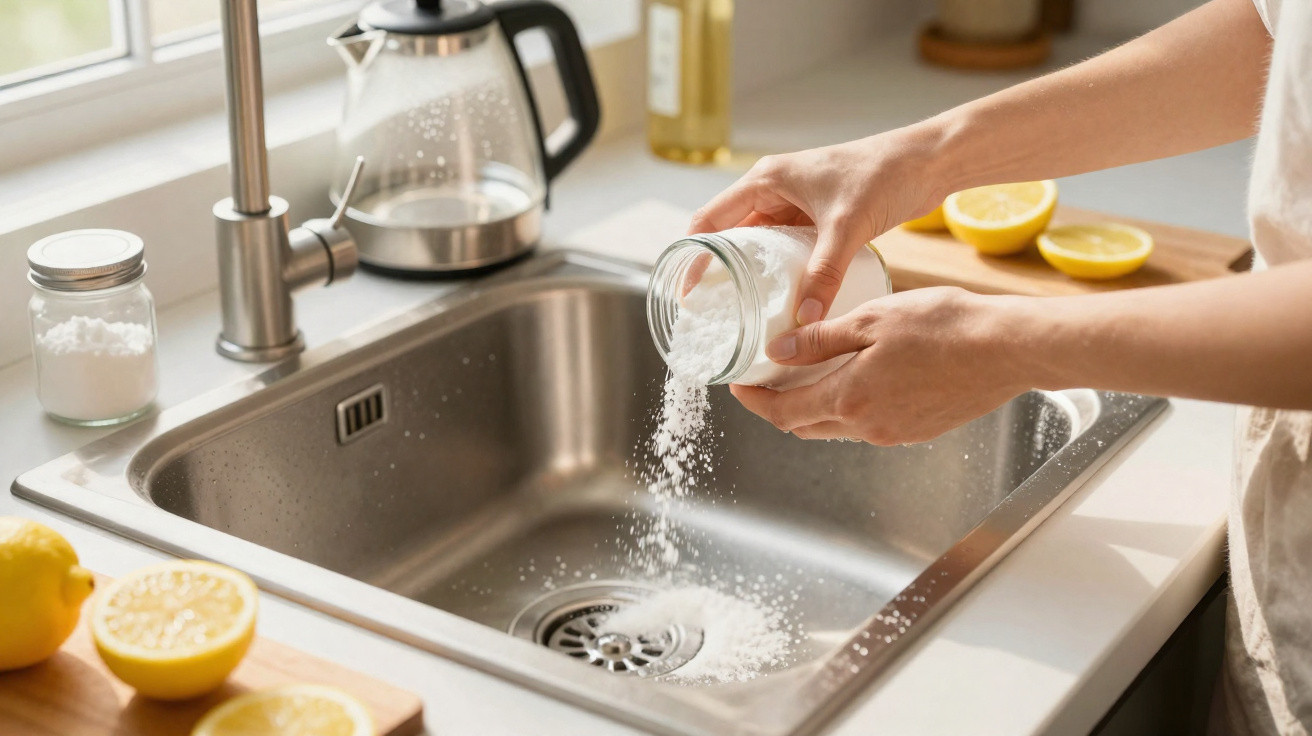
In many cases, all you need is an inexpensive powder you may already have in the cupboard.
A blocked kitchen sink is a familiar household nuisance: pasta water, cooking fat and bits of food gradually build up until the pipe stops draining. Rather than reaching straight for harsh supermarket chemicals, more and more people are turning to home remedies. One particularly cheap powder can clear the drain again within minutes - without caustic fumes.
Why kitchen drains clog so quickly
The kitchen sink takes the most punishment day to day. Fat from frying, leftover sauces, starch from pasta and potatoes, plus coffee grounds and tea leaves often get washed down the plughole. It looks as though it disappears, but in reality it settles inside the U-bend and along the pipework.
- Fats and oils cool down and solidify.
- Starchy leftovers bind with grease to form sticky, stubborn clumps.
- Coffee and tea grounds lodge in bends and joins.
- Hair and fibres from dishcloths catch on the build-up.
What happens next is usually predictable: the water starts to drain more slowly, an unpleasant musty smell develops, and you may hear gurgling. Once water begins to sit in the bowl, a full blockage is close.
The powder that clears a blocked drain quickly
A widely used home remedy - better known for baking and cleaning - is citric acid. This fine powder helps break down deposits in the pipe and can also tackle unpleasant odours.
"One tablespoon of citric acid, followed by a good pour of hot water: in many cases the drain runs freely again within a short time."
How to use citric acid in the drain properly
It’s straightforward and only takes a few minutes:
- Remove as much standing water from the sink as you can.
- Sprinkle 1–2 tablespoons of citric acid directly into the drain.
- Wait briefly so the powder can disperse inside the pipe.
- Pour in a larger amount of very hot (but not boiling) water.
- Leave it for a few minutes, then check whether the water is draining normally again.
The heat-and-acid combination loosens greasy crusts and deposits from the inside of the pipe. If you want a preventative routine, a regular schedule works well:
- Once a week, put 1 tablespoon of citric acid down the drain.
- Rinse through with hot water, for example after washing up.
Doing this often prevents heavy build-up from forming in the first place - and can help you avoid costly emergency call-outs.
Citric acid does more: a everyday descaler
There’s another major benefit: the powder removes limescale. In hard-water areas, kettles, coffee machines and taps can fur up quickly.
Descaling a kettle with citric acid
A small amount is enough for a kettle:
- Add about 1–2 teaspoons of citric acid to the empty kettle.
- Fill with water until the limescale marks are covered.
- Bring it to the boil and leave it briefly.
- Tip the water away and rinse the kettle thoroughly.
You’ll see the white limescale line dissolve. Compared with many ready-made descalers, citric acid is usually much cheaper - and avoids aggressive additives.
If you don’t have citric acid: alternatives for the drain
If there’s no citric acid in the cupboard, another well-known pairing that many households already have is sodium bicarbonate (often sold as “bicarbonate of soda”) and vinegar. Used with hot water, this mixture can also help with blocked drains.
How the bicarbonate of soda and vinegar method works
For a clogged kitchen drain, use this approach:
- Tip about 3–4 tablespoons of bicarbonate of soda into the drain.
- Slowly pour in the same amount of vinegar.
- It will foam immediately - let it work for a few minutes.
- Then flush through with plenty of hot water.
The foaming reaction loosens deposits and can shift smaller blockages. If the blockage is stubborn, you can repeat the process again after a few hours.
How to stop the sink blocking again and again
A few simple habits can prevent many kitchen-drain problems. The key rule is straightforward: if it doesn’t belong in the pipe, don’t put it there.
"The less fat, food scraps and grit that vanish down the drain, the less often you face a complete blockage in the pipe."
Avoid common day-to-day mistakes
- Food scraps: don’t push them into the sink - scrape them into the bin or food-waste caddy.
- Coffee grounds and tea leaves: don’t tip them down the drain for convenience; the particles settle and are difficult to shift.
- Fat and oil: let it cool after frying, pour it into an old jar or container, and dispose of it in the general waste.
- Sink strainer: use one so solids don’t enter the pipework in the first place.
- Hot water regularly: run hot water after washing up to help prevent greasy deposits.
When home remedies reach their limits
Even with these tricks, there are situations where powders and foam won’t be enough. Several signs point to a bigger issue:
- Water backs up in several drains at the same time.
- The pipework gurgles loudly when water is running elsewhere.
- Water rises up from the U-bend even when nothing is being used.
- A persistent smell remains even though there’s no visible dirt left.
In those cases, the blockage is usually further into the system. Often the next step is a standard plunger, a drain-cleaning snake, or ultimately calling a professional.
Chemical drain cleaners: fast results with drawbacks
Shop-bought drain cleaners can be powerful, but they come with real risks. Many contain strong alkalis that can burn skin and eyes. If they reach seals or other sensitive parts undiluted, they can also damage materials over time.
There’s also the environmental impact and added strain on wastewater treatment works, as some ingredients are hard to filter out. Using home remedies like citric acid, bicarbonate of soda and vinegar more often can reduce that burden significantly.
Practical everyday tips for the kitchen
If you want to keep your sink in good condition long-term, it helps to build a small routine. Here’s an easy example:
- Once a week: 1 spoonful of citric acid into the drain, followed by hot water.
- After big cooking sessions: flush briefly with very hot water, especially after greasy meals.
- Empty the sink strainer regularly so it doesn’t become a dirt trap itself.
If you have children at home, you can also make it a simple teaching moment - for example, explaining that the drain “only likes water” and leftovers belong in the bin. That way, fewer unwanted “visitors” end up in the pipe, and the next blockage takes much longer to appear.
Citric acid is also useful elsewhere: taps, shower heads and limescaled aerators. The important point is always the same - don’t use it on acid-sensitive materials such as natural stone, and rinse thoroughly with water afterwards. That keeps the kitchen clean, the drain clear, and the emergency bottle of drain cleaner can stay in the cupboard.




Comments
No comments yet. Be the first to comment!
Leave a Comment