
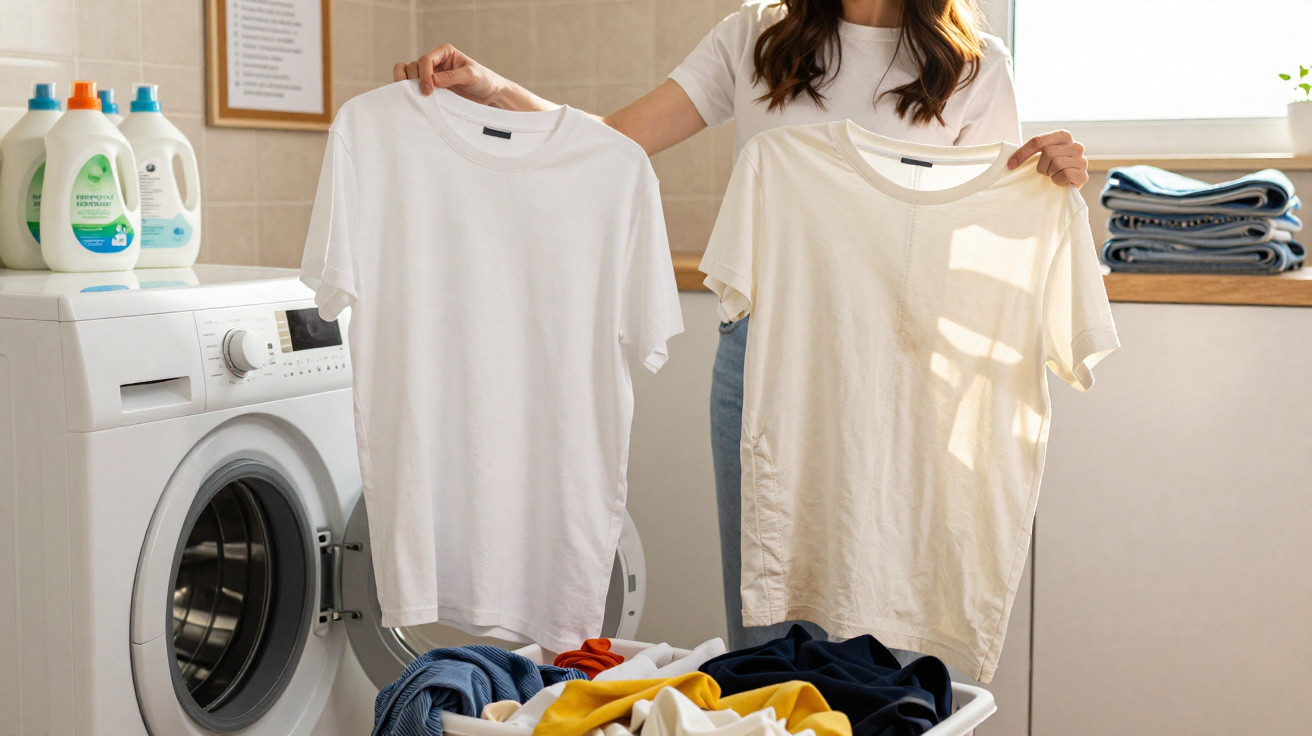
In many homes, this little habit is treated as the gold standard: turn the shirt inside out, flip the jeans, throw everything into the drum - job done. The logic sounds convincing: protect the outside, keep prints safe, help colours last.
But in one very specific situation, that routine can cause real trouble. The item comes out smelling clean, looks fine at a glance - and yet the dirt is still clearly there.
Why we turn clothes inside out in the first place
The basic idea isn’t wrong. If you regularly wear printed T-shirts, dark denim or delicate fabrics, washing items inside out can genuinely help them last longer.
"When washed inside out, it’s mainly the inside that gets cleaned thoroughly, while the visible outside suffers less abrasion and friction."
Here’s what this approach does well:
- Protecting prints and graphics: designs, flock prints and embroidery rub less against the drum and other garments.
- Being gentler on dark fabrics: black or very dark items fade more slowly, so the “washed-out” look appears later.
- Improving odour removal: the inside sits against your skin, so that’s where sweat, deodorant residue and creams build up. Inside out, detergent reaches those areas more directly.
Especially for underwear, sportswear and close-fitting T-shirts, it can make a noticeable difference. If you consistently wash them inside out, they often keep that “fresh” feeling for longer.
The catch: visible stains on the outside
This is where the trap sits. As soon as the outside is genuinely dirty, the supposed benefit flips into the opposite. At that point, the machine is effectively working against you.
"A visible stain needs to be exposed during the wash to the water flow, the detergent and the mechanical rubbing - only then will it lift reliably."
If you automatically turn the garment inside out anyway, three things tend to happen:
- The stained area ends up folded on the inside.
- The fabric effectively shields the stain from the strongest water flow.
- Most of the helpful friction happens elsewhere - not where it’s actually needed.
The result: the item comes out of the machine smelling of detergent and seeming “fresh”, but once it dries the mark reappears. Sometimes a clear edge even forms - the notorious stain halo.
Stains that are particularly stubborn
Certain kinds of dirt react badly when they’re hidden away during the wash cycle:
- Fat and oil: cooking oil, butter, mayonnaise, vinaigrette
- Highly pigmented sauces: tomato sauce, curry, chilli, ketchup
- Ground and outdoors: mud, soil, grass stains on knees and trouser legs
- Cosmetics: make-up, foundation, lipstick on collars, sleeves or scarves
These substances can sink deep into the fibres. If they’re treated half-heartedly or incorrectly, they can leave permanent traces. And once something has properly dried in and set, the machine often can’t remove it completely.
The right order: treat the stain, then wash right way round
Rather than turning every item inside out without thinking, use a simple three-step rule whenever you can see a stain.
"First spot it, then pre-treat it, then wash it right way round - that gives stains the smallest chance of surviving."
A practical sequence:
- Spot the stain: before it goes into the laundry basket, take a quick look at the front, collar, sleeves and knees.
- Lightly dampen: wet the affected area with a little lukewarm water (for protein-based stains, cold water is better) so the fibres open up.
- Apply the right product: choose a different treatment depending on the type of stain.
| Type of stain | Treatment before washing |
|---|---|
| Greasy/oily | A drop of washing-up liquid on the lightly damp area, gently massage in |
| Protein-based (sweat, blood) | Rinse with cold water, then use stain remover; avoid heat at the start |
| Highly pigmented (tomato, curry) | Enzyme-based stain remover or stain soap, leave briefly to work |
| Mud/soil | Let it dry completely first, brush off, then pre-treat |
| Stubborn odours | A little bicarbonate of soda on the dampened area, leave briefly |
The key point: don’t scrub aggressively. Gentle massaging with your fingers or a soft cloth - and a bit more contact time - works better. Hard rubbing damages fibres and roughens the fabric.
After pre-treatment, put the item into the machine right way round, so the stain is right in the middle of the action. That way the water hits the dirty area directly, detergent can work where it’s needed, and the drum movement provides the abrasion required.
When washing inside out still makes sense
Despite the warnings, turning items inside out absolutely has its place - just not always and not for everything. If you can’t see any stains, you can usually wash certain items inside out without worry.
- Printed T-shirts and hoodies: prints, flock and lettering stay looking “fresh” for longer.
- Dark jeans and sweatshirts: the outer surface fades more slowly and looks less dull.
- Underwear, sportswear, tight tops: odours lift more easily because the inside is cleaned more intensely.
- Performance clothing: membranes and technical surfaces tend to last longer if they aren’t constantly rubbed directly.
One exception requires a bit of judgement: very delicate prints or thick flock designs may need to stay inside out even when there’s a stain. In those cases, thorough pre-treatment matters even more, along with a suitable programme that provides enough movement.
Important wash settings people often underestimate
Whether you wash inside out or right way round, results depend heavily on the machine settings. A few factors matter far more than many people realise:
- Temperature: 30 to 40 °C is usually enough, always follow the care label. Too hot can strip colour and set stains.
- Spin speed: delicate fabrics only cope with moderate revolutions; otherwise they become “tired” quickly.
- Loading level: an overfilled drum prevents proper water circulation. Then items aren’t cleaned - they’re just compressed.
- Detergent amount: too much leaves a film and makes textiles look dull; too little doesn’t clean properly.
- Closed zips and hook-and-loop fasteners: this reduces micro-scratches and snagging on delicate items.
Another point that’s often ignored: the tumble dryer. If a stain is still visible, don’t expose it to heat. High temperatures can “bake” residue deep into the fibres and make it last.
The most useful new habit when sorting laundry
A lot of problems start during sorting. If you toss laundry into the basket and later load the machine on autopilot, you lose easy opportunities for better results.
"A quick check before the laundry basket often does more than the most expensive detergent."
In practical terms:
- While sorting by colour, also watch for stains and heavily worn areas (collars, underarms, hems).
- Don’t mix heavily soiled items with lightly worn everyday laundry - treat them separately.
- Make a quick call: does something need protecting here, or is removing dirt the priority?
That leads to a simple rule that’s easy to remember: If the outside is dirty, wash it right way round. If the outside looks clean, you can wash it inside out to protect it.
If you train yourself to do this mini-check before you start the machine, you’ll avoid repeat washes, look after your clothes and get far less annoyed by stubborn edges or stains that come back. And suddenly that seemingly basic move when loading the washer makes much more sense - because you’re using it deliberately rather than out of habit.



Comments
No comments yet. Be the first to comment!
Leave a Comment