
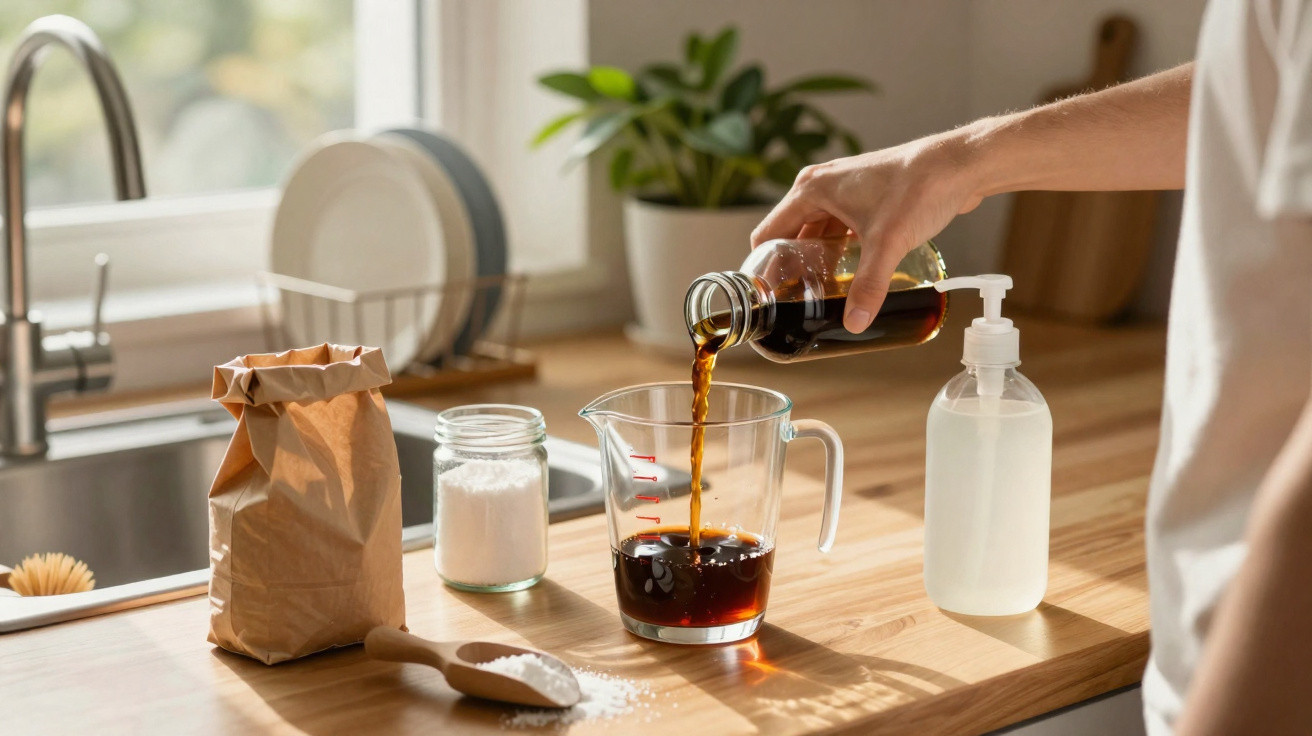
Washing-up liquid is surprisingly easy to replace with a straightforward kitchen trick.
Shelves packed with brightly coloured plastic bottles, ever-new “Ultra-Power” formulas, and prices that keep creeping up: for many households, conventional washing-up liquid feels like a necessary evil. If you add up how much money - and how much plastic waste - builds up over a year of doing the dishes, it quickly gives you pause. This is exactly where a simple recipe comes in: it relies on three basic ingredients and can make the supermarket foam competition look oddly outdated.
Why conventional washing-up liquid has become a problem
Washing-up liquid is often seen as harmless because almost everyone uses it every day. However, the blend of chemical surfactants, fragrances, colourants and preservatives can have knock-on effects - for the environment, your skin and your budget.
- Environmental impact: Surfactants and preservatives can put pressure on waterways and aquatic life.
- Plastic bottles: Every empty bottle ends up as waste or goes through resource-intensive recycling.
- Skin irritation: Many people are left with dry, cracked hands after washing up.
- Hidden costs: Several bottles a month can add up to a significant annual spend.
That’s why many households are looking for options that still clean dishes properly, while creating less waste and relying on fewer chemicals. The interesting part is that the answer is often already within reach in the cleaning cupboard - it’s just not used consistently.
The basic idea: a cleaning mix made from three simple ingredients
At the core of this homemade alternative to washing-up liquid are three fairly unglamorous products which, combined, form a surprisingly powerful trio:
- Black soap (liquid, usually made from olive oil or linseed oil)
- Bicarbonate of soda (sodium bicarbonate, as a powder)
- Washing soda crystals (sodium carbonate in crystal form)
“This mix cuts through grease, neutralises odours and is kinder to both hands and drains - without the colourful chemical circus.”
What each ingredient actually does
Black soap is already a go-to all-purpose cleaner in many homes. It’s typically based on plant oils, avoids harsh solvents, and produces less lather than typical washing-up liquid. Even so, it breaks down grease very effectively - which is exactly what you want at the sink.
Bicarbonate of soda has a mild abrasive action without being scratchy. It helps lift dried-on food, gently buffs glass and stainless steel, and absorbs unpleasant smells. It really comes into its own with casserole dishes or pans where residue has stubbornly baked on.
Washing soda crystals tackle fats head-on. They help “saponify” oils and food residue - in other words, turn them into something that rinses away more easily with water. On top of that, washing soda can loosen build-up in pipes, which may reduce the risk of blocked drains.
Base recipe: how to mix your own washing-up liquid
To make roughly half a litre of homemade dishwashing cleaner, you only need a simple blend - no lab kit and no special equipment.
- Add 1 tablespoon of bicarbonate of soda to an empty, clean bottle.
- Tip in 1 tablespoon of washing soda crystals.
- Pour in about 2 cm of liquid black soap so it sits at the bottom of the bottle.
- Top up with hot water from the tap, leaving a little space at the top for shaking.
- Screw the lid on tightly and shake well until everything has dissolved.
Within seconds you’ll have a slightly cloudy but even mixture. Use it as you would ordinary washing-up liquid - straight onto a sponge or added to the washing-up bowl.
“Once you’ve made a bottle, you quickly notice: it’s unremarkable to prepare, but impressive in use.”
Version with extra foam for lather lovers
For many people, the feeling of “clean” is tied to how much foam they can see. If you don’t want to give up that “lather feeling”, you can adapt the base formula. A common version adds grated bar soap:
- 800 ml hot water
- 1 tablespoon liquid black soap
- 1 tablespoon washing soda crystals
- 1 tablespoon bicarbonate of soda
- about 50 g grated solid soap (for example, traditional household soap or olive-oil soap)
Mix the soap shavings with the bicarbonate of soda, washing soda crystals and black soap in a bowl, then pour over the hot water and stir thoroughly until the soap dissolves. Decant into a bottle and leave it overnight. The next day it will be thicker; dilute with a little cold water until you reach your preferred consistency, give it a quick shake - and it’s ready.
How well does the mix clean in everyday life?
Feedback from households that have relied on this DIY solution for months is strikingly positive. Plates, glasses and pans come up clean; glass stays clear and greasy films disappear. The mix produces noticeably less foam than traditional washing-up liquids, but plenty of users don’t see that as a drawback - quite the opposite.
“Less foam doesn’t mean less cleaning power - it often just means fewer visual show effects.”
When rinsing oily frying pans or baked-on dishes, the washing soda crystals show their strength. Paired with hot water, burnt-on edges lift more easily. At the same time, many people report less dryness on their hands, because the harsher surfactants and added fragrances are no longer part of the routine.
Benefits at a glance
- Lower cost: The core ingredients are inexpensive and go a long way; the per-litre cost is often just a few pence.
- Less plastic: One sturdy bottle can be refilled again and again.
- More control: Only the ingredients you actually want end up in your washing-up water.
- Gentler on skin: Many people find plant-based soaps less irritating than aggressive surfactants.
- Kinder to plumbing: Skipping thick, heavily perfumed products can reduce build-up.
Where are the limits and risks of the homemade recipe?
You shouldn’t mix without a bit of caution. Using too much washing soda can attack sensitive surfaces such as aluminium or certain coatings. A sensible approach is to test on an inconspicuous area with new pots or pans, and avoid overdoing the dosage.
For high-quality crystal glasses or delicate decorations, use lukewarm water with a smaller amount of the mixture. Strongly perfumed bar soaps can leave a faint film on glassware, though it can usually be rinsed away with clean water.
| Suitable for | Use with caution for |
|---|---|
| Stainless-steel pots | Aluminium cookware |
| Glasses and mugs | Plastics with matte coatings |
| Cutlery | Finely decorated glassware |
How to work the mix into everyday routines
If you want to stop buying washing-up liquid altogether, start with a simple trial: keep one bottle of the DIY mix next to your usual bottle and compare them consciously for a few days. Many people find they reach for the shop-bought option far less afterwards.
Practical tips:
- Give the bottle a quick shake now and then if anything settles.
- For heavily soiled pans, add a squirt directly, then soak with hot water.
- When hand-washing glasses, use a small amount and rinse thoroughly with clean water.
- If your skin is sensitive, you can still wear thin gloves even with this milder recipe.
Why more people are switching right now
A mix of rising prices, growing environmental awareness and social media trends has made “mixing your own household products” feel mainstream. What once sounded like an eco niche now comes across as practical: if you can get the same cleaning result for a few pence, you save money and reduce waste - without losing comfort at the sink.
There’s also a satisfaction factor. Many people like reclaiming a small part of household management for themselves: no tiny print listing twenty ingredients, and no marketing promises that mostly mean “more foam”. Clear, basic raw materials, simple dosing and transparent results - for many, that’s all that’s needed.
Once you’ve seen how long a pack of bicarbonate of soda, a bag of washing soda crystals and a bottle of black soap last, the weekly reach for another supermarket bottle starts to feel questionable. A simple mix can become a small step towards a more sustainable, cheaper and more deliberate way of running a home.


Comments
No comments yet. Be the first to comment!
Leave a Comment