
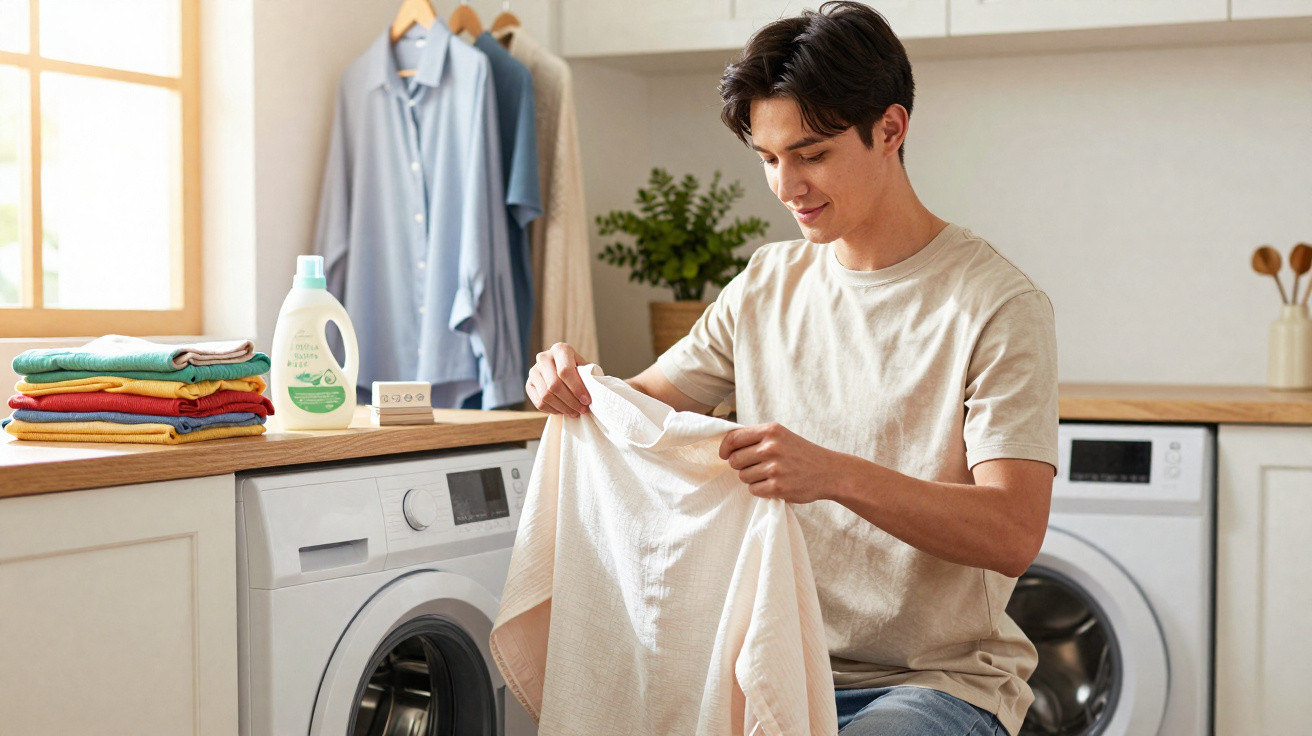
If you’re fed up of pulling twisted T-shirts, dull-looking jeans or frayed blouses out after every wash, it’s easy to blame the machine. In reality, what happens to your clothes is often decided in the few minutes beforehand. Five straightforward actions - no longer than grabbing the detergent - can almost double the life of your wardrobe and, as a bonus, leave your laundry smoother and cleaner.
The invisible armour: turning clothes inside out before washing
The most important move starts at the laundry basket: turn garments inside out. It sounds basic, but it makes a huge difference once everything is in the drum. In the wash, items rub against one another, thump the drum and get tangled together.
"If you consistently wash T-shirts, jumpers and trousers inside out, you protect the visible outer side as if with a thin shield."
That way, the delicate side - the part people actually see - mostly rubs against itself rather than against zips, buttons or the metal drum. This reduces visible abrasion, little bobbles (pilling) and roughened patches.
This trick is especially valuable for:
- T-shirts with large prints or logos
- tops with sequins, embroidery or appliqués
- fine knits, blouse fabrics and anything that can look “old” quickly
Prints and lettering in particular can crack or fade fast if they constantly scrape directly against the drum. Turned inside out, they lose colour and structure much more slowly. After two or three washes you won’t notice much - after a year, you will.
Fasten buttons, do up zips: small details, big impact
The second mistake happens to almost everyone: tossing items into the machine with buttons undone and zips half open. That’s how many problems start - and they often only show up later.
Why fastening buttons helps save the fabric
Open button plackets love to snag on other items. When that happens, seams get tugged, collars can distort and, in the worst case, buttons get ripped off.
If you fasten all the buttons before washing, you give the fabric more stability. Shirts and blouses keep their shape, and seams are put under less strain. This is particularly useful for:
- blouse shirts and business shirts
- cardigans with button fronts
- clothing with tight cuffs or small buttons
Zips as tiny traps in the drum
Unfastened zips can act like mini pincers during the spin: they grab delicate fabrics, pull threads or leave deep crease marks. With jeans, the teeth can practically “bite” into other items.
"Always pull zips fully up - otherwise every item with a zip behaves like a little fabric destroyer."
Closed zips move more smoothly through the drum, catch less often and create fewer hard creases. Taking a moment to “secure” jackets, hoodies, jeans and pillowcases before washing can prevent a lot of frustrating damage.
The biggest troublemaker: full pockets can ruin entire loads
Hardly any household avoids the classic disaster: a paper tissue left in a trouser pocket, and your black jeans come out covered in white fluff. Annoying - but that’s the mildest outcome.
Pockets can hide:
- tickets, receipts and scraps of paper
- coins, screws, hair grips
- chewing gum, sweet wrappers or lip balm sticks
- small tech such as in-ear headphones
Paper breaks apart like confetti across the whole drum. Sticky residues cling to fabrics and often also to the rubber door seal. Hard small items hammer against the drum, can damage the glass door and plastic parts, and in extreme cases may even block the pump.
"If you really empty every pocket completely, you protect not only your clothes but also the machine itself."
The best approach is a fixed routine. Before anything goes into the basket, quickly pat down all pockets. Once it becomes a habit, you stop having to think about flying tissue fluff later.
Jeans and dark colours: how to keep colour looking rich for longer
Jeans have a reputation for being tough, but denim in particular suffers from friction and overly heavy loads. Light streaks at the knees, washed-out thighs, flat-looking colour - many people assume that’s just normal wear. In fact, washing the wrong way speeds it up dramatically.
The simplest protection: always wash jeans inside out. The hard-working outer surface then rubs less directly against the drum and other textiles. Pale abrasion marks develop more slowly and the finish stays more even.
There’s another benefit too: less colour loss. The outer dye is exposed less intensively to detergent and friction in the water. With new, dark jeans, it also reduces the risk of them “bleeding” onto other items.
For colour-rich garments, it’s also worth keeping an eye on the following:
- choose lower temperatures (30 °C is usually more than enough)
- use colour detergent rather than biological/whitening “full” detergent for coloured loads
- don’t cram the drum full, so everything can move freely
The hand rule: why overfilling leaves your laundry creased
Packing too much into the drum is the surest route to heavily creased, poorly washed clothes. When the machine can barely turn, it behaves more like a press than a washing system.
"Remember: your hand should still fit comfortably above the laundry in the drum. If it doesn’t, there’s too much in there."
This rule of thumb keeps enough air in the drum. Items can open out, water reaches every fibre and detergent dissolves more effectively. During spinning, the load doesn’t stick to the wall as a solid lump; instead, it’s properly flung through and cleaned.
The result:
- fewer creases, especially in blouses, shirts and bed linen
- cleaner results even at lower temperatures
- less stress on seams and less twisting
Bulky items such as duvets, towels or hoodies take up a lot of space. If you try to load too much, you don’t save a wash - you simply create more ironing and fabrics that look tired sooner.
Make these five steps a set routine - the long-term payoff
These five actions aren’t glamorous: turn items inside out, fasten buttons, pull up zips, empty pockets, load the drum correctly. Together they take less than a minute. Even so, they noticeably change what happens in your wardrobe.
If you wear better-quality pieces - business shirts, branded jeans, favourite dresses - you save real money over time. Fabrics bobble less, seams stay stronger, and prints look fresh for longer. Even inexpensive fast-fashion items remain wearable for longer, rather than ending up in the bin after just a few washes.
Practical extras for even longer-lasting laundry
On top of the five automatic habits, a few additional points can help extend the life of your clothes:
- wash only genuinely dirty clothes, not after every brief wear
- use gentle cycles for delicate fabrics
- dose less detergent than the pack suggests if you have soft water
- use laundry bags for bras, fine knits or lace items
A lot of damage comes from too much chemistry and friction, not from dirt. Fabrics need breaks, just like skin and hair do. If you air clothes out instead of washing constantly, you extend their lifespan even further.
In the end, every small habit pays off: less waste, fewer replacements, a more reliable wardrobe - and a much calmer feeling when you open the drum after the spin cycle.


Comments
No comments yet. Be the first to comment!
Leave a Comment