
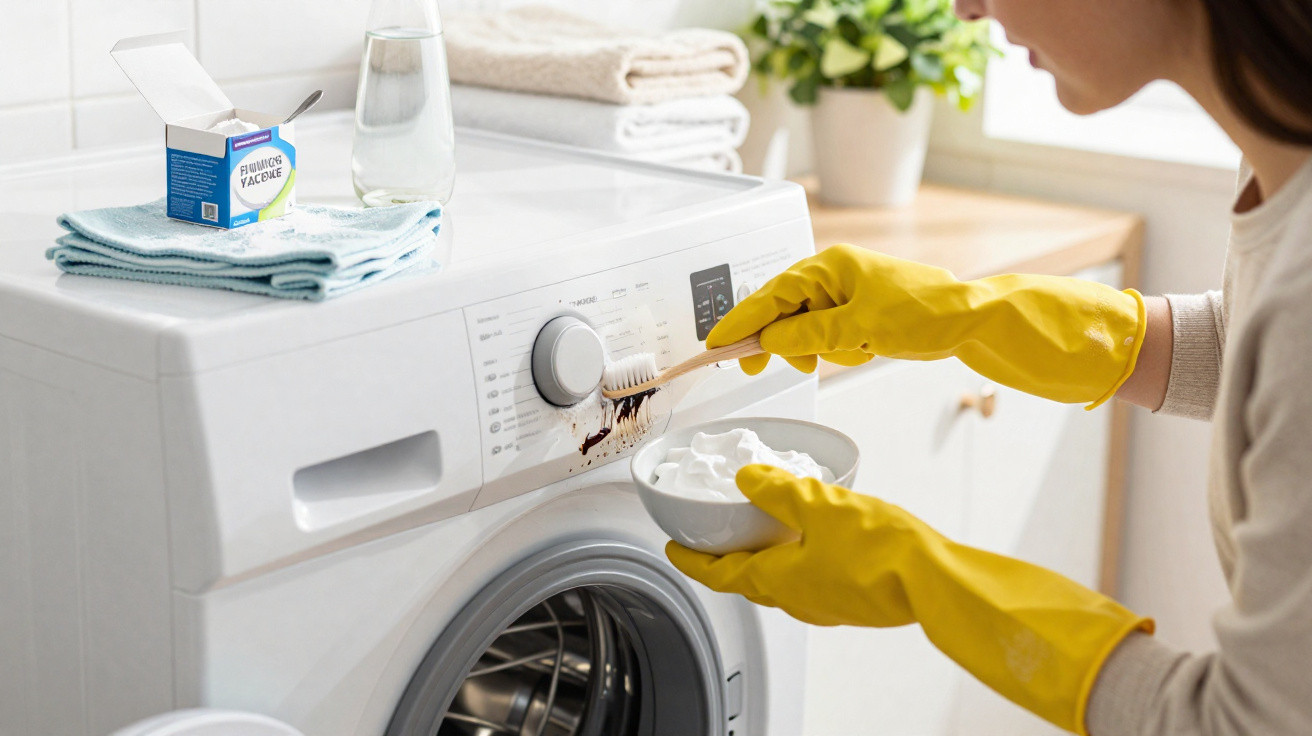
Over the course of months, what builds up in there is not for the faint-hearted.
The drum may shine, the detergent may smell fresh, and everything can look perfectly hygienic. But if you carefully lift the rubber seal around your machine’s door, you’ll often find a warm, damp pocket where grime, slimy residue and dark marks collect. This is more than a cosmetic nuisance: under the seal, a mini “biotope” can develop that creates odours, soils your laundry and, in the worst cases, can even affect health.
What’s really lurking under the washing machine door seal
In the folds of the rubber seal, almost everything a washing machine deals with day to day ends up mixing together. The result is a stubborn film that clings on.
Under the seal there isn’t a “mysterious” issue, but an everyday cocktail of detergent residue, limescale, skin particles and moisture – ideal for mould.
What typically accumulates there includes:
- Leftover detergent and fabric softener
- Fine fluff and fibres from clothing
- Limescale deposits from hard water
- Microscopic skin and dirt particles
Because the rubber seal forms a kind of trough, a little water is always left behind after a wash. That moisture never properly dries out, and the inside of the machine stays slightly warm – exactly the conditions mould and bacteria prefer. Over time, a black or greenish layer forms, along with the familiar musty “cellar smell”.
Warning signs you shouldn’t ignore
If you look closely (and trust your nose), you can spot the issue early. Common clues are:
- A harsh smell when you open the door, even when the laundry is clean
- Dark dots or streaks on the rubber seal
- Grey-black marks on light-coloured textiles
- A greasy, slippery feel on the rubber
It doesn’t stay confined to the machine. Spores and residue keep transferring back on to your clothes. People with allergies or sensitive airways often react more strongly than they realise.
The most effective approach: a thick bicarbonate of soda paste, not a spray-and-pray
Many people instinctively reach for aggressive cleaners or blast bathroom spray into the seal. It may seem to help briefly, but it rarely tackles the problem thoroughly. A much more targeted option is a thick paste made from bicarbonate of soda (baking soda) and water.
The trick: don’t use a watery mix that runs straight off, but a paste that clings exactly where the dirt is.
How to mix the cleaning paste
- About 40 grams of bicarbonate of soda
- A few tablespoons of water, until you get a spreadable paste
- 200 millilitres of clear white household vinegar for wiping afterwards
Aim for a consistency like a sandwich spread: not dry and crumbly, and not runny. That way, you can work it under the lip of the seal without it immediately dripping into the drum.
Step-by-step: cleaning the seal
- Switch the machine off and open the door.
- Carefully pull back the rubber seal, especially at the bottom.
- Use a finger, the back of a spoon or a small spatula to push the bicarbonate paste deep into the folds.
- Pay extra attention to the underside and inner edge, as that’s where most water collects.
- Leave it to sit for a few minutes so the buildup starts to loosen.
- Scrub firmly but carefully with an old toothbrush.
- Wipe away the loosened residue straight away with a damp cloth.
A toothbrush reaches narrow grooves that a sponge can’t get into. The key is not to yank or lever the seal so hard that it slips out of place or gets damaged.
Vinegar as the finisher: shifts limescale and tackles the pong
Once the worst of the grime is gone, move on to the second stage: a thorough wipe-down with household vinegar. Vinegar reacts with mineral deposits, breaks down remaining limescale and helps neutralise odours.
First bicarbonate of soda, then vinegar – don’t mix them together, otherwise the cleaning power is wasted in a show of bubbles.
How to rinse and wipe down properly
- Soak a clean cloth generously with vinegar.
- Wipe the entire seal carefully, including every fold.
- Keep turning or replacing the cloth so you don’t spread the dirt back around.
- Go over stubborn areas a second time.
The vinegar smell can be sharp at first, but it fades quickly, especially if you leave the machine door open. To finish, wipe again with clean water and dry the rubber thoroughly. If the seal stays damp, you’ll soon be back where you started.
Hot wash reset: run it empty at 90°C
Even if the seal looks spotless again, residue can still be sitting in hoses, around the drum and in the machine’s hidden corners. An empty boil wash at 90°C makes a big difference.
An empty high-temperature cycle after cleaning acts like a freshness reset for the inside of the machine.
To use it effectively:
- Don’t add detergent, or at most use a very small amount.
- Choose the longest programme you can, so the temperature stays up.
- Keep the door shut during the cycle; afterwards, open it wide and let the machine air out.
The heat loosens fatty deposits and kills a large proportion of the microorganisms that thrive at 30°C or 40°C. After this cycle, the machine should ideally smell neutral - not perfumed, but not musty either.
Forgotten grime traps: the detergent drawer and the filter
Many people focus only on the drum. Two areas almost always get overlooked - and they’re often the ones that cause trouble:
| Part | Typical problem | What helps |
|---|---|---|
| Detergent drawer | Sticky residue from powder, gel and fabric softener | Pull the drawer out fully, soak in hot water, scrub grooves with a brush |
| Filter (lint filter/pump filter) | Fluff, hair, small objects, stagnant dirty water | Unscrew regularly, remove debris, wipe the area with a cloth and a little vinegar |
A quick wipe over the inside of the door and around the drum completes the “spring clean” for your machine. You can often smell the difference on the very next wash.
Keep it clean with minimal effort: the monthly routine
If you don’t wait until the machine already stinks, you’ll save yourself a lot of work. A brief check once a month is usually enough.
One empty hot wash a month and two or three cloths - that’s often all it takes to avoid problems.
A practical routine you can actually stick to
- Once a month: run an empty wash at 90°C.
- When you’re cleaning the house, quickly lift the seal and look for dark patches.
- As soon as the first spots appear: use a small amount of bicarbonate paste and a brush, then wipe it away straight away.
- After every wash: leave the door slightly open, and if needed quickly dry the seal with a cloth.
- Don’t overdose detergent or fabric softener - excess leaves a film behind.
If you live in an area with very hard water, it can also be worth descaling the machine. Descaler tablets or a manufacturer’s dedicated programme can reduce limescale layers that give bacteria and mould something to cling to.
Health considerations and common cleaning mistakes
Dark buildup under the seal isn’t a harmless “cosmetic flaw”. Mould spores and bacteria can worsen airway irritation, itchy eyes or skin issues in sensitive people. Children, allergy sufferers and anyone with a weakened immune system tend to react more quickly.
During cleaning, a few avoidable mistakes are common:
- Metal scourers or very abrasive pads can scratch and damage the rubber.
- Strong chlorine-based cleaners can attack the material and may even make smells worse.
- Mixing bicarbonate of soda and vinegar directly - the foaming spectacle looks impressive but delivers very little cleaning performance.
Gentle basics like bicarbonate of soda, vinegar, a toothbrush and a soft cloth are usually all you need. Used regularly, this simple combination stops a damp, black “biotope” from forming under the seal again.
Checking under the rubber seal is, in reality, just part of normal household upkeep. Once you’ve had the nerve to lift it even once, it’s easy to see why a few extra minutes are worth it for noticeably fresher, more hygienic laundry.
Comments
No comments yet. Be the first to comment!
Leave a Comment