
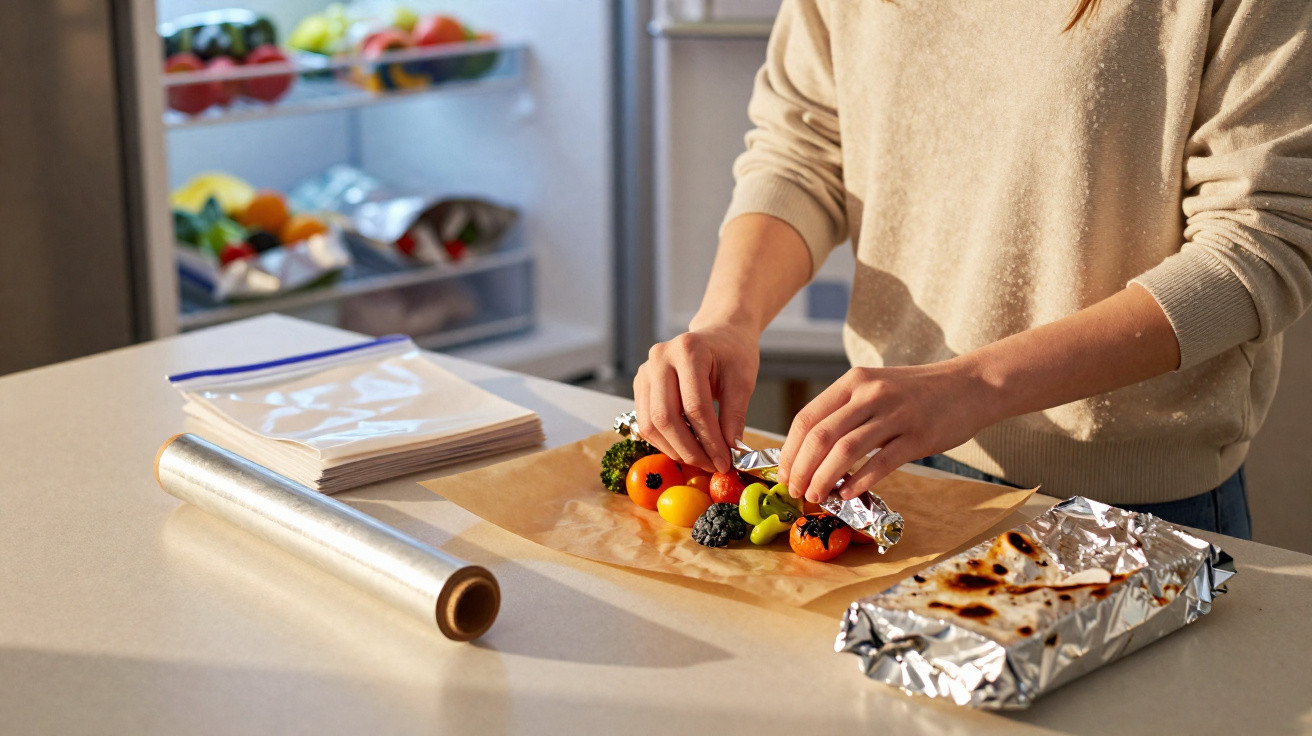
The cause is usually a simple packaging mistake.
A piece of salmon from the special offer, half a tray of lasagne, a few slices of weekend bread: wrap it quickly in foil, shove it in the freezer – job done. Then, months later, comes the disappointment: crystals, grey patches, an odd texture. This is exactly where it becomes clear how much your choice of packaging determines whether you’ll enjoy it or regret it.
Why reaching for aluminium foil when freezing so often goes wrong
At first glance, aluminium foil seems perfect: cheap, easy to tear off, and it moulds tightly around food. Many people use it automatically for anything that needs to go into the freezer “just for now”. It even looks rather professional – like something from a caterer.
The trouble starts where you can’t see it. On its own, aluminium foil isn’t a reliable barrier against air. It creases, corners split easily, and tiny gaps appear. Through these micro-openings, air and moisture make their way in.
"When air reaches food in the freezer, you get ice, dehydration and loss of flavour – the classic freezer-burn trap."
You notice the price you pay when you defrost:
- dry, pale patches on the surface
- puddles of water on the plate, especially with sauces and bakes
- limp meat, crumbly bread, a watery texture
What looked neatly wrapped at freezing time can seem tired and “old” after thawing – even though the food itself would otherwise have been absolutely fine.
Frost, freezer burn and unwanted odours: what really happens in the freezer
A freezer isn’t a silent storeroom; there’s constant movement of air and moisture. If food isn’t sealed properly, water evaporates from the surface, freezes on the outside and forms ice crystals.
That process leads to freezer burn: pale, dull, dry areas that aren’t usually dangerous, but taste noticeably worse. These foods are particularly vulnerable:
- Bread: absorbs moisture and smells extremely quickly, then turns soft or crumbly
- Fish: delicate structure; dries out in moments and loses juiciness and bite when defrosted
- Meat: the surface becomes tough, while the inside can end up stringy
- Ready meals with sauce: water separates from fat, leaving a lumpy or greasy consistency
There’s another factor many people overlook: odours. A freezer is, in effect, a collection point for aromas. If smells can travel through leaky packaging, the unpleasant bit happens:
"The birthday cake smells of fish fingers, and the Sunday goulash picks up a subtle note of ‘herby mixed vegetables’."
Aluminium foil on its own doesn’t reliably prevent this swapping of aromas. The result is that everything ends up tasting vaguely “like the freezer”.
Aluminium in direct contact: tricky with acid and salt
One issue often slips completely under the radar: aluminium foil doesn’t react well with strongly salty or acidic foods. In the freezer, long contact times can make these reactions more likely.
Common culprits include:
- tomato sauces and any dishes heavy on tomato purée
- lemon chicken, fish with lemon juice, lime-based marinades
- leftover salad with vinegar dressing
- intense marinades, chilli con carne, heavily salted braises and stews
Where acid, salt and moisture sit directly against aluminium, it’s simply unhelpful for food quality. You won’t always spot it immediately, but flavour and texture can suffer. That’s why professionals are clear: anything strongly seasoned, salty or acid-forward should never be frozen with bare aluminium foil touching the food.
The better strategy: a double barrier instead of a quick fix
Most people freeze food to save time – not to swear at it weeks later while defrosting. One simple approach prevents the majority of problems: the “double barrier”.
"First a protective layer directly on the food, then a second, truly airtight outer shell – and you’ve got a proper freezer-pro set-up."
How the double barrier works day to day
In practice, it’s just two steps:
- Layer against the food: place cling film or baking parchment directly on the surface so nothing sticks and no air pocket remains.
- Airtight outer layer: use a thick freezer bag or a sturdy container, seal it carefully, and keep trapped air to a minimum.
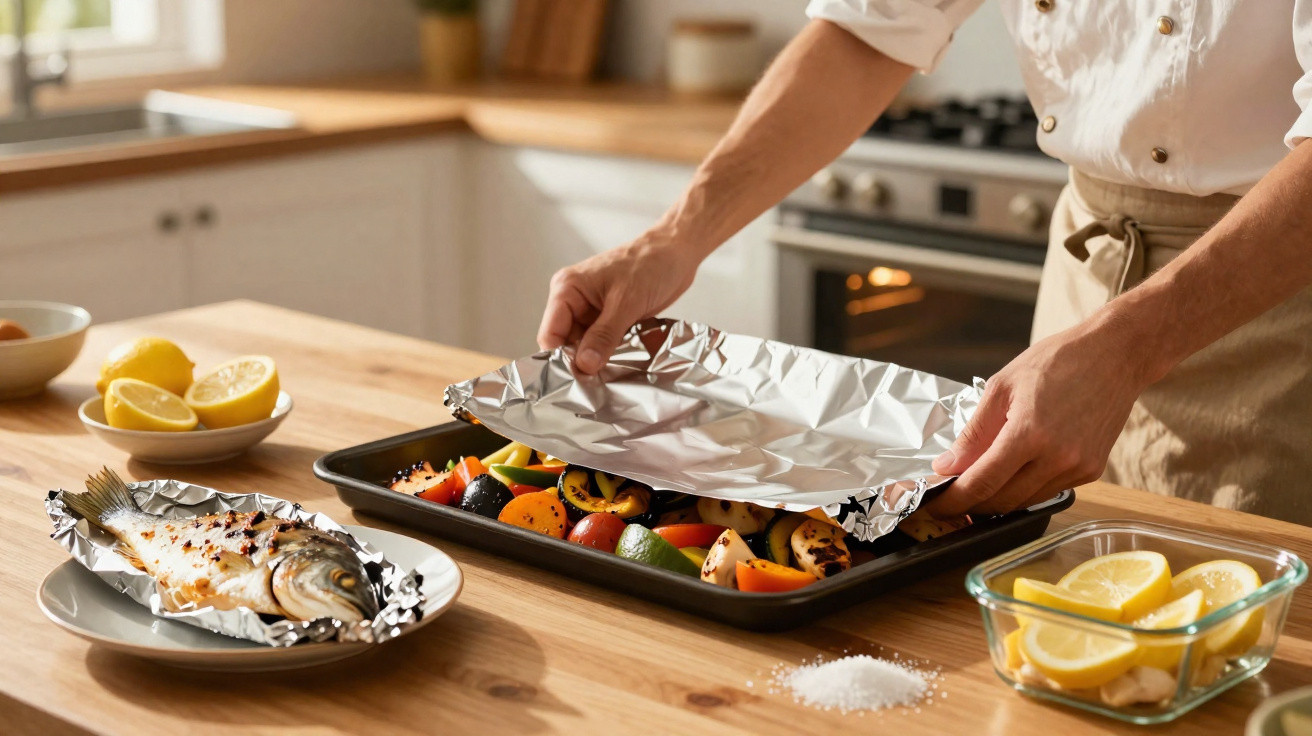
If you still want to use aluminium foil, use it only outside that first layer – for example, to help a dish hold its shape. It shouldn’t touch the food directly, especially with salty or acidic meals.
Practical solutions for different foods
| Food | Recommended packaging |
|---|---|
| Meat and fish | Wrap tightly in cling film or baking parchment, then place in a freezer bag and squeeze out the air |
| Bread and rolls | Freeze sliced in a well-sealed freezer bag; no foil needed |
| Bakes / lasagne | Pre-freeze in the dish, then move to a bag or container with a film cover |
| Tomato sauces & stews | Lay flat in a bag; use double packaging; avoid any contact with aluminium |
| Cakes & pastries | Freeze briefly first, then layer in a container or bag with baking parchment between pieces |
Five small habits that dramatically improve defrosting
It’s not only the material that matters; how you use it does too. A few routines make the difference between “fine” and “nearly like freshly cooked”:
- Portioning: several small packs are better than one huge block. That way you don’t have to refreeze half-defrosted food.
- Press out the air: close the bag almost completely, then push the air towards the opening and seal it fully.
- Freeze sauces flat: lay a bag of sauce flat on a tray. It saves space and speeds up both freezing and defrosting.
- Label everything: write the contents and the date. If you know what it is, you’ll use leftovers in time instead of shuffling them “briefly” to the back again and again.
- Let it cool first: never put hot food straight into the freezer. Allow it to cool to room temperature, otherwise condensation forms and turns into ice.
How long does food really keep in the freezer?
Even with perfect packaging, food doesn’t stay at its best forever. A rough guide for households:
- Lean fish: around 3 months
- Oily fish and seafood: 2–3 months
- Poultry and lean meat: 6–8 months
- Minced meat: 2–3 months
- Ready meals and stews: 3–4 months
- Bread and baked goods: 1–3 months
After that, the food isn’t automatically spoiled, but flavour and quality will steadily drop. By that point, any weakness in your packaging shows up twice as much.
How defrosting affects quality and safety
Even the best packaging won’t help much if defrosting is chaotic. Big temperature swings and repeated warming and re-freezing damage both texture and taste. The best method is to thaw food slowly in the fridge. It takes longer, but it keeps juices and structure far better.
Soups, sauces and stews can also be reheated in a pan over a low heat, ideally with a splash of extra liquid. Bread does well at room temperature or briefly in the oven. What you should avoid is leaving delicate foods on the worktop for hours, half-thawing in a warm kitchen and then freezing again.
Why an extra two minutes is genuinely worth it
Once you get used to the double barrier and consistently reducing air in the pack, the difference is obvious: less food goes in the bin, leftovers taste as intended, and that “freezer taste” all but disappears.
Most households freeze food anyway. The real lever is the handful of seconds you invest in packing it properly. Instead of aluminium foil doing the job alone, a considered outer seal decides whether your freezer stash becomes a reliable back-up meal or a small kitchen frustration.

Comments
No comments yet. Be the first to comment!
Leave a Comment