
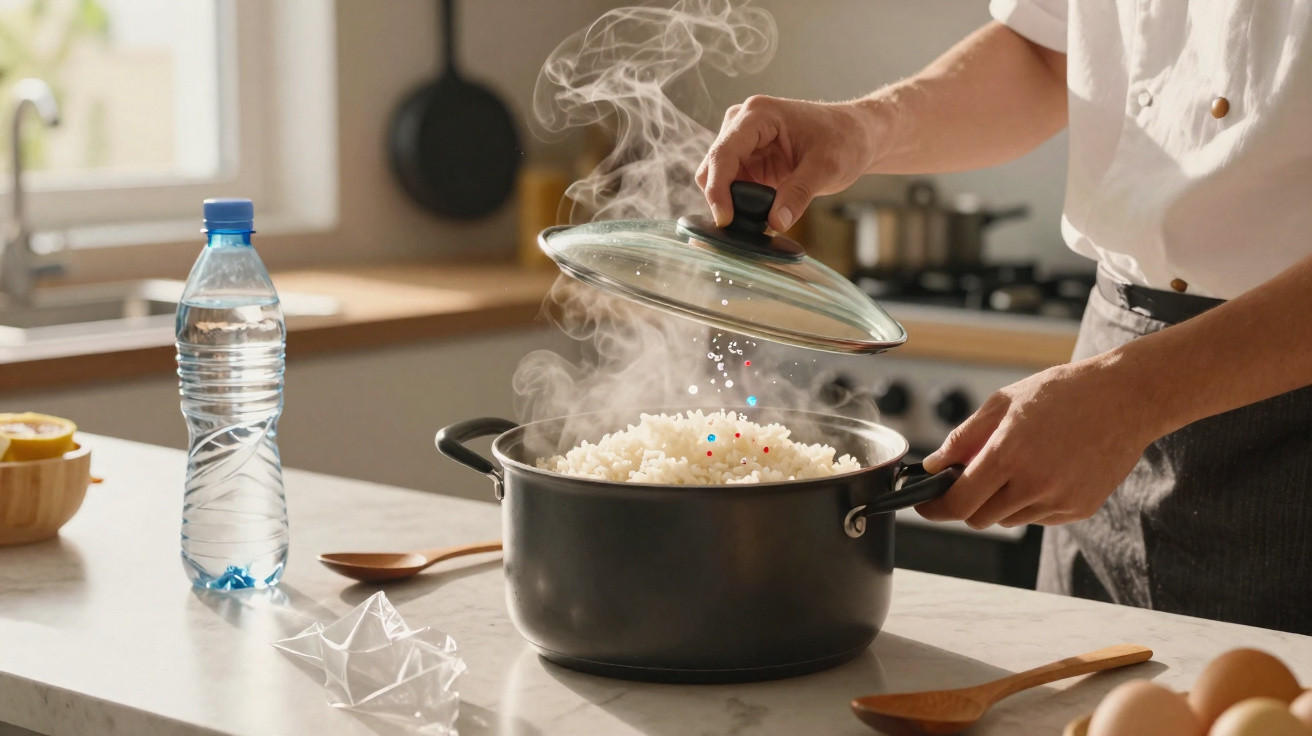
A Polish chemist is raising the alarm about a product many people rely on as an easy kitchen shortcut. Plastic boil-in-the-bag rice and grain pouches that go straight into boiling water may become a steady source of microplastics and other concerning chemicals. What sounds convenient day to day could, over time, carry consequences for both health and the environment.
Why popular boil-in-the-bag rice is under criticism
Boil-in-the-bag rice is often sold as the perfect option for anyone who cannot be bothered with weighing, timing, or draining. Drop the pouch in the pan, add water, and it is done-or so the promise goes. That is exactly where chemist Sylwia Panek, who reaches a large online community in Poland, directs her criticism.
"Cooking in a plastic bag always means: plastic is in contact with boiling water and food for minutes."
These pouches are usually made from more than one type of plastic, and at high temperatures they are not completely inert. With heat, vigorously boiling water, and friction from the rice grains, tiny particles can break away. Instead of ending up in the bin, they can end up on your plate.
Panek also highlights a practical point: portioned rice typically costs noticeably more-not because the rice is superior, but because you are paying for packaging and the “convenient” format.
Microplastics in food: how they form and why they matter
Microplastics are plastic fragments smaller than five millimetres-often so small you cannot see them. They can be created through abrasion and breakdown of packaging, and also when plastic is exposed to heat.
"Just because we cannot see the particles does not mean they are not in the food."
With boil-in-the-bag rice, several conditions come together that can increase release:
- high temperature (boiling water)
- direct contact between plastic and food
- long contact time (often 10–20 minutes)
- movement in the pan, which puts extra stress on the material
Studies indicate that plastic can shed far more tiny particles when heated. Those particles are then eaten and may accumulate in the body-exactly where and with which long-term effects is not yet fully understood, but the signals pointing to adverse impacts are growing.
Hidden chemicals in the pouch: Bisphenol A and plasticisers
The chemist’s concern does not stop at microplastics. Many plastics contain other substances that have been debated by experts for years-for example Bisphenol A (BPA) and a range of plasticisers such as phthalates.
When heated, these substances can migrate out of the material more easily. In the context of boil-in-the-bag rice, that means they can move into the cooking water and be absorbed by the grains.
"BPA and many plasticisers are suspected of affecting the hormone system and disrupting metabolism and fertility over the long term."
In the body, BPA can act in a similar way to the hormone oestrogen. Phthalates are used to make plastics more flexible, but they are also associated with hormonal disruption, developmental problems in children, and possible impacts on the liver and kidneys. If you regularly heat food in contact with plastic, you automatically increase your exposure to these kinds of substances.
The cumulative load: it is not only the rice pouch
One plate of rice will not make anyone ill overnight-Panek emphasises that point too. The issue arises from the total number of everyday sources.
Many people use several “convenience solutions” where heat and plastic meet:
- kettles with a plastic outer body or plastic internal parts
- reheating meals in the microwave in plastic containers
- ready meals in disposable trays
- takeaway coffee in plastic or mixed-material cups
- cling film, bags, and lids used during cooking or baking
Each situation can seem harmless on its own. Over weeks and years, however, this can add up to an ongoing extra burden that could be avoided. From the expert’s perspective, skipping boil-in-the-bag pouches is a simple, realistic adjustment for a kitchen “health check”.
How to cook rice perfectly without a plastic bag
Cooking rice without a pouch is straightforward. Many people have simply stopped doing it because the bag version has been marketed so heavily. In reality, you just need a standard saucepan and a couple of basics.
Classic absorption method for fluffy rice
The absorption method works particularly well for long-grain or parboiled rice:
- Rinse the rice in a sieve under cold water until the water runs almost clear.
- Measure the water: usually about double the amount of water relative to the rice (for example, 1 cup of rice to 2 cups of water).
- Add a pinch of salt and, if you like, a little oil or butter.
- Bring to the boil, then turn the heat right down, cover with a lid, and simmer gently for 10–15 minutes until the water is absorbed.
- Switch off the hob and let the rice stand, covered, for another 5 minutes, then fluff with a fork.
With a little practice, this method is reliable and produces loose, well-separated grains-without any plastic.
Cooking rice in plenty of water
If you are worried about rice sticking or catching, you can use the “pasta method” instead:
- Bring a large pan of water to the boil.
- Add rinsed rice and cook according to the pack instructions.
- Drain in a sieve, leave to steam dry briefly, and optionally pour over a little hot water.
This approach tends to be more forgiving, although the texture will be slightly different. It is often ideal for salads or stir-fries.
Why loose rice is usually the better choice
Beyond the chemical concerns, overall product quality often favours loose rice. Larger packs are frequently less heavily processed. The grain stays closer to its original state, which can have a positive effect on flavour and nutrients.
"If you skip the bags, you save money, reduce waste, and ease the body’s burden of avoidable plastic contact."
| Aspect | Boil-in-the-bag rice | Loose rice |
|---|---|---|
| Price per kilogram | usually higher because of packaging | often cheaper |
| Contact with plastic | direct contact in boiling water | only from storage packaging |
| Waste produced | single-use pouch plus outer pack | outer pack only |
| Control over doneness | fixed portion, limited flexibility | easy to adjust |
Practical tips for less plastic in the kitchen
If this warning has made you uneasy, you do not need to replace your entire kitchen overnight. A gradual approach, based on simple everyday choices, is usually more sensible:
- Choose loose rice, pasta, and grains where possible.
- Use glass, stainless steel, or enamel cookware when high temperatures are involved.
- Store leftovers in glass containers or ceramic dishes, and reheat them in the same.
- Decant coffee and tea into a stainless-steel travel mug more often instead of using disposable cups.
- Replace cling film where you can with beeswax wraps or lidded containers.
What matters is not one perfect change, but the combined effect of small swaps. Even moving from boil-in-the-bag pouches to loose rice noticeably reduces direct plastic-and-heat contact.
What microplastics could do in the body
Research into microplastics in humans is progressing rapidly. Scientists have already detected plastic particles in blood, in the lungs, and even in intestinal tissue. It is still not fully clear what long-term dose becomes critical, but several concerns are repeatedly raised:
- Microplastics may trigger inflammatory processes.
- Deposits in tissue could affect organ function over time.
- Microplastics can carry pollutants on their surface, which may then enter the body as well.
Because so many questions remain unanswered, specialists advise reducing exposure wherever there are straightforward alternatives. When it comes to cooking rice, avoiding plastic pouches clearly falls into that category.
Rice, health and enjoyment: combining both successfully
Rice remains a valuable staple: it provides complex carbohydrates, keeps you full for longer, and-depending on the variety-can also contribute minerals and fibre. If you choose wholegrain versions, you also add more B vitamins to the plate.
Healthy eating here does not mean giving up rice; it means paying attention to how you prepare it. With a bit of practice, saucepan-cooked rice can be just as dependable as the bag version-only without the aftertaste of plastic and chemicals. If you also reach for alternatives such as millet, buckwheat, or quinoa from time to time, you add variety and reduce your personal risk exposure where microplastics are concerned.
Comments
No comments yet. Be the first to comment!
Leave a Comment