
Rather than scrubbing in frustration or buying a replacement straight away, it’s worth trying a few straightforward household remedies first. With the right approach, even heavily soiled or burnt pots and pans can be cleaned without ruining the metal or the coating - and in most cases using items you already have in the kitchen cupboard.
Why pots and pans become unsightly so quickly
Heat, fat, starch and sugar are a problematic mix for any cookware surface. When something boils over, an oily film bakes on, or food residue sits in the pot for too long, you end up with stains and stubborn, stuck-on crusts. Many people then reach automatically for wire wool or harsh cleaners. The result is often scratched bases, damaged coatings and even more tedious washing-up next time.
"If you know the right household remedies, you save effort and money - and noticeably extend the lifespan of your cookware."
Instead of using brute force, it’s better to take advantage of simple chemical reactions and gentle abrasion in a controlled way. That’s exactly what bicarbonate of soda, vinegar and similar staples are good for.
Gentle everyday cleaning with bicarbonate of soda and washing-up liquid
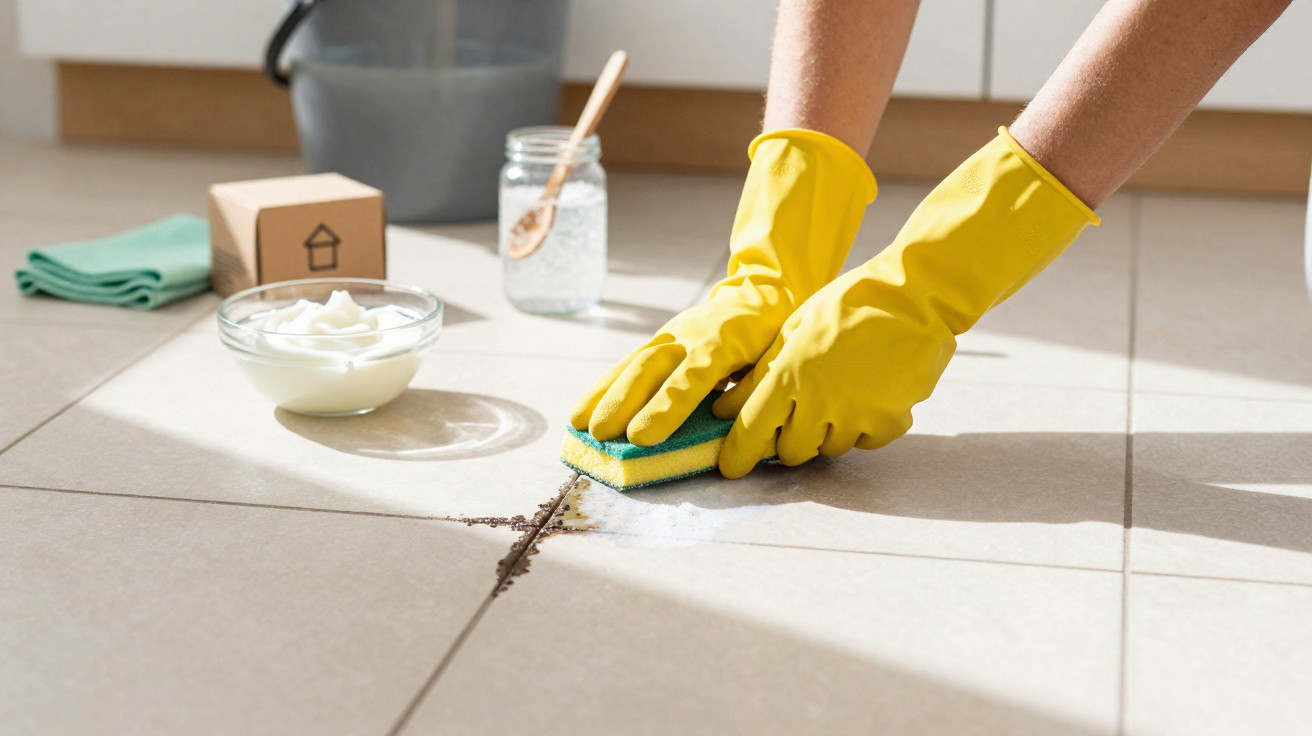
A reliable cleaning-cupboard classic is bicarbonate of soda (often sold as baking soda). Combined with ordinary washing-up liquid, it works like a mild cream cleaner.
How the bicarbonate-of-soda and washing-up liquid method works
- Put 1–2 tablespoons of bicarbonate of soda into a bowl.
- Add a little washing-up liquid until you get a thick paste.
- Apply the paste to the outside of the pot using a soft sponge or cloth.
- Rub with light circular movements - don’t press hard, to avoid scratches.
- Rinse thoroughly with warm water and dry well.
This mix lifts greasy films, grey heat haze and light discolouration without attacking the metal or coating aggressively. It’s particularly useful for stainless steel and for pot bases that often turn dark from the hob.
Restoring shine to dull cookware with clear white vinegar
Over time, many pots simply start to look “flat” or dull. That’s often down to limescale, baked-on grease and fine deposits that sit like a film over the surface. Clear white vinegar is ideal for loosening these.
Vinegar spray for a quick clean
A simple trick is to fill an empty spray bottle with clear white vinegar so you can coat the surface evenly:
- Spray the outside of the pot with vinegar (and for stainless steel, the inside too).
- Wipe with a soft cloth in horizontal strokes.
- Leave briefly to work, then wipe again.
- Rinse with water and polish dry with a microfibre cloth.
The microfibre cloth adds the final shine and reliably picks up remaining limescale and grease. Stainless steel pots, in particular, often look noticeably “fresher” afterwards and reflect light nicely again.
Saving burnt pots: bicarbonate of soda and vinegar together
It becomes genuinely stubborn when the base is black and nothing seems to shift. Instead of scraping, you can give the burnt residue a chemical “nudge”.
Step-by-step instructions for burnt bases
- Fill the pot with enough water to cover the burnt area.
- Add a splash of clear white vinegar (around a quarter of the water volume).
- Put it on the hob and bring to the boil.
- Reduce the heat, then add 1–2 tablespoons of bicarbonate of soda to the hot water.
- Wait for the foaming - the reaction helps loosen the residue.
- Take the pot off the heat and let it cool.
- Remove the loosened bits with a soft sponge.
"The combination of heat, acid and bicarbonate of soda breaks up the burnt layers - afterwards, light pressure with a sponge is usually enough."
Important: for non-stick pans, use only soft sponges. If the surface starts to feel rough or shows scratches, don’t continue with more aggressive tools.
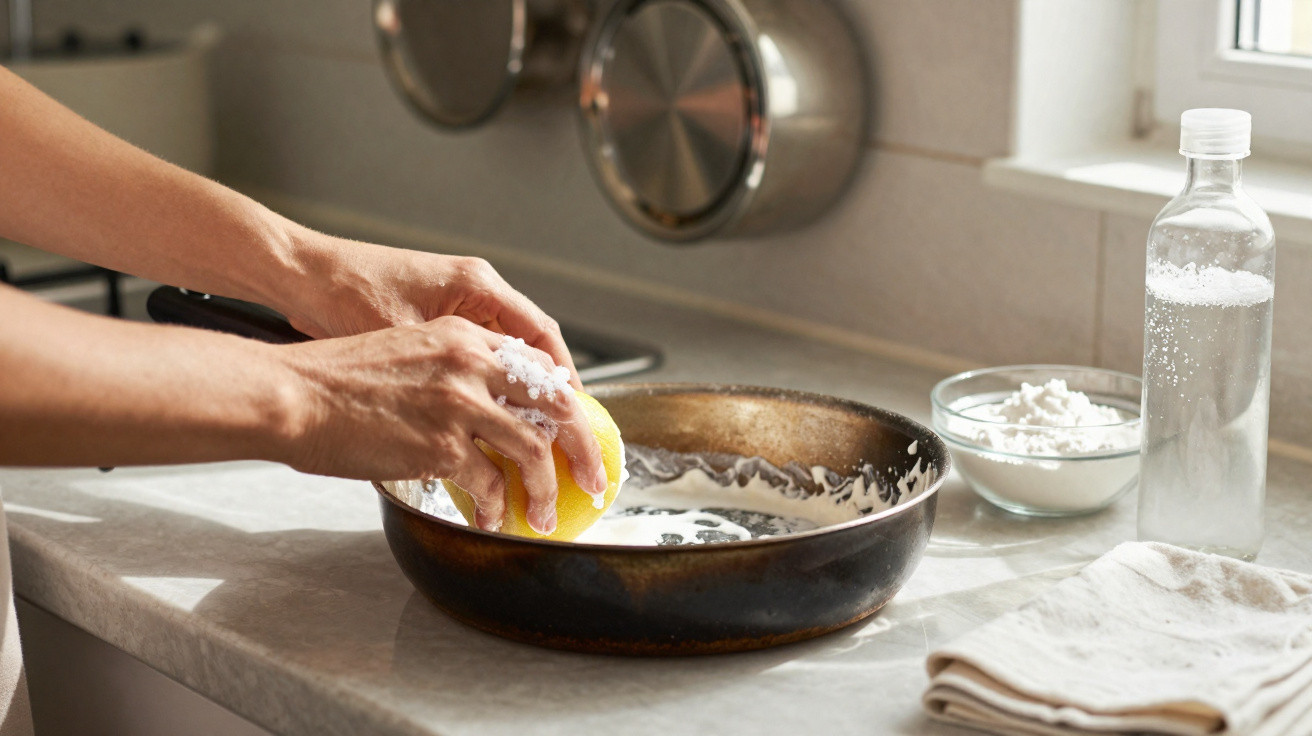
Alternative: bicarbonate of soda and lemon for a fresh shine
If you can’t stand the smell of vinegar, lemon is a good substitute. Its acidity works in a similar way, but leaves a cleaner, fresher scent in the kitchen.
Lemon as a natural ‘scrubbing sponge’
Here’s how to do it:
- Cut a lemon in half.
- Sprinkle bicarbonate of soda onto the cut side.
- Rub the lemon half directly over the dirty area.
- Leave for a few minutes.
- Rinse with water and buff with a cloth.
As you rub, the lemon juice and bicarbonate of soda form a paste that dissolves grease and polishes at the same time. This method is well suited to the inside and outside of uncoated pots, as well as light burnt marks.
How to keep pots and pans looking like new for longer
Treat your cookware well and you’ll avoid many heavy-cleaning sessions. A few simple habits make a real difference.
The most important care rules at a glance
| Problem | Simple prevention |
|---|---|
| Scratches on the base | Use only wooden or silicone utensils - no metal |
| Rust and spots | Always dry pots completely after washing |
| Scratches from stacking | Place a tea towel or kitchen paper between pots |
| Heavy discolouration | Don’t keep heat permanently at maximum; build up gradually |
For example, using metal turners on frying pans or heating them empty on high heat can damage even high-quality coatings. Wooden or silicone tools prevent these issues from the outset.
When household remedies reach their limits
With very old pots and pans, it pays to be realistic: if the coating is flaking, there are deep cracks, or the base is clearly warped, even the best cleaning method won’t fix it. In those cases, more scrubbing can do more harm than good.
Especially with non-stick pans, a damaged surface can make food stick more quickly or brown unevenly. Then replacement is often the more sensible choice - including from a health perspective.
Practical examples from everyday cooking
Burnt rice pudding can be dealt with effectively using the bicarbonate-of-soda and vinegar method, because the milk-sugar layer loosens from the base again when simmered in vinegar water. Baked-on oil from frying meat or vegetables, on the other hand, responds very well to the lemon-and-bicarbonate paste, as it gently lifts fat and protein residues.
If you regularly bake bread or cake directly in a pot or an ovenproof frying pan, avoid pouring cold liquid into the still-hot vessel after baking. The temperature shock can cause warping, which then affects heat distribution. It’s better to let it cool slightly first, then soak with warm water and a little washing-up liquid.
Risks many people underestimate
Wire wool, metal scourers and very gritty abrasives can look impressively fast, but they often tear tiny grooves into the surface. Food then gets trapped in these grooves during later cooking, making residue even harder to remove. Over time, washing up becomes more difficult - not easier.
Strong, pungent cleaners can also attack materials. Cast iron, non-stick pans and aluminium are more sensitive than solid stainless steel. Using mild household remedies here usually means you’ll enjoy your cookware for longer.
What’s actually happening with these household remedies
Bicarbonate of soda is mildly alkaline and is particularly good at breaking down fats and organic residue. Clear acetic acid (white vinegar) targets limescale and mineral deposits. When they meet, the fizzy reaction helps to mechanically “lift” build-up. Lemon works similarly to vinegar but is often more pleasant-smelling and adds an extra polishing effect.
If you understand these basic principles, you can tackle many kitchen cleaning problems more precisely and reach for expensive specialist products far less often. That way, pots and pans don’t just stay clean - they can look almost like they did on day one, without hours of scrubbing.


Comments
No comments yet. Be the first to comment!
Leave a Comment