
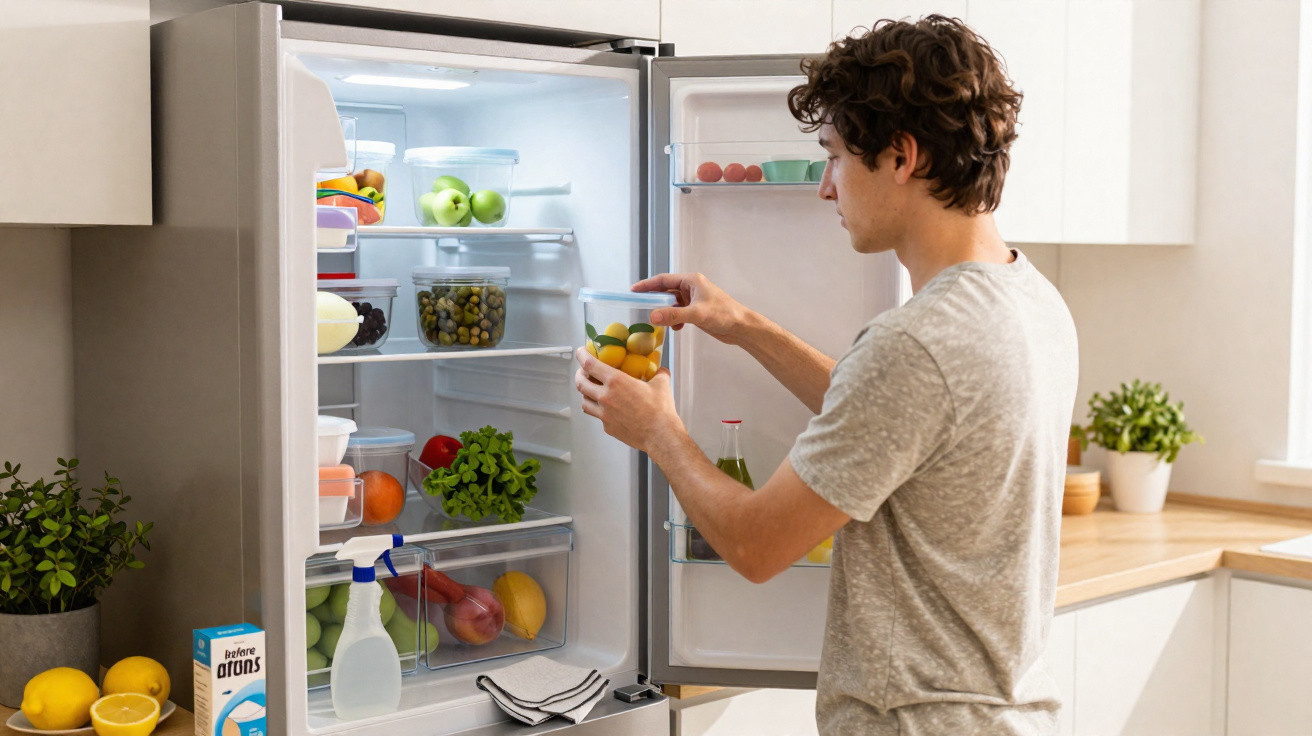
The smell reaches you before the door is even halfway open.
It’s a jumble of last night’s leftovers, something faintly sour you can’t identify, and that unmistakable “old fridge” undertone that makes you shut it again faster than you meant to. The shelves are packed, yet you can barely see what’s there. A jar of pickles from last year is tucked behind a limp bag of salad, and somewhere in the clutter, food you paid for is quietly spoiling. The fridge is meant to be the kitchen’s cool, calm control centre. Instead, it’s more like a drawer where things get forgotten. And without really thinking about it, this is where we decide how well we eat, how much we waste… and what our home smells like every time we open the fridge door. The good news: there’s a way to reset it all - and it’s surprisingly freeing.
Why your fridge smells and never seems to have enough space
You open the door, nudge a jar aside, balance a yoghurt on top of something else, and promise yourself you’ll “sort it out soon”. Then the days roll on. The yoghurt oozes a little. The cucumber at the back turns to mushy liquid. The cold masks the worst of it… until it can’t. Fridge odours don’t appear overnight. They creep in gradually, like a slow story you never asked to read.
Most of us know that awkward moment when a guest opens the fridge to grab a drink - and you silently pray they won’t mention the smell. Food waste begins in the same spot. Various household surveys suggest the average family throws away kilos of food each month, often because it was “lost in the fridge” or found too late. A neglected chunk of cheese wrapped in paper. Half an onion in a dry plastic tub. A pot of cream that expired without anyone noticing three weeks ago.
Those smells come from bacteria, mould, and the tiny spills that work their way into corners. When the fridge is crammed full, air can’t move properly, so you end up with colder patches and warmer pockets - ideal conditions for food to spoil. A poorly arranged shelf becomes a blind spot, and blind spots become odours. The more we stack, the less we can see. And the less we see, the more we waste. A smelly, overfilled fridge isn’t only unpleasant - it’s a snapshot of our habits, routines, and everyday little lapses.
Proven methods to deep clean and reset your refrigerator
A proper deep clean starts before you touch a sponge. About an hour beforehand, turn the temperature down slightly so everything stays safely chilled while you work. Then switch off or unplug the fridge, open the door wide, and take a moment to really inspect the inside: the shelves, drawers, door bins, rubber seals, the light cover, and every small ridge where crumbs and sticky drips love to settle.
Take everything out one item at a time and line it up on the worktop. Make one area for what’s clearly fresh, one for “not sure”, and one for obvious rubbish. Let’s be honest: nobody does this daily. But during a deep clean, this sorting step is your biggest help. As you empty the fridge, wipe down jars and bottles with a damp cloth so you’re not putting grime straight back in. If anything is crusted on or leaking, rinse it under warm water as you would a dirty mug.
Now for the real reset. Lift out shelves and drawers and wash them in the sink using warm water and mild washing-up liquid. For the interior surfaces, combine equal parts warm water and white vinegar, then add 1 tablespoon of bicarbonate of soda for each litre of liquid. This mild mix cuts through grease, neutralises odours, and doesn’t leave a chemical scent that can cling to food. Clean from top to bottom so drips don’t fall onto areas you’ve already finished. If a stain won’t shift, lay a damp cloth over it for a few minutes instead of scrubbing furiously. You’re doing more than cleaning - you’re removing months of quiet build-up.
Odour removal and smart storage: going beyond a quick wipe
Once everything is dry, you can deal with lingering smells in a way that actually lasts. Put an open box of bicarbonate of soda on a central shelf; it will absorb odours for roughly three months. For a stronger reset, place a shallow bowl of coffee grounds or activated charcoal inside overnight, door shut, with an empty fridge - like a simple detox ritual for the appliance.
Odour also clings to the rubber door seal. Ease it open gently and wipe inside the folds with the same vinegar solution, then dry it with a clean cloth. This little strip is a haven for crumbs and sticky juice. If mould has started, a cotton bud dipped in vinegar can reach the narrow grooves. Many people ignore the seal for years and then wonder why the fridge smells sour even when the shelves look spotless. The gasket is like the margin of a notebook: easy to overlook, but it collects everything.
Then comes storage. The coldest area is often the back of the bottom shelf near the vent - that’s the best place for raw meat or fish, kept in a leak-proof tray. The door is the warmest part, so eggs and milk stored there tend to go off sooner than they would on a middle shelf. Use clear containers for a “snack zone”, “leftovers”, and “ready-to-cook veg”, and write dates on them with a marker. An almost-empty jar? Merge it with the new one rather than keeping two half-forgotten stragglers. You’ll suddenly find space where there used to be nothing but clutter.
“A clean, well-organized fridge is less about being perfect and more about giving yourself a daily nudge towards eating what you already have,” explains a nutrition coach who spends half her time in people’s kitchens, watching how they really live.
- Wipe up small spills as soon as you spot them, even if you’re in a rush.
- Store food in groups: dairy together, sauces together, cooked meals on one shelf.
- Keep a single “eat first” box for anything close to its date.
- Write the date directly on leftovers with a marker - no mental maths required.
- Do a 60-second “fridge check” before you write your shopping list.
A fridge that smells fresh and finally works with you
Once the deep clean is finished, there’s a brief, quiet moment. The fridge hums gently, the shelves look bright again, and everything has a home instead of being shoved wherever it lands. You open the door and all you feel is cool air - not that faint, stale whiff of regret. It’s strangely similar to clearing your mind.
From that point, it isn’t about perfection; it’s about small actions you can repeat. A quick weekly look into the “eat first” box. A two-minute wipe when a jar leaks. Choosing to keep fewer sauces and condiments open at once. These tiny habits stop mystery odours and forgotten leftovers from slowly creeping back in.
Some people notice that an organised fridge changes the way they cook. You spot vegetables before they wilt away. You notice the yoghurt that can still become a sauce tonight. Meals start with, “What have I already got that I don’t want to waste?” rather than, “What do I feel like ordering?”. That shift - inside an ordinary white box in the corner of the kitchen - affects your budget, your health, and how you feel when you open the door after a long day. A deep clean isn’t only about shiny plastic and cold air. It’s about taking back a space you open dozens of times a day, often without realising how much it shapes you.
| Key point | Details | Why it matters to readers |
|---|---|---|
| Use a vinegar and baking soda solution for deep cleaning | Mix 240 ml of white vinegar, 240 ml of warm water, and 15 ml (1 tablespoon) of bicarbonate of soda. Wipe all interior surfaces, then dry with a soft cloth so moisture doesn’t sit in corners. | This combo neutralises odours, cuts grease, and avoids strong chemical smells that can transfer to food, while costing a fraction of shop-bought cleaners. |
| Assign a specific “eat first” zone | Set aside one clear container or a full shelf section for food close to its date: half-cut veg, open cheese, the last slices of ham, leftover pasta. | It turns “forgotten items” into visible priorities, reducing food waste and helping you plan quick meals around what needs eating soon. |
| Adjust storage by temperature zones | Put raw meat on the coldest lower shelf, dairy in the middle, ready-to-eat items at eye level, sauces in the door, and delicate herbs in a ventilated box. | Keeping foods where they last longest means fewer bad smells, fewer surprises at the back, and better use of every centimetre of space. |
FAQ
- How often should I deep clean my refrigerator? For most households, a full deep clean every three months works well, with a quick 5-minute wipe and check once a week. Large families or people who cook a lot might need a deeper reset every six to eight weeks.
- What’s the safest way to remove strong odors like fish or onion? Start with a thorough wash using a vinegar-water solution, then leave a bowl of baking soda or coffee grounds inside overnight. If the smell persists, repeat once and pay special attention to seams, door seals, and under drawers where juices may have dripped.
- Can I use bleach to clean the inside of my fridge? A very diluted bleach solution can be used for visible mold, but it needs careful rinsing and airing out afterward. For regular cleaning, mild soap, vinegar, and baking soda are usually enough and less harsh around food.
- How do I stop my fridge from getting overcrowded again? Before each grocery trip, spend one minute checking what you already have and tossing anything truly gone. Keep a mental cap on how many condiments or open sauces you allow at once so shelves don’t slowly fill with duplicates.
- Is it okay to store hot food directly in the fridge? Let hot dishes cool on the counter for about 20–30 minutes, then cover and refrigerate. Putting very hot food straight in raises the internal temperature, which can encourage bacterial growth and strain the motor.


Comments
No comments yet. Be the first to comment!
Leave a Comment