
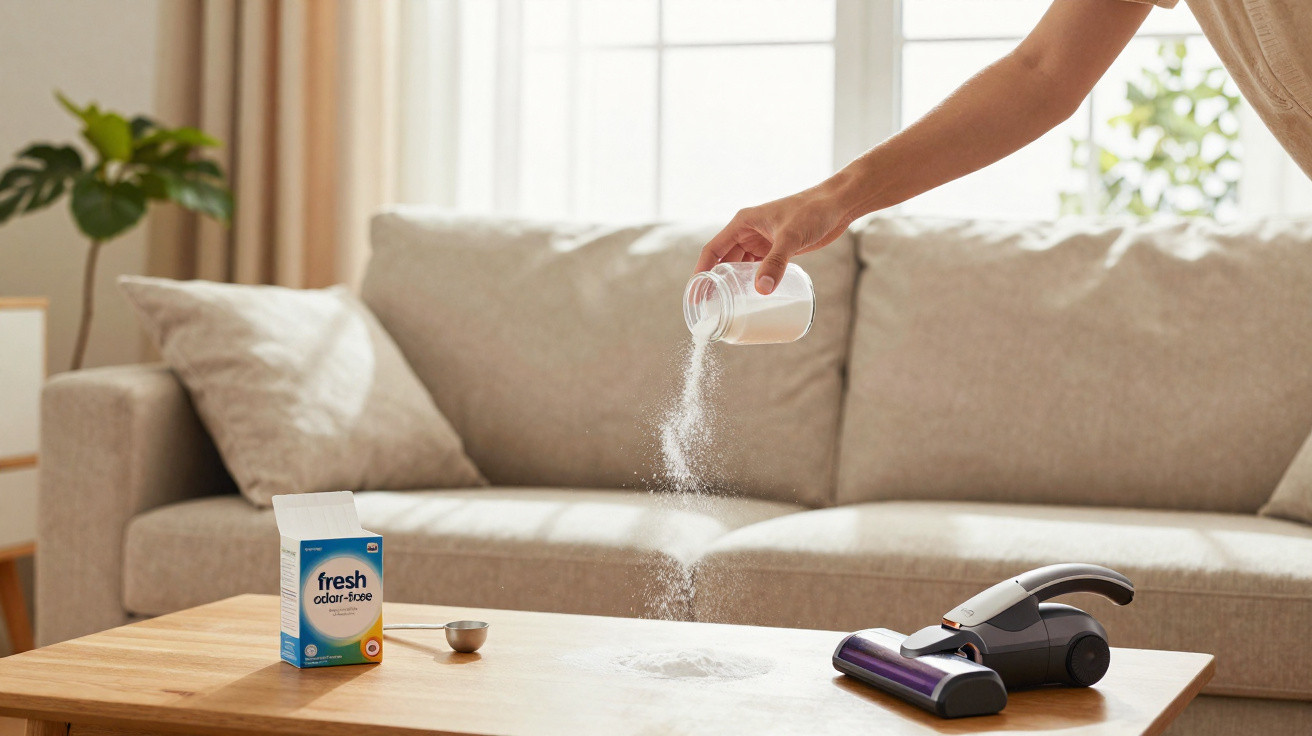
A hidden odour trap is usually right beneath us - in the sofa.
Between box-set nights, raclette get-togethers and working from home, sofa cushions soak up every waft of smell like a sponge. Many people reach for fragranced sprays and then wonder why the stale pong returns so quickly. A simple cupboard staple can deal with the problem far more thoroughly, without resorting to harsh chemicals.
Why your sofa starts to smell faster than you’d like
The living room is often the cosiest spot in the home - and that’s exactly why everyday smells end up there. Upholstery fabrics act like a filter, holding on to whatever drifts through the air.
Typical winter odour sources:
- strong cooking smells from bakes, stews or raclette
- damp fur from a dog or cat after a walk
- tobacco smoke that settles deep into the fibres
- heated indoor air that dries the room out and makes airing it feel less appealing
Chunkier fabrics such as corduroy, velour or coarsely woven cotton are especially prone. They trap dust, moisture and sweat. Over time, that creates the familiar “musty living-room” feeling that you often stop noticing yourself - while visitors pick it up immediately.
"Upholstery absorbs smells faster than you think - and is reluctant to let them go again."
Why fragranced sprays usually make things worse
A quick blast of room spray can seem like the easiest fix: one spritz and everything smells like “mountain freshness” or “spring meadow”. The problem is, the source of the odour remains in the fabric.
In many cases, fragranced sprays only do the following:
- they mask bad smells rather than removing them
- they add extra substances to the air in the room
- they can irritate your nose and contribute to headaches
In well-insulated homes, these substances can linger. If you’re sensitive, you may notice irritated airways or dry eyes. More effective are approaches that actually bind odour molecules and lift them out of the upholstery.
The underrated powder in your kitchen cupboard
This is where a classic household staple comes in: bicarbonate of soda, also known as baking soda. This white powder is inexpensive, non-toxic and fully biodegradable.
What makes it so effective:
- it neutralises odour molecules instead of simply covering them up
- it absorbs moisture, which can intensify unpleasant smells
- it doesn’t attack fabric fibres
- it doesn’t leave sticky residue behind
"Bicarbonate of soda works like an odour-absorbing sponge: it takes in the smelly particles and then simply disappears into the hoover."
Three steps, half an hour: how to make your sofa smell fresh again
You don’t need professional kit for this dry-clean method. It works on most fabric sofas, whether old or new.
What you’ll need
- 200–300 grams of bicarbonate of soda
- a fine kitchen sieve or tea strainer
- optional: a soft brush or clean hand brush
- a vacuum cleaner with an upholstery attachment
Step 1: Sprinkle the sofa generously
Shake the powder through the sieve like a light “snow” over the entire sofa. Don’t be stingy: the seat, back, armrests and the gaps between cushions should all be well covered.
For thicker fabrics or stubborn smelly patches, it helps to gently work it in with a soft brush or your hand. That pushes the bicarbonate of soda deeper into the fibres - exactly where most odours are hiding.
Step 2: Leave it to work - and don’t touch
Now leave the powder in place for at least 15 to 30 minutes. During this time it can:
- draw residual moisture out of the fabric
- bind odour molecules
- lightly “freshen” the surface
The longer you leave it, the more thorough the result. If the sofa smells strongly, leaving it overnight can be worthwhile. Important: while it’s working, no one should sit on the sofa and pets shouldn’t clamber over it.
Ideally, crack a window open briefly during the waiting time. That helps shift some of the stale air at the same time.
Step 3: Vacuum thoroughly
After the pause, it’s time for the vacuum. Use the upholstery tool and go slowly, section by section:
- go over each area at least two to three times
- vacuum seams, crevices and edges carefully
- on textured fabrics, change direction to pick up any remaining powder
"With the powder, you’re not only removing odours, but also dust and some mites at the same time."
The sofa is ready to use straight away - there’s no drying time because nothing has been made wet.
Where else it works: from carpets to the core of your mattress
Once you’ve seen how quickly bicarbonate of soda perks up a sofa, you’ll usually want to use it elsewhere too. The powder is suitable for many textiles that aren’t practical to put in the washing machine.
Typical uses:
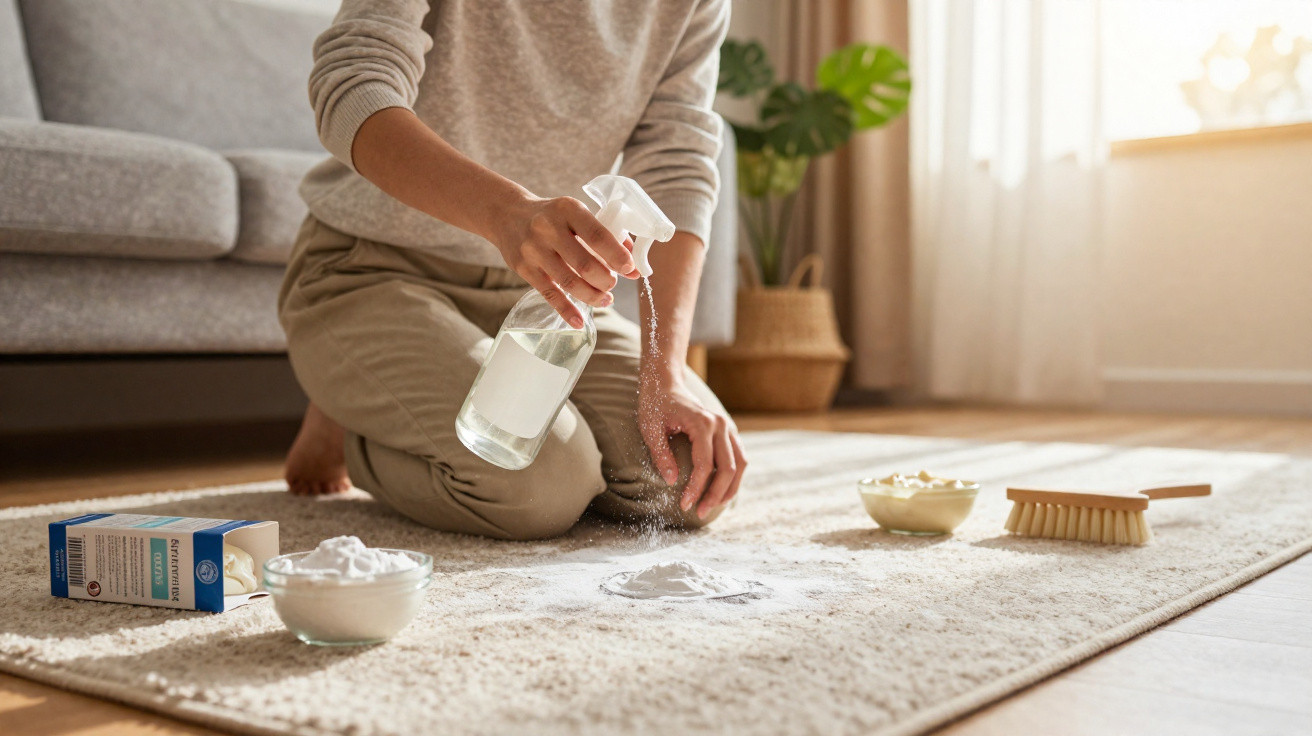
- Carpets: sprinkle generously, leave to work, then vacuum - ideal in homes with pets
- Mattresses: improves the bed’s feel and helps bind sweat odours
- Decorative cushions and upholstered headboards: often overlooked sources of odour, especially in bedrooms
- Fabric car seats: useful against food smells, smoke or dog odour
Important: if you’re unsure about a fabric, do a quick test on an inconspicuous area first - particularly with very delicate or specialist upholstery.
How often makes sense - and when to stop
To prevent smells becoming deeply embedded, it helps to stick to a routine. For most households, these intervals are realistic:
- Sofa: every two to three months
- Mattress: two to three times a year
- Carpets in high-traffic areas: every one to two months
If you have lots of pets, frequent visitors or smokers in the home, you can shorten the gap. However, you shouldn’t do this daily or weekly, as it puts unnecessary strain on the fabrics.
The method has limits when stains or discolouration are involved. Bicarbonate of soda is an odour specialist, not a universal stain remover. Spills or greasy marks need extra treatment, ideally following the manufacturer’s care instructions.
Risks, small pitfalls and how to avoid them
Bicarbonate of soda is generally very gentle, but a few points are still worth bearing in mind:
- for dark, very delicate fabrics, try a small test patch first
- don’t sprinkle it onto wet or damp upholstery, otherwise it can clump
- keep children and pets away during the waiting time
- don’t mix it with vinegar directly on the sofa - that’s better suited to other cleaning tasks
If you’re highly allergic to dust, it’s sensible to wear a light mask while vacuuming. The vacuum can briefly stir particles up before they’re finally trapped in the bag.
How to boost the effect with simple habits
The powder works best when it’s supported by a few everyday routines. Useful add-ons:
- air the room briefly each day, even in winter
- use throws or covers on heavily used sofas and wash them regularly
- after cooking - especially roasts or melted cheese - air the living room deliberately
- towel pets off roughly before they jump onto the sofa
These small steps make the bicarbonate of soda treatment last noticeably longer. After a few weeks, many people find the air in the room feels clearer overall - without constant use of fragranced sprays.
Bicarbonate of soda shows that well-kept upholstery doesn’t require lots of tech or pricey specialist products. If you set aside half an hour and scatter a few spoonfuls of powder, you can bring a fresher feel straight back into the living room - noticeably, and without a perfumed chemical haze.
Comments
No comments yet. Be the first to comment!
Leave a Comment