
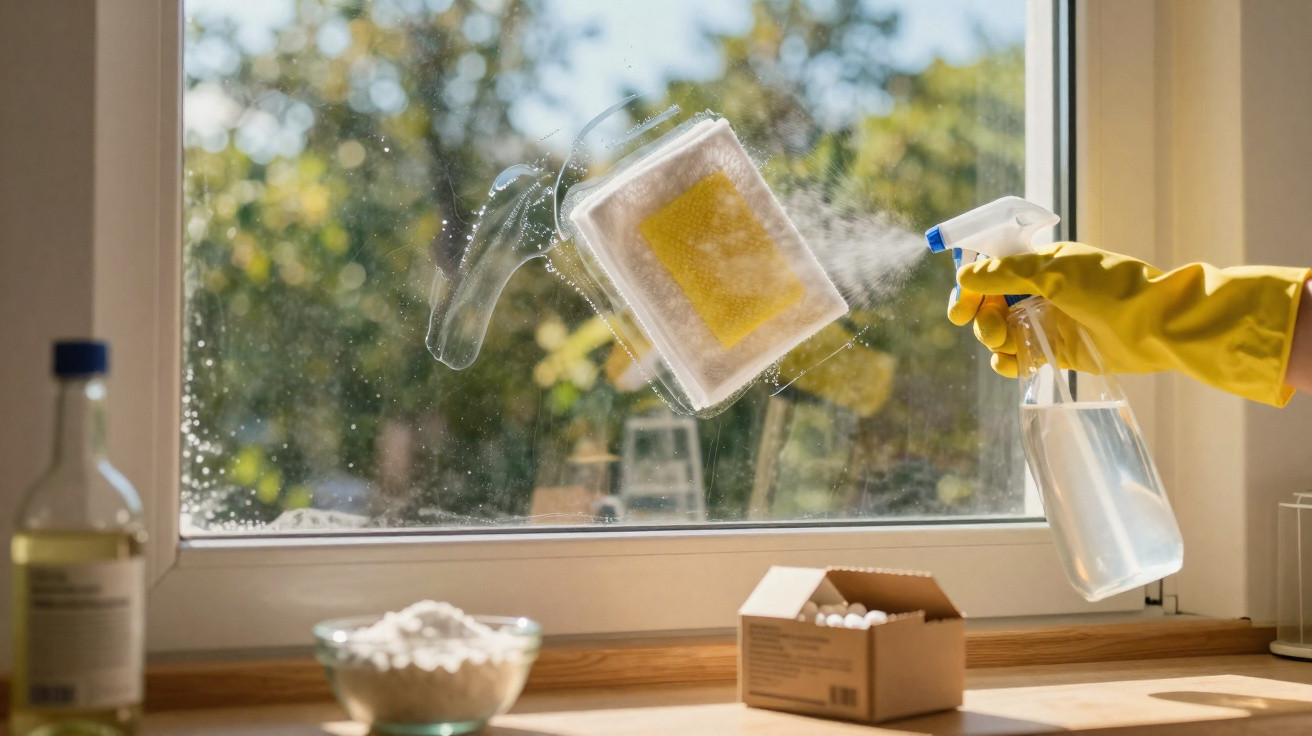
In plenty of homes, a blend of water and household vinegar is treated as a miracle fix for streaky glass. Then bright sunlight hits the pane and the disappointment shows up: pale smears, a dull grey haze, and that lingering sharp smell. Yet an unassuming kitchen powder can deal with the issue almost spectacularly - without eye-watering fumes.
Why the vinegar classic so often disappoints
The same suggestion has been circulating for years across social media, advice forums and cleaning blogs: mix a splash of household vinegar with water, pour it into a spray bottle, and you have a supposed magic cleaner for glass. In practice, many people run into the same complaints:
- obvious streaks the moment the sun shines on the glass
- dull, matt-looking surfaces instead of a clear view
- a very strong odour that hangs around indoors
One key reason is how quickly a water-and-vinegar mix evaporates over large areas. On wide windows, mirrored bathroom cabinets or glass shower screens, it can leave behind a fine film that barely shows in shade but becomes unforgivingly visible in direct light. If you keep wiping, you often just move the residue around rather than removing it.
"Neat or heavily diluted vinegar water can form a fine, dull film on glass that shows up as streaks and halos."
On top of that, vinegar has a biting note. In small rooms with poor ventilation, many find it hard to tolerate. Rather than scrubbing more aggressively or mixing in additional products, it is worth turning to an everyday ingredient that works with almost no smell - and tackles exactly where vinegar falls short.
The unassuming powder that changes everything
The ingredient is cornflour made from maize, the familiar cupboard staple usually sold under well-known brands. It is normally used to thicken sauces, custards or soups - but on glass it comes into its own in a completely different way.
Tiny starch particles alter the surface tension of the liquid. A mixture of water and alcohol spreads more evenly, the layer sits thinner, and it is less prone to forming droplets. At the same time, the starch binds minute traces of grime and grease that would otherwise dry into a hazy veil.
"Cornflour acts like a mini-magnet for dirt particles - it lifts them away instead of spreading them across the pane."
A US blogger who had wrestled with vinegar experiments for a long time describes her turning point like this: only the combination of alcohol, water and cornflour finally gave her truly streak-free glass. The alcohol sanitises and breaks down light greasy films, the water dilutes, and the starch delivers the clean, dry finish.
Recipe: how to mix a streak-free glass spray
For a practical everyday glass cleaner that fits a standard spray bottle, you only need a straightforward base mix. The ingredients are usually already in the kitchen or easy to pick up in the household aisle:
- 250 millilitres water (ideally lukewarm or at room temperature)
- 250 millilitres household alcohol or alcohol at around 70%
- 1 level tablespoon cornflour (maize starch)
Pour the water into a clean bottle first, add the alcohol, then tip in the cornflour. Seal the bottle and shake vigorously until there are no visible lumps drifting around.
You end up with a glass cleaner that is almost odourless, which is particularly useful in living rooms, bedrooms or bathrooms. If you want a hint of freshness, add one or two drops of essential oil (for example lemon) - no more, or you risk residue again.
Application: how to clean windows, mirrors and shower screens properly
To get the best out of the spray, technique matters. The most important rule is to shake hard before every use so the cornflour disperses through the liquid again instead of settling at the bottom.
Cleaning windows in a few steps
- Shake the bottle until the liquid looks slightly milky.
- Spray only a small amount onto the glass - less really is more here.
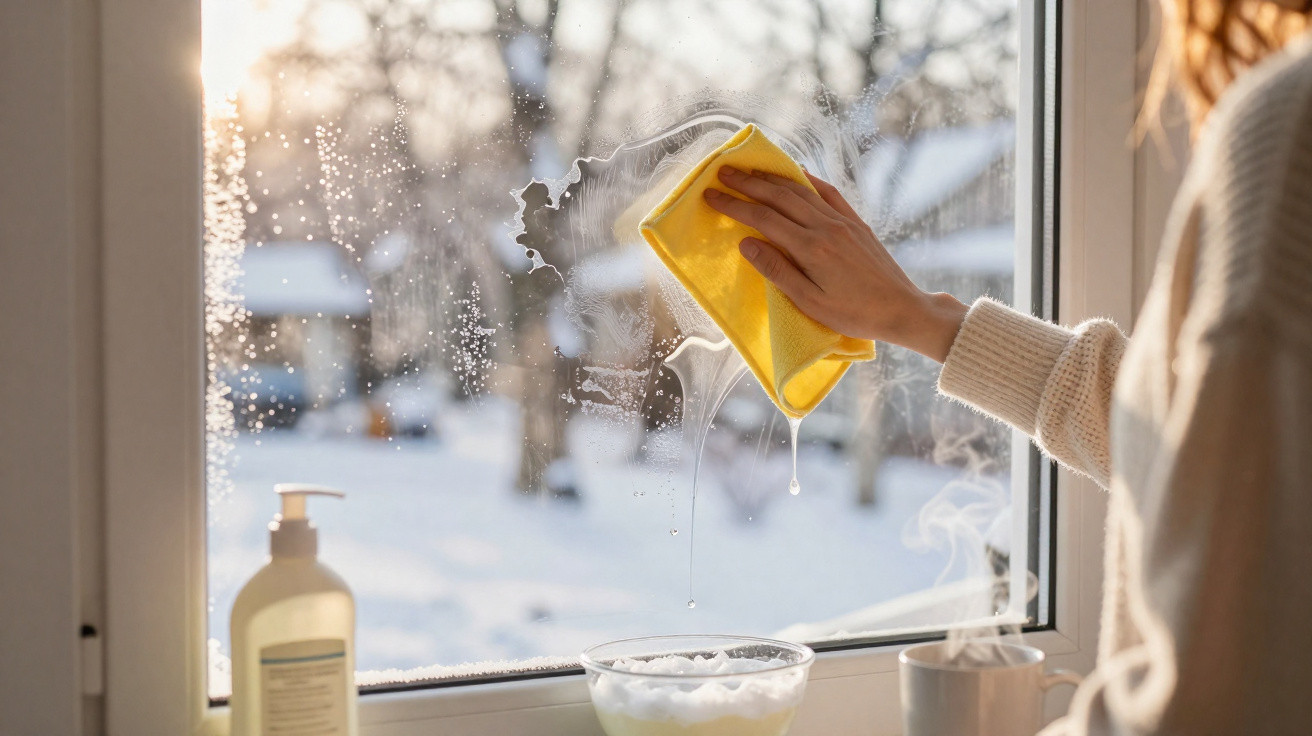
- Spread immediately with a clean microfibre cloth, without waiting.
- Work in sections, ideally from top to bottom.
- Use a dry side of the cloth, or a second cloth, for the final buff.
If you clean in strong midday sun, the cleaner can evaporate too quickly. Early morning or later in the afternoon is much more forgiving, and the risk of streaking drops noticeably.
Keeping mirrors and the glass shower under control
The cornflour spray is not just for windows. Hall mirrors, bathroom vanity mirrors and glass shower panels benefit just as much from the gentle formula. Limescale marks will not vanish completely without some preparation, but after a brief pre-clean they can be polished off very reliably.
For glass near the hob where greasy splashes build up, the standard mix may occasionally fall short. In that case, a small boost of household vinegar helps:
- the same base mix as above
- plus 1–2 tablespoons of vinegar added to the finished mixture
Important: the cornflour remains the star of the recipe. The vinegar is only there to reinforce performance on greasy films, not to return as the main ingredient.
Shelf life, risks and common mistakes
Like any homemade cleaning solution, this mix does not keep indefinitely. Cornflour can clump over time or settle into a thicker layer at the bottom of the bottle. When that happens, it no longer distributes properly and performance drops.
It makes sense to mix only a smaller batch - roughly half a bottle - and use it within a few weeks. If the liquid noticeably thickens, it belongs down the sink, not on your windows.
Two mistakes in particular are worth avoiding:
- too much cornflour: it makes the spray tacky and brings streaks back
- too much product on the glass: excess dries unevenly and leaves edges
"The best mixture works quietly: it barely smells, dries quickly and leaves the glass looking as if it has just been fitted."
Why cornflour has a physical advantage
From a scientific point of view, the difference lies in how liquids behave on smooth surfaces. Plain water tends to bead into droplets. Alcohol evaporates very quickly. Vinegar changes the pH, but it only has limited effect on how evenly the film spreads.
The starch particles act like tiny spacers. They help prevent larger droplets from forming and support a thin, continuous layer that dries more uniformly. At the same time, the particles pick up tiny specks of dust and dirt that would otherwise scatter light and show up as a grey haze.
Practical add-ons for everyday use
If you use the cornflour spray regularly, you may find your routine shifts. Many users report that they need to deep-clean windows less often because less dust seems to cling to the smoother, clearer surface. A quick refresh with a small amount of product and a clean cloth is often enough.
It can also suit households with children or pets. The alcohol evaporates quickly, most ingredients are food-adjacent, and there are no aggressive fragrances. Even so, the usual caution applies: store the bottle out of reach of children and never leave it where toddlers can access it.
If you already have pricey specialist cleaners at home, you can still pair them with the cornflour spray - for instance, as a finishing step after a heavier initial clean. The first pass deals with stubborn dirt; the second, using the starch mix, provides the clear, low-streak result.
That turns a simple kitchen powder into a credible rival to many supermarket glass cleaners - far quieter on the nose, cheaper to make, and with an effect that is especially obvious when the sun is blazing straight through the window.



Comments
No comments yet. Be the first to comment!
Leave a Comment