
When you cook, you end up with leftovers. And all too often, the most interesting bits go straight into the bin. That is exactly where a quiet kitchen revolution begins-one that is practical, enjoyable, and genuinely works.
Why baking parchment is not the only option
Baking parchment is undeniably handy. Yet it is almost always coated, turns greasy after baking, and belongs in the general waste bin. Each sheet is a single-use item, which means more raw materials, more energy, and-ultimately-more disposal. In many homes it lands in the shopping trolley out of habit, even though there are simple, edible alternatives.
"Edible lining instead of single-use: leaves and skins from the veg drawer can replace baking parchment-aromatic, heat-resistant, compostable."
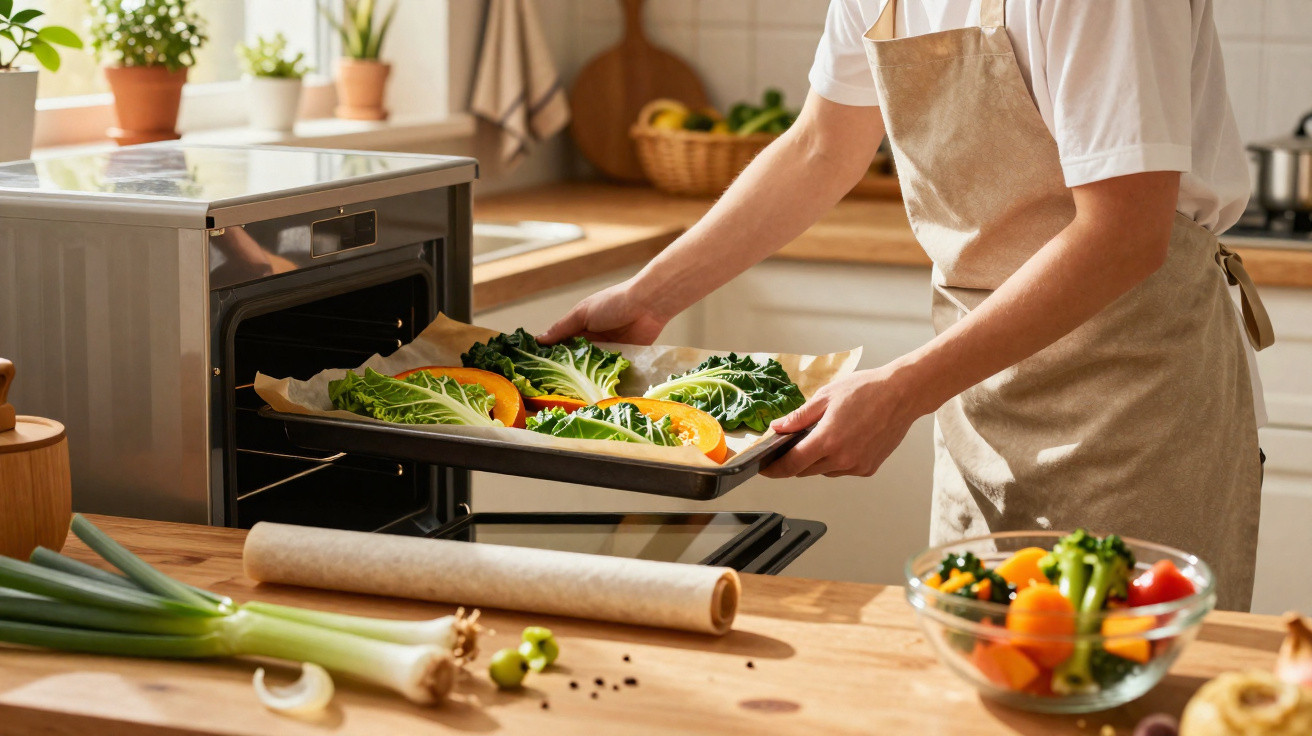
The timing could not be better. Right now, leeks, pumpkins and all sorts of cabbages are everywhere. Their sturdy outer layers can cope with oven heat, add a subtle flavour, and stop food sticking. The finish looks rustic yet modern-and it cuts waste at the same time.
Leaves instead of paper: what works in the oven
Leek leaves, pumpkin skins, cabbage: three candidates with surprising talents
With a brief blanch, leek leaves behave almost like a flexible fabric. They line tins, help support tarts, and add a gentle green note. Pumpkin skins create a natural protective layer. They suit cakes, breads and bakes that cook at moderate heat. Cabbage leaves (white cabbage, savoy, pointed cabbage) are tough, easy to handle, and excellent for gratins, lasagne-style dishes or savoury cakes.
- Leek leaves: delicately savoury, highly pliable, great for round and square tins.
- Pumpkin skins from Hokkaido or butternut: slightly sweet, sturdy, and a warm orange colour.
- Cabbage leaves: robust, help manage moisture, add structure and bite.
The flavours stay understated. They do not overpower; they simply round things out. If you want an even more neutral result, brush the leaves lightly with oil, which also helps prevent drying.
How to make the leaves pliable
The key is blanching. It softens the fibres and makes them elastic without turning them mushy. Afterwards, the leaves can be folded, overlapped and pressed smooth.
"Quick guide: blanch in boiling water for 10–30 seconds, plunge into ice-cold water, pat dry. Ready for the oven."
Step by step: the "plant baking mat"
- Wash the vegetables thoroughly, removing soil, sand and any waxy residue.
- Choose large leaves. For cabbage, trim thick central ribs flatter so they sit neatly.
- Blanch, cool quickly in cold water, then dry. If needed, briefly steam pumpkin skins.
- Lightly grease the tin. Lay the leaves in with overlaps, letting the edges overhang.
- Add the batter or mixture. Bake at 170–200 °C. After 15 minutes, check the overhanging edges and, if necessary, brush them with a little oil.
- Let it rest briefly after baking. Lift using the leaf lining and turn out, or serve directly.
The leaves act like a natural buffer: they reduce sticking, absorb a little moisture, and make releasing from the tin easier. They work for both sweet and savoury bakes, provided you keep to moderate oven temperatures.
Temperatures, moisture, hygiene
These "plant mats" are happiest between 160 and 200 °C. Above 220 °C, the edges can darken; a light film of oil helps. Moist fillings tend to do better with cabbage leaves, while drier doughs are often better with leek. Hygiene matters: wash well, dry thoroughly, and use only fresh, undamaged leaves.
Which recipes work especially well
Tarts, quiches, crustless cheesecakes, polenta bakes, breads with wetter dough, vegetable gratins-many dishes succeed straight away. Even brownies can work, as long as the edges are not sitting directly under intense top heat. Sweet mixtures pair particularly well with Hokkaido skins, while savoury bakes suit leek and cabbage.
Everyday recipe idea
Autumn tart with Hokkaido, goat’s cheese and leek leaves
- 1 roll of puff pastry
- 4 large outer leek leaves
- 350 g Hokkaido pumpkin, thinly sliced
- 120 g soft goat’s cheese
- 2 eggs, 120 ml double cream
- 1 tbsp olive oil, salt, pepper, nutmeg
- 1 handful toasted pumpkin seeds
Blanch the leaves, cool in cold water, and pat dry. Grease a springform tin and line it with the leek leaves. Lay in the puff pastry. Spread over the Hokkaido slices. Whisk together eggs, cream and cheese, season, and pour over. Drizzle with oil and bake at 185 °C for about 35–40 minutes. Sprinkle with seeds. It slices well while warm and releases cleanly from the tin.
Comparison of alternative "leaves"
| Plant part | Preparation | Oven suitability | Suitable dishes | Notes |
|---|---|---|---|---|
| Leek leaves | Blanch 20 seconds, dry | 160–200 °C | Tarts, quiche, cheesecake | Very flexible, mild flavour |
| Pumpkin skins (Hokkaido/butternut) | Briefly steam or lightly oil | 170–200 °C | Cakes, breads, bakes | Slightly sweet, robust |
| Cabbage leaves (savoy/white cabbage) | Blanch 30 seconds, trim ribs flatter | 170–200 °C | Gratin, lasagne, meatloaf | Manages moisture, savoury |
| Swiss chard leaves | Blanch 10–15 seconds | 160–190 °C | Vegetable cakes, frittata | Delicate; do not bake too hot |
Safety and limits
What does not belong in the oven
- Rhubarb leaves: contain high levels of oxalic acid; unsuitable.
- Tomato, potato or aubergine leaves: contain solanine; avoid.
- Citrus peel from conventional produce: often waxed; use only if well scrubbed and sparingly.
- Badly damaged, mouldy or spoiled leaves: discard.
"For anything edible in the oven: use only fresh, clean, safe plant parts. Choose organic where possible, and wash thoroughly."
If you are sensitive to cabbage, start by testing small amounts. Leaves do not replace good hygiene: keep worktops clean, change washing water, and wash knives and boards thoroughly.
Zero waste in everyday life: tips for getting started
- When prepping vegetables, set aside the larger leaves and blanch them straight away.
- Freeze leftovers in portions, layering without baking parchment.
- For sweet bakes, reach for Hokkaido skins; for savoury dishes, choose leek and cabbage.
- Brush overhanging leaves with oil so they do not dry out.
- After baking, serve the leaves or compost them.
"With just a few steps, you save money and rubbish-and give dishes a new look and a subtle extra flavour."
Getting even more from leftovers
Stock, crisps, broth: what is left after prepping
Leek trimmings, onion skins and carrot tops make a richly flavoured vegetable stock. Thin pieces of pumpkin skin turn into crisp chips in the oven with oil and salt. Cabbage ribs can be finely sliced, fried, and used as a topping. That way, almost nothing ends up in the bin.
Alternatives and plan B for different kitchens
If you do not have suitable leaves, grease trays well and dust them with flour or breadcrumbs. Reusable baking mats are convenient, but they still require raw materials and cannot be composted. The leaf method stands out for flavour and full utilisation. It works best at moderate temperatures and with shorter cooking times.
Real-world impact: a small calculation, a big effect
If you bake two trays a week, switching to leaves can save around 100 sheets of baking parchment a year. That means less packaging, less general waste, and lower household costs. At the same time, it brings more variety into everyday cooking. Children also learn-almost by accident-how to use food fully, from leaf to skin.
Fine-tuning for better results
Rub leaves with lemon juice before lining if the filling is very fatty; it helps keep colour and reduces odour. For very runny quiches, scatter a thin layer of breadcrumbs over the leaves to bind juices and produce cleaner slices. For delicate cakes, lay leek leaves criss-cross in the tin so no corners are left exposed.
Useful details for the curious
Why does it work? The cellulose fibres in leaves act like a natural non-stick layer once they are hydrated and lightly oiled. The surface separates batter from tin, while the fibres take up excess moisture. At the same time, gentle roasting flavours develop where the leaves touch the food. That combination delivers neat slices and a pleasant texture.


Comments
No comments yet. Be the first to comment!
Leave a Comment