
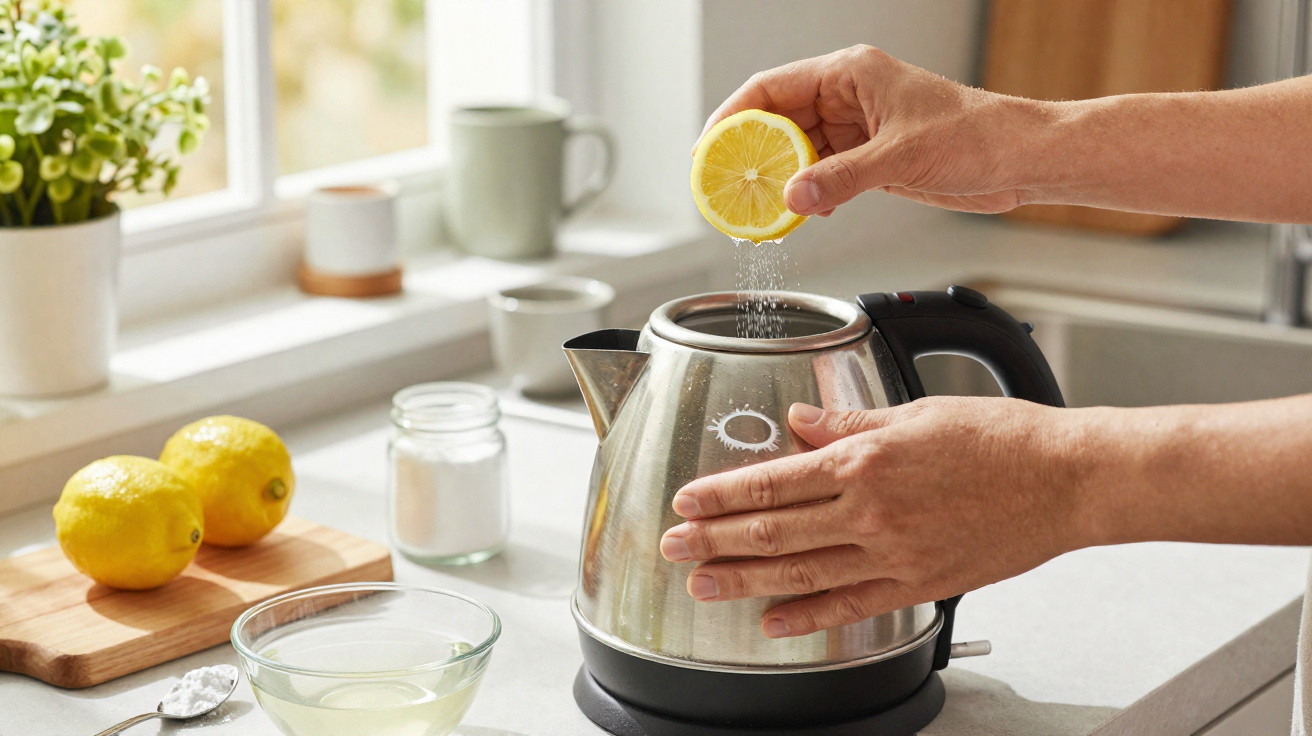
A stubborn film quietly forms inside your kettle week after week, and many people only clock it when their tea starts tasting a bit off.
That chalky band on the base of an electric kettle is not just an eyesore - and if you live in a hard‑water area, it can build up surprisingly quickly.
Why limescale in your kettle is more than a cosmetic issue
In much of the UK - and across large areas of the US - tap water contains plenty of calcium and magnesium. Once the water is heated to boiling, those minerals fall out of solution, harden, and stick to the metal. In a kettle, that usually appears as a white, gritty coating on the bottom and around the heating element.
Engineers often describe that crust as acting like a winter coat wrapped around the heating plate. Because heat has to pass through the deposit first, the kettle needs more energy to get the water to the same temperature. That means longer boil times, a gradual rise in running costs, and a kettle that can wear out sooner than it should.
Limescale makes kettles slower, less energy‑efficient and can shorten their lifespan by years if nothing is done.
Flavour is affected as well. Bits of scale do not always stay attached to the element - small flakes can break away and end up in your mug, muting the taste of tea and coffee. If you spend money on good loose leaf blends or speciality beans, that rather defeats the purpose.
There is a safety consideration too. When the heating element is heavily scaled, some areas can run hotter than others. Modern kettles have cut‑off systems, but parts under extra stress tend to fail more often than components that are properly looked after.
Most manufacturers recommend descaling regularly. In reality, many people put it off because they do not want to use strong chemical products, or they cannot stand the sharp smell of vinegar that can seem to hang around for days. Shops sell plenty of tablets and sachets that promise a speedy fix, but they add cost, packaging waste, and often fragrances you do not actually need.
The natural combo that tackles limescale without vinegar
A growing number of households want something that feels safe to use around children, does not make the kitchen smell like a chip shop, and does not require harsh cleaners. That is where an old‑fashioned pairing comes in: baking soda and lemon.
A mix of lemon slices and baking soda quietly dissolves stubborn limescale without vinegar, bleach or proprietary descalers.
Baking soda (sodium bicarbonate) is gently alkaline. Lemon juice is acidic and contains plenty of citric acid. In hot water, the two create a mild reaction that helps loosen the grip limescale has on the metal. You will see light fizzing and get a soft cleaning action, along with a fresher scent rather than strong fumes.
Step‑by‑step: how to descale your kettle with lemon and baking soda
- Unplug the kettle and tip out any water left inside.
- Add three to four slices of fresh lemon, ideally from an unwaxed lemon.
- Put one tablespoon of baking soda straight into the empty kettle.
- Top up with cold tap water to the maximum fill line.
- Boil once, switch off, and let it sit for about 20 minutes.
- Pour the mixture away, then wipe the interior with a soft sponge.
- Rinse well, then boil plain water once more before making drinks.
That 20‑minute wait is important. The hot mixture needs time to seep beneath the limescale layer and loosen it, so that a gentle wipe is enough. Often the rough coating lifts off in sheets. If you are in a very hard‑water area and some spots refuse to shift, a second round may be needed.
Because this approach skips vinegar altogether, you avoid the lingering sour odour, and most households already have baking soda in a cupboard. Using slices rather than bottled juice also brings oils from the lemon peel, which can leave the kettle smelling cleaner and fresher.
How this compares to classic methods
| Method | Smell | Cost | Impact on kettle |
|---|---|---|---|
| Vinegar and water | Strong, often lingers | Low | Effective, but can attack rubber seals over time |
| Chemical descaler sachets | Chemical or perfumed | Medium to high | Fast, but adds packaging and chemical residues |
| Lemon and baking soda | Mild, fresh citrus | Very low | Gentle on metal and seals, suitable for regular use |
If you are trying to cut back on plastic and unnecessary chemicals, the lemon‑and‑baking‑soda routine aligns neatly with a broader move towards slower, lower‑impact cleaning. It can also make a dull bit of maintenance feel like a quick, satisfying reset.
How often to descale and the habits that make a difference
Limescale does not build at the same pace everywhere. In places such as London, Birmingham, or parts of Texas, deposits appear far faster than they do in Scotland or the Pacific Northwest. Water companies often publish hardness data, but the easiest indicator is what you can see inside your kettle.
A practical guideline in hard‑water areas is to descale every four to six weeks to keep a kettle running well. Where the water is softer, every two to three months is often enough. If you boil the kettle repeatedly throughout the day - for example, in a tea‑drinking household - you may need to shorten that interval.
Emptying the kettle after each use slows limescale build‑up more than any product you can buy in a shop.
When water is left sitting in the kettle for hours, minerals continue to settle out and stick to the surfaces. Pouring away what you do not use after making tea helps break that cycle. A quick weekly wipe with a soft cloth can also lift early deposits before they harden into a crust.
One “shortcut” that seems handy but is often questioned is filling the kettle from the hot tap. Plumbers - and many health agencies - commonly advise against it. Hot water can spend longer in tanks and pipework, which may encourage bacterial growth and leach metals in older systems. Using cold water and heating it in the kettle reduces those concerns.
What if you do not have lemon or baking soda?
Sometimes the kitchen simply is not stocked. On a Sunday evening there may be no fresh citrus, and the baking soda might be sitting in the fridge. In that situation, many people revert to the traditional vinegar approach: mix one part white vinegar with two parts water, bring it to the boil, leave it for 20 minutes, then rinse thoroughly.
It is still effective against limescale, but the smell can be intense and it may not suit anyone in a small, poorly ventilated flat or anyone who finds acidic fumes unpleasant. The lemon option is a calmer alternative, which can matter if you have respiratory sensitivities or young children nearby.
Small appliance, real energy impact
Electric kettles do not often feature in climate discussions, yet they are switched on in millions of homes every day. When a kettle is badly scaled, it draws more electricity for each cup because it is heating the deposit as well as the water. In places where the power grid still relies heavily on gas or coal, that extra demand carries a real carbon cost.
Descaling nudges the numbers in the right direction. With a clean element, heat transfers straight into the water instead of being wasted on warming a hard shell of limescale. Over the course of a year, that can add up to several kilowatt‑hours in a busy household - especially where friends, flatmates, or colleagues are constantly making another round of hot drinks.
For students and renters, there is also a practical point: at the end of a tenancy, landlords may charge for appliances that have been damaged or clearly neglected. A kettle coated in limescale, with rust specks and burnt marks, does not look well cared for, while a clean, fresh‑smelling one suggests it has been used properly.
Beyond the kettle: using the same trick elsewhere in the kitchen
The simple chemistry behind lemon and baking soda is useful for more than kettle care. The same combination can help with other small tasks where limescale or residue tends to collect.
- Shower heads: remove the head, soak it in hot water with lemon and baking soda, then rinse to clear blocked jets.
- Stainless steel sinks: apply a paste made from baking soda and lemon juice, leave it for a few minutes, then rinse for a smoother finish.
- Glass coffee carafes: fill with hot water, add one teaspoon of baking soda and a squeeze of lemon to lift brown staining.
The pattern is the same each time: a mild reaction, little scrubbing, and less reliance on bottled cleaners. If you are trying to reduce the clutter under the sink, a single tub of baking soda and a few lemons can stand in for a drawer full of specialist sprays.
If you live with hard water - or you have just moved somewhere and are still learning what the local supply is like - setting a simple routine for kettle care helps. A monthly calendar reminder, keeping baking soda within easy reach, and saving leftover lemon ends from cooking can turn a forgotten job into a quick, near‑automatic habit that keeps both flavour and appliances in better condition.


Comments
No comments yet. Be the first to comment!
Leave a Comment