
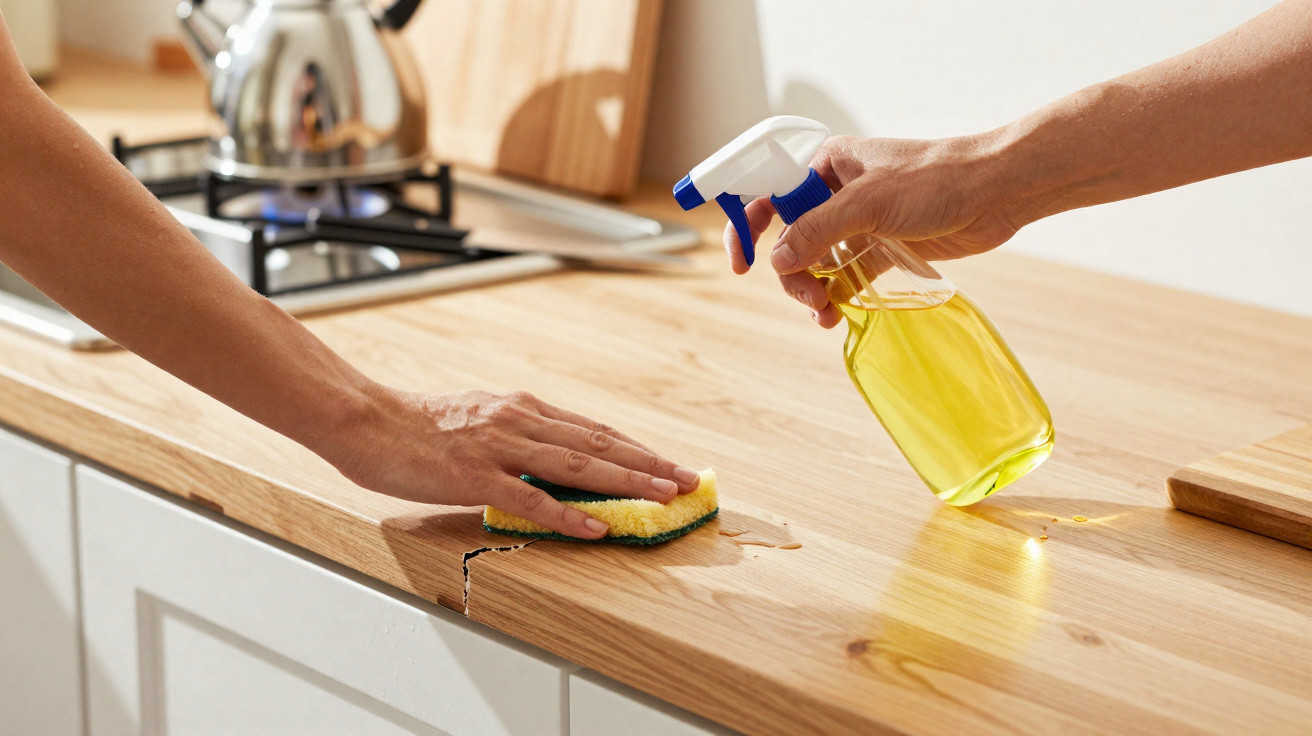
The cause is often tucked away in the way you clean.
Across the US and the UK, homeowners are noticing swollen seams, lifting edges and scorch-like patches on laminate worktops. The unexpected connection is not poor fitting or bargain materials, but a very everyday cleaning habit many people repeat several times a day.
The common cleaning ritual that wrecks laminate
Laminate worktops usually don’t fail because of one big mishap. More often, they’re worn down by lots of minor, repeated damage. The biggest issue is extended exposure to moisture and strong chemicals - often created by the cleaning method itself.
It typically goes like this: a cleaner is sprayed on liberally, left for a moment “to do its job”, and then wiped away using a cloth or sponge that’s far too wet. The worktop looks spotless and smells pleasant. Meanwhile, moisture and detergent are gradually finding their way into seams, joins and cut edges.
The most damaging habit for laminate counters is leaving them wet after cleaning, especially around seams, sink cut-outs and edges.
Laminate is built from paper and resin layers bonded to a wood-based core, most often chipboard or MDF. That inner board absorbs water readily. When moisture reaches it, the core swells, the laminate bond starts to fail, and the result shows up as bubbling, lifting, or a raised line along a join.
Where the damage starts: weak points on your countertop
Even top-end laminate has areas that are more exposed than others. Day-to-day cleaning habits can either defend these points or make deterioration happen faster.
- Sink area: Water lingers around the tap and the sink rim, then works its way into cut edges.
- Back joints: The join where two sections meet - often behind the hob - collects splashes and steam.
- Front edges: Drips run over the lip and underneath the edge profile, where glue lines may be exposed.
- Dishwasher zone: Steam escaping as the dishwasher is opened hits the underside of the worktop.
These weak spots almost never fail in a single night. Tiny gaps and hairline cracks develop as the board expands by a fraction of a millimetre over and over. Eventually, a blister appears and it’s easy to blame one spill - while missing the years of damp wiping and “leave-on” sprays that led to it.
The chemical side of the problem
Water alone can be enough to cause trouble, but the cleaning product matters too. Many households simply use whatever happens to be under the sink: bleach sprays, all-purpose degreasers, or powerful antibacterial wipes.
Used repeatedly, these products may:
- Gradually dull the finish and make it more open and porous.
- Degrade the sealants used around sinks and along joins.
- Cause staining or lightening over time on darker laminate patterns.
Repeated use of strong chemicals can weaken the protective layer of laminate, turning a tough surface into a thirsty one.
Once that protective top layer is damaged, spills absorb more quickly, crumbs catch more easily, and stains take more effort to shift. Many people then scrub harder or switch to even harsher cleaners - which drives the same cycle further.
How to clean laminate without slowly destroying it
Laminate doesn’t benefit from aggressive cleaning. A simple, low-impact routine typically protects it far better long term than any heavy-duty spray.
The safe, daily routine
Here is a straightforward method that suits most laminate worktops:
| Step | What to do | Why it helps |
|---|---|---|
| 1. Wipe crumbs | Use a dry cloth or kitchen roll first. | Helps prevent scratches when you later wipe with moisture. |
| 2. Mild cleaner | Use warm water with a drop of washing-up liquid. | Removes grease without attacking the laminate surface. |
| 3. Lightly damp cloth | Wipe the worktop; keep seams and joins from getting soaked. | Cleans effectively while reducing water at vulnerable points. |
| 4. Rinse & wring | Rinse the cloth, wring it out thoroughly, then wipe again if needed. | Prevents residue building up over time. |
| 5. Dry immediately | Use a soft towel, focusing on joins and edges. | Reduces the risk of the core board swelling beneath the laminate. |
It may feel a bit old-fashioned, but many worktop manufacturers quietly advise a routine very close to this in their care instructions.
Products that quietly cause trouble
Some cleaners and kitchen routines are especially risky for laminate, even if they’re only used “occasionally”.
- Bleach-based sprays: Can discolour surfaces and weaken seals, particularly on dark or textured finishes.
- Oven cleaners: Very caustic; even brief contact can leave lasting marks.
- Scouring creams and powders: Create scratches, making the surface harder to keep hygienic.
- Steam cleaners: Drive moisture into joins and edges using heat and pressure.
- Soaking cloths or standing water: Act like a wet compress on the same weak points day after day.
If a cleaner is strong enough for ovens, grout or toilets, it is usually too harsh for laminate worktops.
Everyday kitchen habits that speed up damage
Cleaning is only part of the picture. Everyday kitchen behaviour also plays a big role in how long a laminate worktop stays in good condition.
Heat, knives and “just for a second” moments
Laminate can cope with ordinary warmth from a mug or plate, but it is not designed to handle intense, concentrated heat from cookware or baking trays straight out of the oven.
Habits that commonly shorten a laminate worktop’s lifespan include:
- Setting a hot pan directly on the surface while stirring or plating up.
- Positioning a slow cooker or air fryer under a wall cupboard so steam rises into the back edge.
- Slicing bread or vegetables straight on the worktop when the chopping board is “too far away”.
- Leaving wet tea towels scrunched along the back edge near splashbacks.
Heat can leave a glossy patch or cause local blistering. Knife damage breaks the protective layer and creates new pathways for water. When combined with a wet-cleaning routine, these minor faults accelerate swelling and peeling.
When damage has already started
A swollen join or chipped edge often makes people think the entire worktop has to be replaced. In the short term, that isn’t always the case.
For smaller problems, a few practical measures can help prevent things getting worse:
- Seal tiny gaps: Apply colour-matched sealant to joins and around the sink to block fresh moisture.
- Dry more aggressively: Keep a dedicated towel by the sink specifically for drying the worktop.
- Shift appliances: Move kettles, coffee machines and air fryers a little forwards so steam clears the back edge.
- Use mats: Place heat-resistant mats in the spots where hot trays or pans are usually put down.
These actions won’t undo swelling that has already happened, but they can slow further deterioration and may extend the worktop’s life by several years.
Why laminate reacts so badly to water
Many people assume laminate is simply “waterproof plastic”. The truth is more complicated. The decorative surface is plastic-based, but most of the thickness is made from compressed wood fibre.
Laminate worktops are water-resistant on the surface but highly vulnerable the moment moisture reaches the core board underneath.
Wood fibres expand when they get wet and don’t return perfectly to their original shape once dry. As this swelling and shrinking repeats, it strains the adhesive bond between layers. Over time, the laminate sheet lifts, corners start to curl, and joins open up.
This also explains why an older worktop can look fine for years and then, after a small leak - such as a loose tap or a sink that wasn’t sealed well - suddenly develop dramatic bubbling within weeks. The structure may already have been weakened by years of damp cloths and strong products.
Planning future renovations: choosing and caring for surfaces
For anyone planning a kitchen refit, laminate offers a useful reminder: every surface has its own limits, and daily routines need to work within them.
Stone, solid wood and composite worktops each respond differently to water, chemicals and heat. Laminate remains widely chosen because it is affordable, comes in an enormous range of designs, and is relatively straightforward to install. With gentler cleaning and better drying habits, it can still last 10 to 20 years in a busy household.
A helpful mindset is to treat a laminate worktop more like a good wooden table, rather than an indestructible lab bench. That shift alone often changes how people clean, chop and place hot cookware - even without memorising any technical advice.
Small habit changes that make a big difference
Picture two identical kitchens installed on the same street. In one home, the worktop is sprayed several times a day with bleach cleaner, wiped with a dripping cloth, and left to dry on its own. In the other, the owner uses mild soap, a well-wrung cloth, and always finishes by drying with a towel.
A decade on, the first worktop is likely to show swollen joins, a dull finish and lifting around the sink. The second may have a few scratches and a slightly faded shine, but still be structurally sound.
The gap comes down to routines repeated hundreds of times each year. If you’re looking at a peeling laminate edge today, the real culprit may not be a defective product at all - but that comforting spray-and-soak approach that always seemed harmless.

Comments
No comments yet. Be the first to comment!
Leave a Comment