
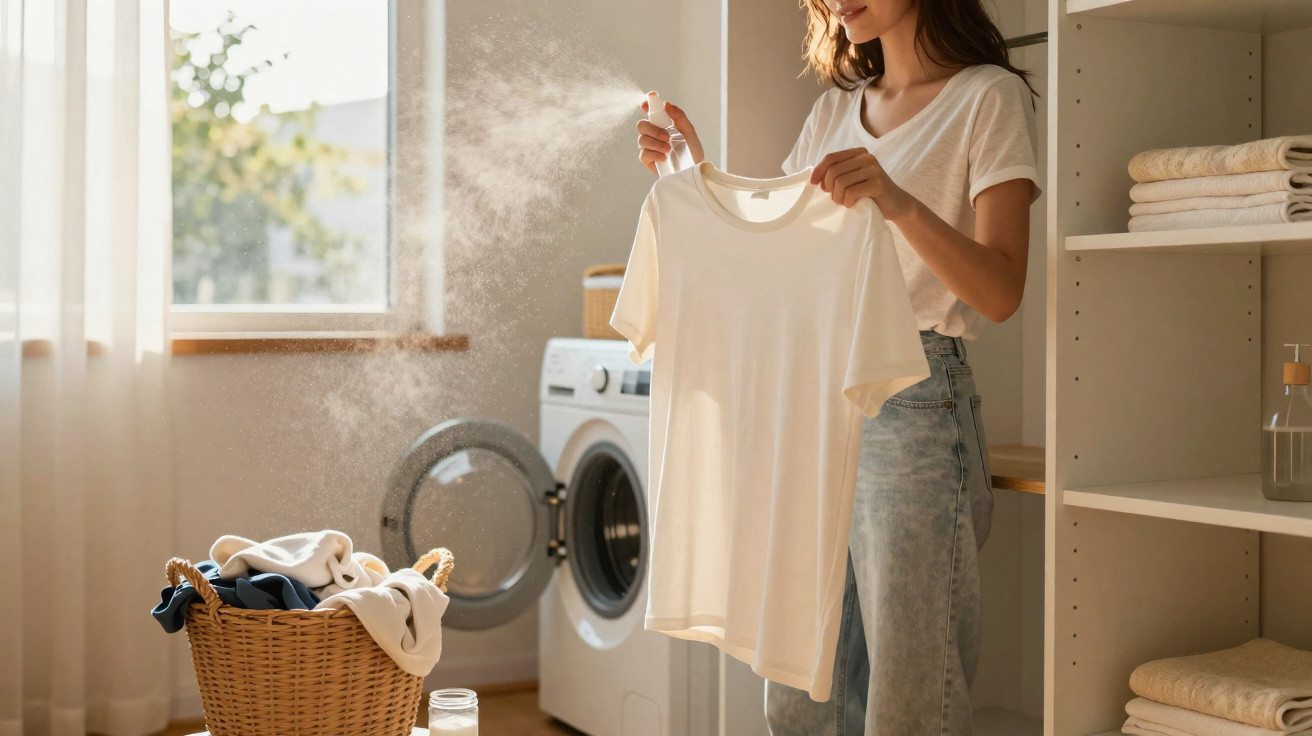
A jacket can look pristine - just out of the wash, neatly folded on a chair - and yet still carry a faint hint of last night’s garlic pasta on the cuff, like an unwanted visitor who won’t take the hint. I’ve had the same with my favourite hoodie after an evening at the pub: no marks, no obvious grime, but that stale smoky odour somehow threaded itself into the fibres as though it belonged there.
We wash, we spritz, we dangle things by an open window, and still certain smells seem determined to stick around.
There’s a tiny change you can make that quietly shifts everything.
The real reason smells cling to “clean” clothes
It’s easy to assume odours are a surface issue. You smell a T‑shirt, notice sweat or food, and imagine it’s sitting on top of the fabric like dust on a shelf. In truth, smells behave more like invisible lodgers: they work their way into the fibres and settle in places a normal wash doesn’t always reach.
That’s why a top can look spotless, feel soft, and still carry a faint reminder of last week’s gym session when you step into a lift. The fabric holds on.
Imagine this: you do a big laundry run on Sunday. Everything gets washed, dried and folded. Then on Tuesday morning you pull a “clean” jumper from the stack, tug it over your head… and there it is - a slight sour, body‑odour echo, mingled with the perfume you wore three days earlier. Not dreadful, but certainly not fresh.
You tell yourself it’ll do and hope no one clocks it in the 9 a.m. meeting. But the rest of the day you can’t stop noticing it. One stray smell, and your confidence dips.
There’s straightforward science behind it. Odours come from volatile molecules - often from sweat, cooking, smoke or grease. On synthetic fabrics in particular, those molecules cling tightly and don’t always come away in a quick cycle, especially if you use too much detergent and don’t rinse thoroughly. Worse, a nice‑smelling detergent can actually trap certain smells if it leaves residue behind.
So the issue isn’t only what you wash with. It’s when you interrupt the process - before smells sink in and bind deeply in the first place.
The simple trick: act fast with a “neutralizing pause”
Here’s the small habit that changes your relationship with fabrics and lingering odours: introduce a brief, automatic pause between taking clothes off and putting them away. Before you drop something in the hamper or return it to the wardrobe, give it a neutralizing window of fresh air + dry time.
In real terms, it’s easy. The moment you take off a jumper, jacket, jeans, or even pyjamas, avoid folding them or hanging them in an enclosed space. Instead, put them somewhere open and airy for at least 30–60 minutes. Doing this straight away - before sweat and food smells properly “settle” - lets a lot of odour molecules evaporate rather than embed.
Set up a small “buffer zone” at home: a hook behind a door, a rail near a window, or a simple clothes‑airing rack in the hallway. This becomes the place where once‑worn items go to breathe before they go anywhere else.
For example, you cook dinner in your favourite cotton shirt. Rather than leaving it on a chair (where it creases and traps smells) or putting it straight back in the wardrobe (where the odour can transfer to other clothes), hang it on that dedicated hook - ideally near a window. With a bit of airflow and a little time, nine times out of ten that light kitchen smell has disappeared by morning.
What the “neutralizing pause” really does is interrupt the pattern where dampness + enclosed spaces = trapped odours. Smell‑causing bacteria thrive in warm, slightly moist, still conditions. If you toss a mildly sweaty T‑shirt directly into a laundry basket, you’re essentially hosting a party for them. They multiply, the smell ramps up, and by wash day you’re dealing with something far more stubborn.
By airing and fully drying clothes immediately after wearing, you stop that micro‑party before it starts. You’re not covering up odours - you’re stopping them taking hold.
How to turn this into a tiny daily habit
The routine is almost laughably straightforward:
- Take the item off.
- Hang it in an open spot for 30–60 minutes (or overnight).
- Then decide: wardrobe, wash, or re‑wear.
If something was only lightly worn and doesn’t smell after airing, you can put it on again without that nagging “Is this a bit grim?” doubt. If the odour is still present after the break, it goes directly into the wash. That pause often makes the difference between fabrics that seem to age quickly and clothes that stay fresher for longer.
Many people skip this because they “don’t have time” or “haven’t got anywhere to hang things”. Realistically, no one does it perfectly every day. The aim isn’t perfection - it’s avoiding the worst‑case set‑ups: sweaty tops scrunched on a chair, gym leggings shoved into a sealed basket while still damp, cooking clothes pushed back into a dark, overcrowded wardrobe.
Even one hook used reliably can change everything. You’ll wash a little less, your clothes will last longer, and you’ll avoid that low‑level embarrassment of wondering whether your jacket still smells like last night’s chips.
Sometimes the difference between “Ugh, this smells” and “Wow, this still feels fresh” is just one hour on a hanger instead of one minute on a chair.
- Create a “breathing station”
Pick a fixed spot - a hook, rail, or rack - where once‑worn clothes always go for an airing break. - Use natural boosters sparingly
A light mist of diluted white vinegar (1:4 with water) or a fabric spray on the underarm area, and only on sturdy fabrics. - Dry before you decide
Don’t put warm or slightly damp clothing straight into a basket or closed wardrobe; let it cool and dry first. - Prioritise “high-risk” items
Start with pieces that sit close to skin: T‑shirts, sports bras, shirts, pyjamas, and the inner parts of jackets. - Protect delicate fabrics
For wool, silk or cashmere, air them flat or on wide hangers, out of strong sunlight, and avoid aggressive sprays.
When tiny changes radically shift how your home smells
Once you build in this small pause, you begin to notice how much of a home’s “background smell” comes from fabrics quietly holding on to old odours: sofa throws that never properly dry, coats crammed into a packed hallway cupboard, half‑worn piles at the foot of the bed. Adjusting just one habit can give you a surprising sense of control.
You start trusting your clothes again. You grab that favourite jumper without second‑guessing whether yesterday’s commute or last night’s dinner is still lodged in the fibres.
People may not mention it outright, but you can feel the difference when you walk into a space where fabrics aren’t saturated with stale smells. The air feels lighter, less weighted. Some people buy gadgets, purifiers and pricey detergents - and still miss this quiet, almost invisible step of letting clothes breathe.
The plain truth is this: the most effective anti‑odour move costs nothing, makes no fuss, and happens in those everyday decisions about where clothes sit between wearing and washing. Try it for a week with one hook and your most‑worn items, and you’ll likely notice the change before anyone else does - and you may never want to stuff “clean enough” clothes into closed spaces again.
| Key point | Detail | Value for the reader |
|---|---|---|
| Neutralizing pause | Let worn clothes hang in open air 30–60 minutes before storing or washing | Reduces embedded odors and keeps fabrics fresher for longer |
| Dry before storing | Avoid putting warm or slightly damp items in baskets or closets | Prevents bacteria growth and that sour “clean but not fresh” smell |
| Dedicated breathing station | Use a fixed hook or rack as a buffer zone for worn-once clothes | Simplifies the habit and cuts down on unnecessary washing |
FAQ:
- Question 1 Does airing clothes really work better than just using more detergent?
- Answer 1 Airing tackles odours before they properly bind to fibres, whereas extra detergent can leave residue that traps smells. Both help, but the airing step often has the bigger long‑term impact.
- Question 2 How long should I leave clothes hanging to neutralize odors?
- Answer 2 For everyday wear, 30–60 minutes in a ventilated spot is usually enough. For stronger smells such as smoke or cooking, leave items overnight near a window or in a dry, open hallway.
- Question 3 Can I use this trick on all fabrics?
- Answer 3 Yes - just adjust how you air them. Delicates such as wool or silk do best on wide hangers or laid flat, away from harsh sun, while cotton and synthetics can be aired more simply.
- Question 4 Is spraying perfume on clothes a good way to hide bad smells?
- Answer 4 Perfume only covers odours and can combine into something worse. It’s better to air the item first, wash if the smell remains, and use perfume lightly on skin rather than fabric.
- Question 5 What if I don’t have much space at home?
- Answer 5 Fit one or two sturdy hooks behind a door, or use a foldable drying rack you only open in the evening. Even airing just your most‑used tops and jackets will reduce lingering odours.
Comments
No comments yet. Be the first to comment!
Leave a Comment