
The pan had a history. After a Sunday roast, a thick, brown layer had welded itself to the base - the sort you prod with a sponge and it seems to mock you right back. The washing-up bowl was already crammed, the water was only lukewarm, and the dishwashing liquid was almost gone. Proper end-of-week kitchen fatigue.
That momentary dip in your stomach hits when you realise there’s no chance this pan is getting clean before bed.
Later that evening, a neighbour mentioned something that sounded more like an old wives’ tale than advice: “Throw salt on it with a bit of dish soap, leave it. You’ll see.”
It sounded far too basic to make any difference.
And yet, by morning, the sink told a different story.
Salt and dishwashing liquid: the duo your sink has been waiting for
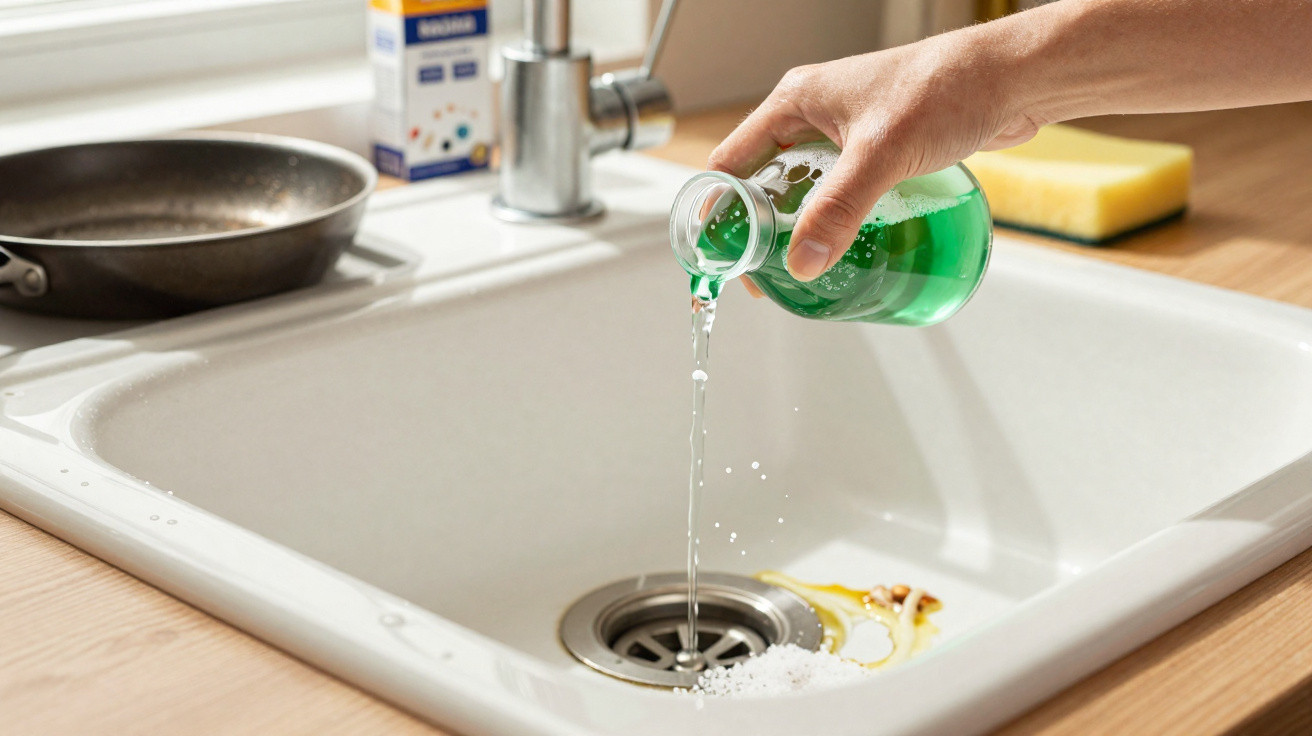
Tip a layer of coarse salt into a greasy pan, squeeze over a swirl of dishwashing liquid (washing-up liquid), and you’ve effectively set up a miniature cleaning experiment on your worktop. The crystals act as a gentle scourer, the soap binds to the grease, and hot water helps the whole mix behave like a quick, homemade degreasing paste.
You hear the faint rattle of salt against the metal. You notice the subtle grit under the sponge. And, almost without drama, the burnt-on patches begin to let go.
A minute ago, the pan looked beyond saving. Then it becomes simply “a bit of elbow grease” away from looking bright again.
Imagine a Monday night: you’ve made pasta and a speedy sauce, a phone notification steals your attention, and the tomato base catches on the bottom of the pot.
You rinse it once, then again. That red film stays stuck fast, like an unwanted reminder.
So you reach for the salt and sprinkle a small handful straight into the still-warm pot. A short line of dish soap goes on top. Then a little hot water - just enough to dampen the mixture, not flood it.
You leave it while you eat. When you come back and rub gently in small circles, the sauce starts to release in thin, curled flakes. No endless scrubbing session, no scraping with a knife, no splashing out on a “miracle” cleaning foam.
There’s a solid reason this “grandma hack” feels like magic. Salt is a mineral with mild abrasiveness, ideal for shifting stuck-on layers without behaving like sandpaper. Dishwashing liquid is made to break down fat molecules, so it can work its way between the burnt food and the pan’s surface.
Used together, they tackle two problems at once: baked-on crust and greasy residue. The salt gives your sponge traction, while the soap lubricates and dissolves what you can’t easily see.
That’s also why it can help with greasy oven trays, baking dishes, and even the area around hob burners. The science is straightforward, but the outcome can feel almost unfair.
How to use the salt + dish soap trick without ruining your pans
Here’s the simple routine that makes a real difference. As soon as you’ve finished cooking - while the pan is warm rather than scorching - tip away any leftover oil or sauce.
Sprinkle in a small handful of coarse salt. No heap, just enough to lightly coat the base.
Squeeze in one or two short lines of dishwashing liquid. Then add a shallow splash of hot water so the mixture can spread.
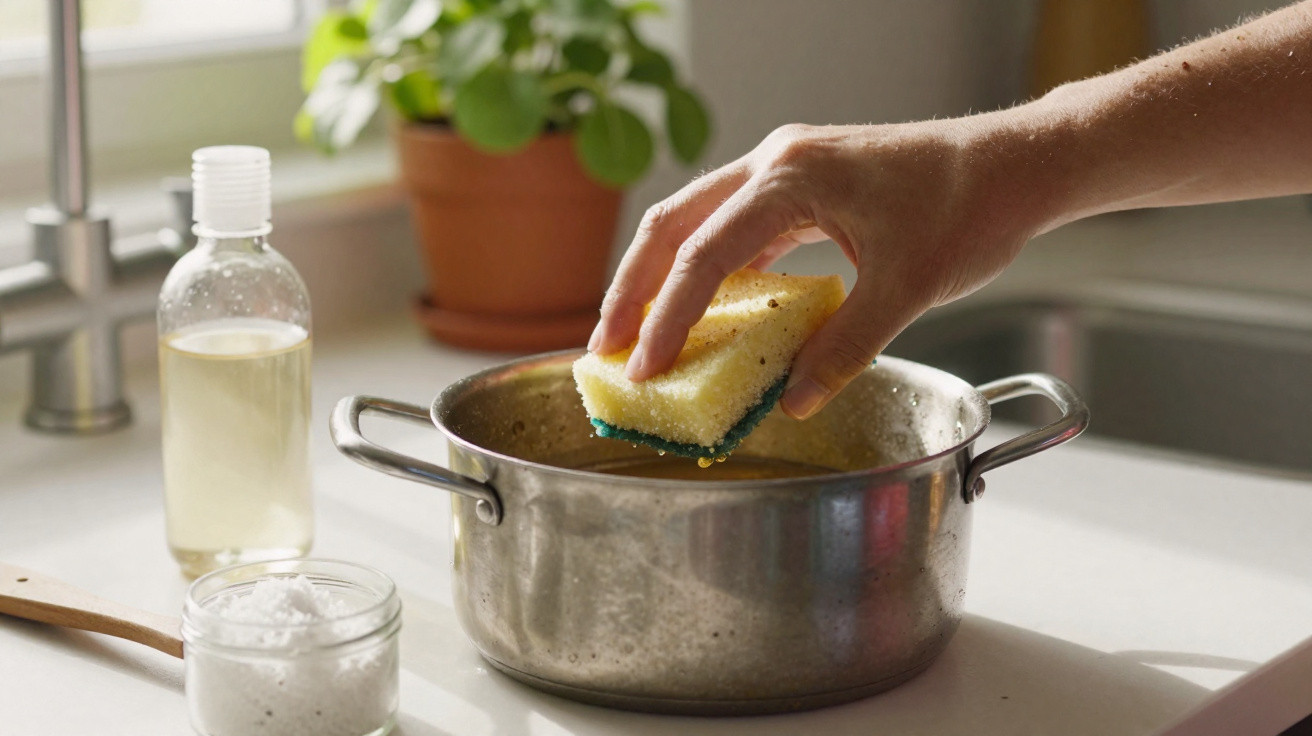
Leave it for 10–20 minutes. When you return, use the soft side of your sponge and scrub gently in small circles. Rinse. In most cases, you won’t need to repeat.
There’s a common reason people don’t get much from this method: they don’t give it time. They add salt and soap, scrub furiously for 30 seconds, then decide it doesn’t work.
In reality, letting it sit does a big chunk of the work. The salt gradually loosens the crust, and the soap seeps in and softens it. You can feel the burnt-on bits losing their grip as you go.
Take extra care with non-stick pans and delicate coatings. You shouldn’t need heavy pressure - the grains can do the hard work. And let’s be honest: hardly anyone does this daily. It’s for those nights when the pan looks like something from an archaeological dig.
“I used to throw out baking trays because I thought they were ‘done’,” says Laura, 34, who cooks almost every night. “The first time I tried salt with dish soap, an old blackened tray turned silver again. I genuinely stared at it for a full minute.”
- Use coarse salt, not fine table salt: larger crystals give you a better scrubbing action.
- Let the mixture rest on really burnt areas: 20–30 minutes can save you 20–30 minutes of hard scrubbing.
- Test the method gently on delicate coatings: if you sense scratching, reduce pressure or avoid the salt.
- Use the trick on grills, oven racks, and stainless-steel pots: these surfaces generally respond well to a salt scrub.
- Rinse well to remove tiny salt grains that can leave marks once dry.
Beyond the pan: a small kitchen ritual that changes your relationship with cleaning
Once you realise a basic mix of salt and dishwashing liquid can rescue a pan you were ready to bin, something shifts. Suddenly, you notice all the “lost causes” pushed to the back of the cupboard.
The battered oven tray you always hide under the better one. The stainless-steel pot with a flat, grey base. The old grill rack that still carries a hint of last summer’s barbecue.
At that point, you’re not merely washing up. You’re making everyday tools last longer. You’re spending less without really thinking about it. And you’re turning a chore into a small, oddly satisfying experiment.
| Key point | Detail | Value for the reader |
|---|---|---|
| Salt + dish soap synergy | Salt scrubs, soap breaks down grease, hot water helps both work | Quicker cleaning for burnt-on and greasy cookware |
| Right moment and method | Use on warm pans, leave 10–20 minutes, scrub lightly | Less effort, fewer scratches, better results |
| Extended uses | Helpful on trays, oven racks, hob surrounds, and some grills | Brings old kit back to life, saves money on replacements |
FAQ:
- Question 1 Can I use this trick on non-stick pans?
- Answer 1
- Yes, but with care. Use less salt, very light pressure, and the soft side of the sponge. If you feel any scratching, stop and rinse.
- Question 2 Does fine salt work as well as coarse salt?
- Answer 2
- It works a bit, but the effect is weaker. Coarse salt is better because the grains act like tiny scrubbers on stuck-on food.
- Question 3 Can I replace dishwashing liquid with another soap?
- Answer 3
- Liquid dish soap is best because it’s formulated for grease. Solid soaps or hand soaps usually don’t dissolve fat as efficiently.
- Question 4 How long can I leave the salt and soap mixture on the pan?
- Answer 4
- For most materials, up to 30 minutes is safe. For delicate coatings, 10–15 minutes is usually enough. Always rinse well afterward.
- Question 5 Does this method also remove lingering smells?
- Answer 5
- Yes, often. The combo removes greasy residues where odors cling. For very strong smells, you can repeat once or finish with a rinse of hot water and lemon juice.


Comments
No comments yet. Be the first to comment!
Leave a Comment