
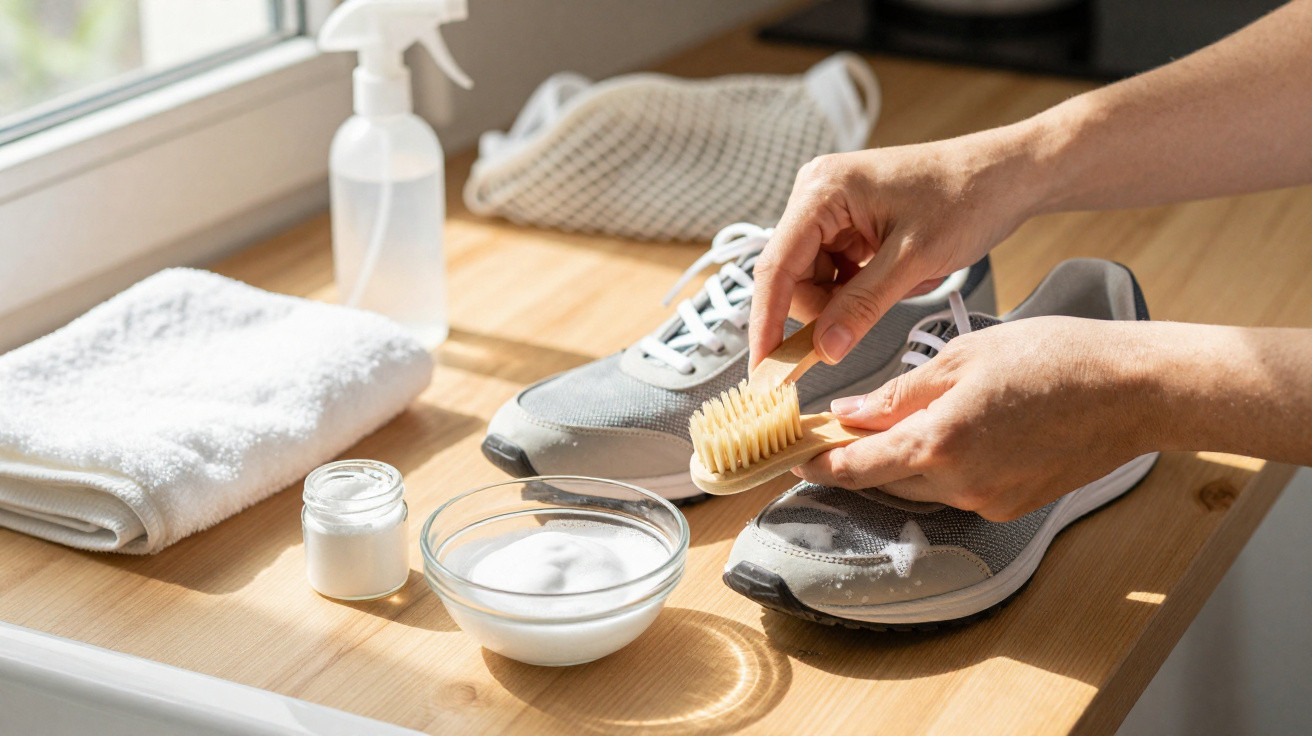
Many people only notice the smell when they take their shoes off - and then discover the insole cannot be removed. Trainers, gym shoes and fashion trainers, as well as smart leather shoes, often have footbeds that are glued or stitched in place. Clean them the wrong way or use too much water and you can end up with rippled insoles, loosened adhesive and a lingering musty odour. With the right approach, the inside stays clean, hygienic and structurally sound.
Why non-removable insoles are so tricky
If the insole comes out, the job is straightforward: lift it out, wash it separately, dry it, done. With fixed insoles, it is different. They are usually glued directly into the midsole or sewn in, so the footbed and the shoe effectively act as one.
Common materials include:
- Foams and memory foam
- Gel cushioning systems
- Textile top layers designed for moisture management
- Smooth leather surfaces in business shoes
Each of these reacts differently to water, cleaners and heat. If the adhesive is softened too much or foam becomes saturated, it can warp or start to crumble over time. Meanwhile, sweat, skin flakes and dust build up inside - perfect conditions for bacteria and, as a result, unpleasant odours.
"The trick is to clean the insole thoroughly without soaking it - as little water as possible, as much cleanliness as necessary."
Preparation: remove loose dirt first
Before you introduce any water, it pays to do a dry clean. That way, grime is not pushed deeper into the fibres later on.
- Use a soft brush to lift out crumbs, dust and grains of sand.
- Work carefully in the toe area and along the edges.
- If you have one, give the inside a quick vacuum on a low setting.
If you regularly wear sweaty sports shoes, you can also wipe the surface once with a dry cloth before wet cleaning. This already removes some of the sweat film.
Gentle wet cleaning: how to do the main clean
For most shoes, a mild soap solution is all you need. Harsh cleaners or chlorine bleach can damage glue, foam and surface coatings.
The ideal everyday mix
Pour lukewarm water into a bowl and add a small squirt of mild washing-up liquid or a dedicated shoe cleaner. You want a light lather - not something like a bubble bath.
- Dip a microfibre cloth or soft sponge into the solution.
- Wring it out thoroughly until it is only slightly damp.
- Wipe the insole using small circular motions.
- Spend a bit longer on heavier marks, but do not scrub as if you are cleaning concrete.
- Use a second cloth, lightly dampened with clean water, to lift off any soap residue.
- Finally, dab the area gently with kitchen roll or a dry towel.
You will notice quickly if you have used too much water: the footbed feels spongy and you may even hear a sloshing sound when you move the shoe. If that happens, immediately blot again with dry cloths.
Household remedies for stubborn odours and stains
If dark sweat marks remain or the smell is still noticeable, a few classic kitchen staples can help - provided you use them correctly and do not ruin the materials.
| Cleaning agent | Best for | How to use | Typical drying time |
|---|---|---|---|
| Mild soap and water | General soiling | Work in with a damp cloth | 24–48 hours |
| Bicarbonate of soda or baking powder paste | Strong odours, stains | Apply, leave to work, wipe off | 12–24 hours |
| Alcohol–water mixture | Disinfection | Lightly mist or dab on | 6–12 hours |
| Diluted white vinegar | Odour removal | Fine spray mist, do not soak | 12–24 hours |
To make a bicarbonate paste, mix one to two teaspoons of bicarbonate of soda with a few drops of water until it forms a spreadable paste. Apply a thin layer to the affected areas, leave it for around 15 minutes, then wipe off with a damp cloth and blot dry. Bicarbonate neutralises odours and provides gentle abrasion without scratching the surface.
An alcohol–water mixture (for example, isopropyl alcohol mixed roughly 1:1 with water) is most useful when hygiene is the priority - such as after wearing shoes barefoot or if there is a risk of athlete’s foot. Apply a fine mist or dab it on with a cloth, avoid soaking, and allow plenty of ventilation.
Drying properly: where most mistakes happen
After cleaning, the biggest risk is not the cleaner - it is drying shoes the wrong way. Putting them on a radiator or blasting them with a hairdryer can lead to waves, cracking and adhesive failure.
"Direct heat ruins more shoes than any stain - slow drying at room temperature with good airflow is safer."
Gentle drying step by step
- Place the shoes in a well-ventilated room, not in a closed cupboard.
- Open them up: loosen the laces and pull the tongue forward.
- Loosely stuff the inside with newspaper or kitchen roll.
- Replace the paper several times during the first few hours while it is still noticeably damp.
- After a few hours, tilt the shoes slightly so air can reach the toe box more effectively.
A fan, or positioning the shoes near an open window, can speed things up considerably. If you have a dehumidifier, placing the shoes nearby helps them dry in a controlled but gentle way.
Before you wear them again, reach right into the shoe. If the front still feels slightly clammy, wait a few more hours. Moisture trapped inside encourages mould and stubborn odours.
Keeping things fresh: what helps between cleans
Treating shoes well day to day means you will need deep cleaning far less often. Small habits can make a big difference.
Daily routines for less odour
- After wearing them, do not put shoes straight into a tight cupboard; let them air out fully first.
- Use cedar shoe trees - they absorb moisture and help smooth creases.
- Put moisture-absorbing sachets (for example, silica gel) into heavily used pairs.
- Rotate sports and casual shoes so each pair has time to dry out.
Simply alternating between several pairs often halves the odour issue, because the insoles finally get the chance to dry completely.
Deodorants and sprays: what actually makes sense
Shoe deodorants can be useful, but they should do more than mask smells with perfume. Products with antibacterial ingredients, or natural essential oils such as tea tree or eucalyptus, target the bacteria responsible for the odour.
Important: only spray or powder onto completely dry insoles. On damp surfaces, sticky layers can form that make it easier for germs to thrive. If you have sensitive skin, try new products briefly on a day when you will wear socks, before using the shoes for long periods.
When to be cautious - and when a professional is better
With expensive leather shoes and high-quality leather footbeds, it is worth inspecting closely. If you can already see cracks, deep discolouration or edges lifting, use very little water. In these cases, specialist leather cleaning products - or a visit to a cobbler - can be the smarter option.
The same applies to shoes with complex cushioning systems or an integrated membrane (for example, waterproof outdoor footwear): check the manufacturer’s care instructions. Some coatings do not tolerate certain cleaners or household remedies, even if they seem mild.
For everyday pairs, though, the basics usually work: a brush, lukewarm soapy water, bicarbonate as an odour neutraliser and patient drying will get most fixed insoles back to a state where you can take your shoes off without embarrassment - at the gym, in the office or at a friend’s house on the sofa.



Comments
No comments yet. Be the first to comment!
Leave a Comment