
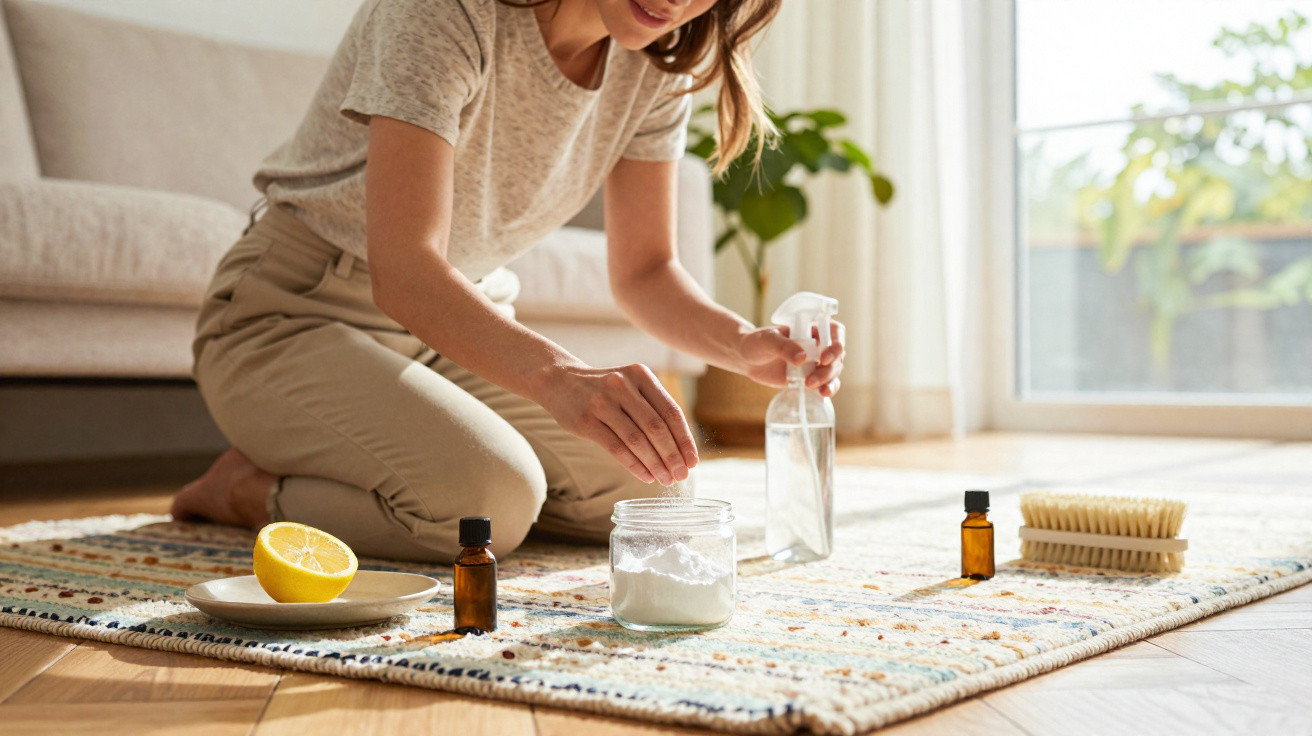
Keeping rugs and carpets clean at home is a priority for anyone who wants a tidy, healthy living space, yet a dedicated carpet-washing machine is not always to hand. For that reason, many people turn to a natural method to clean rugs and carpets, relying on straightforward, low-cost ingredients that are usually already in the cupboard. Done properly, this approach helps lift visible dirt and cut unpleasant odours without needing professional equipment.
Why use a natural method to clean rugs and carpets?
Textile conservation specialists advise that, before any kind of washing, it is important to identify the rug’s fibre type, how ingrained the dirt is, and whether there are specific stains to tackle. With that quick assessment, you can tailor the steps, mix the right strength of homemade solution, and limit wear on fibres in high-traffic areas such as living rooms and hallways.
As well as being gentler on the material, natural cleaning is often more comfortable for people with respiratory allergies or sensitivity to strong fragrances. Because it uses everyday products such as mild washing-up liquid, white vinegar and bicarbonate of soda, it is easier on the budget, simple to repeat, and practical as part of year-round upkeep.
How does the natural method to clean rugs and carpets work?
A natural rug and carpet cleaning routine typically begins by removing dust thoroughly, which helps prevent particles staying trapped deep in the pile. After that, you apply a mild homemade mixture, adjusting it to suit the fabric and the level of soiling.
A basic process, commonly recommended by home-cleaning professionals, can be done without machines as long as you keep a close eye on how much water you use. Here is a clear step-by-step guide to using the method at home:
- Remove loose dust: vacuum the entire surface slowly. If you do not have a vacuum, shake the rug outside and use a soft brush.
- Mix the natural solution: combine warm water with a small amount of mild washing-up liquid. In many situations, add white vinegar to help neutralise odours and a little bicarbonate of soda to support the removal of light staining.
- Test a hidden section first: apply the mixture to a less visible corner to check the fabric does not fade or lose shape.
- Apply the solution: use a slightly damp cloth or a soft sponge to moisten the fibres without soaking them, working with gentle strokes in one direction.
- Allow time to work: leave the solution in place for a few minutes, depending on how strong the dirt and smell are.
- Lift out the excess: wipe over with another clean cloth dampened only with water to remove product residue, then follow with a dry cloth to absorb remaining moisture.
This approach to carpet cleaning without a machine helps loosen embedded grime, reduces common smells from pets, food and sweat, and-where marks are older-can be repeated on specific spots until you reach a better result.
How to dry rugs and prevent mould after cleaning
After using any homemade recipe to clean a rug, drying properly is essential to avoid mould and lingering odours. If fibres stay damp for too long, conditions become ideal for fungal growth, which can affect health and undo the work you have just done.
A few straightforward habits can speed up evaporation and protect both the surface and the backing, particularly with fitted carpets installed directly on the floor. Use the following practical tips:
- Keep the rug in a well-ventilated place with steady natural airflow.
- Put it near open windows or doors, but avoid lengthy exposure to harsh, direct sun.
- Use fans to increase drying speed, especially for carpets that cannot be moved.
- Check the underside as well, making sure the backing is dry to the touch.
How often should you use the natural method to clean rugs and carpets?
How often to use the natural method to clean rugs and carpets depends on how the room is used, how many people live in the home, and whether there are pets. In general, it works best as part of a routine that combines light maintenance, quick responses to spills, and more thorough cleaning at regular intervals.
In practical terms, many households vacuum weekly, deal with spillages straight away, and carry out a deeper clean every 1 or 2 months in busy areas. This mix of habits helps extend the life of rugs and carpets, keeps persistent odours under control, and reduces the need for heavy machine cleaning or premature replacement.

Comments
No comments yet. Be the first to comment!
Leave a Comment