
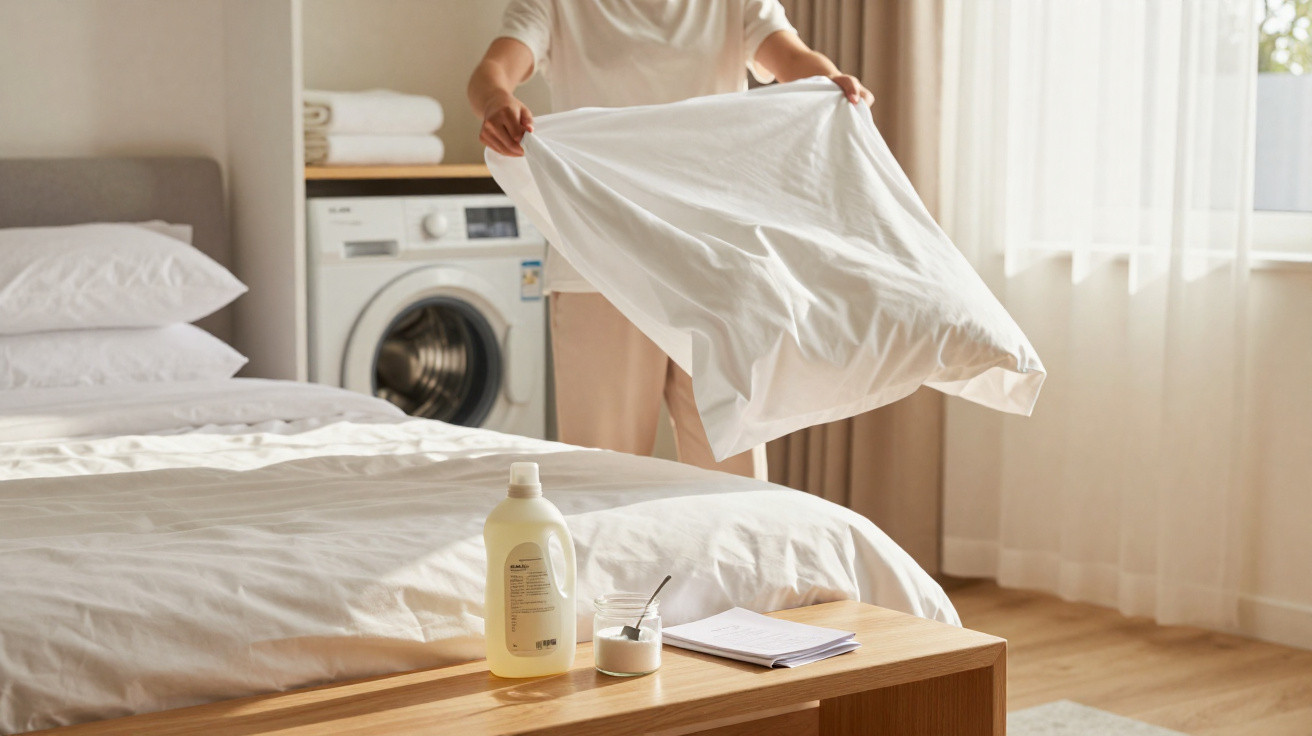
That luxury-hotel feeling in your own bedroom sounds like a dream - especially when your bed linen looks as white, soft and crisp as it does in a five-star hotel.
Anyone who has stayed in a decent hotel knows the moment: you slide into bed and the sheets are spotless white, smooth and pleasantly cool. Many people assume it takes expensive specialist machines or professional laundries. In reality, hotels mainly rely on clear routines and a few simple washing rules that are followed consistently. With a bit of discipline, you can recreate much of that effect at home.
Why hotel bed linen always looks so immaculate
Hotel bed linen is under constant pressure: daily use, frequent washing and a steady turnover of guests. Yet it often stays bright for years and can look almost new. That’s because professionals treat textiles like working equipment - with set wash schedules, defined temperatures and carefully measured products.
"The key difference is rarely the washing machine, but the care taken with every single wash cycle."
At home, many households make the same mistakes without realising: washing too hot, using the wrong detergent, overfilling the drum or adding too much fabric conditioner. After only a few months, sheets can start to look grey, dull or feel rough. Sticking to a handful of hotel-style rules can delay that decline noticeably.
The right detergent: gentle rather than harsh
Hotels typically choose detergents designed specifically for light-coloured textiles that won’t attack the fibres. The brand matters far less than the formula.
What to look for in a detergent
- ideally no strongly colouring additives
- labelled for white or light laundry
- suitable for cotton and delicate fabrics
- accurate dosing based on water hardness and load size
Overly aggressive products can roughen cotton, leaving the surface looking flat and making it easier for dirt to cling on. A solid white-laundry detergent helps keep whites clear without “burning” the fibre.
"If you think ‘more is better’, you often make the wash result worse - residues build up in the fibres and can make whites look yellowed."
Temperature control: no hotter than necessary
Many people assume bed linen must always be washed at 60 °C or above to get clean. Hotels tend to be more targeted, matching the temperature to the level of soiling, the fabric type and the detergent being used.
Which temperature makes sense for which bed linen
| Material | Recommended temperature | Note |
|---|---|---|
| Cotton bed linen | 40–60 °C | 60 °C only needed for heavy soiling |
| Fine blends | 30–40 °C | protects fibres and colours |
| Satin/percale sheets | 40 °C | stays smooth and soft for longer |
Cooler water protects the fibre structure and helps prevent the “towel effect”, where sheets start to feel stiff and scratchy. It also cuts energy use - something hotels pay attention to because of running costs.
Fabric conditioner: friend or foe for white sheets?
Many people automatically pour fabric conditioner into every wash. Hotels are much more restrained with it, particularly for bed linen. The reason is simple: the ingredients can coat fibres with a film.
In the short term the laundry may feel softer, but over time residues can build up that:
- make whites look darker
- reduce breathability
- trap odours more strongly
A simple alternative from the kitchen
Many professionals replace fabric conditioner in their care routine for white laundry with a small amount of ordinary clear vinegar. A splash in the fabric-conditioner compartment is enough, and the smell disappears as it dries.
"Vinegar dissolves detergent residue from the fibres, neutralises odours and helps sheets feel pleasantly fresh and light."
Important: avoid heavily scented vinegar, and for very delicate materials test on a small, inconspicuous area first.
Sodium hydrogen carbonate: a secret weapon against greying
A familiar household helper has become established in many laundries: sodium hydrogen carbonate - more commonly known day-to-day as bicarbonate of soda (plain, without additives).
If you add around half a cup alongside the detergent, several things happen:
- stained patches loosen more easily
- unpleasant odours are absorbed
- a grey cast becomes visibly less pronounced
- the fibre remains mechanically unharmed
"Sodium hydrogen carbonate works gently: it brightens the fabric visually without bleaching it or breaking it down."
Especially with older bed linen that has started to yellow slightly, combining detergent, a little bicarbonate of soda and a moderate temperature can produce surprisingly good results.
Don’t overfill the drum: space is essential
One key hotel rule is that textiles must be able to move freely in the machine. Only then can water circulate properly and detergent reach every area.
How to judge the right fill level
- there should be roughly a hand’s width of space between the laundry and the top of the drum
- split large sheets across two washes if needed
- wash pillowcases closed so nothing gets tangled inside them
When the drum is crammed full, dirt particles aren’t carried away properly - they end up redepositing in the fabric. That’s exactly what makes white textiles look patchy and uneven over time.
How hotels extend the lifespan of bed linen
Beyond detergent and temperature, there are everyday habits many people ignore at home. A few typical hotel routines are easy to copy:
- change bed linen regularly, but not after every single night - it reduces total wash cycles
- pre-treat stains as soon as possible with water or a mild stain remover
- remove laundry promptly after the wash to prevent musty smells developing
- hang sheets smoothly or tumble-dry loosely to reduce creasing and friction
"Every time bed linen is washed, it ages a tiny bit. If you optimise each wash cycle, you get more years out of your textiles."
Common mistakes that age white laundry faster
Many causes of dulled, greyed bed linen come down to simple day-to-day habits:
- mixing whites with dark or strongly dyeing items
- washing too hot purely out of habit
- constant use of heavy-duty detergent with bleaching additives that weaken fibres
- drying on radiators, which can make cotton hard and brittle
If you tackle these points and adjust a few behaviours, you often notice a difference within weeks - laundry looks fresher, brighter and smoother.
Practical examples of a “hotel wash” at home
A typical wash routine for white cotton bed linen at home could look like this:
- Put only white sheets and duvet covers in the drum, and don’t fill it to the brim.
- Dose a liquid detergent for white laundry according to the manufacturer’s instructions.
- Add half a cup of sodium hydrogen carbonate (bicarbonate of soda) to the main wash.
- Pour a small splash of clear vinegar into the fabric-conditioner compartment.
- Choose an easy-care or cotton programme at 40 °C.
- When finished, take the sheets out immediately, shake them out well, then hang to dry or tumble-dry on a low temperature.
If you repeat these steps a few times, you’ll usually find that even older laundry can “brighten up” a little. Newly bought sheets keep that hotel look for much longer.
Background: why white is especially demanding
Pure cotton is considered hard-wearing, but it reacts badly to over-treatment. Excessive temperatures, the wrong products and heavy mechanical stress attack the cellulose structure. Tiny fibres break off, the surface becomes dull, and light reflects differently - so the fabric appears grey.
On top of that, body oils, skin flakes and traces of skincare products combine with surfactants from detergent. If this mixture isn’t fully rinsed out, it remains as a fine film in the weave. This is where the hotel approach comes in: wash moderately, rinse thoroughly and remove residues deliberately.
Risks and limits of “hotel methods”
If you use strong chlorine bleach or aggressive stain removers too often, you risk thinning, weak spots and tears - the same is true in professional settings. Bicarbonate of soda and vinegar are much milder, but they won’t replace every specialist treatment. For coloured bed linen, these methods are only partly suitable, as they can alter the shade slightly.
The washing machine itself also matters: a limescaled heating element, dirty door seals or a detergent drawer that’s rarely cleaned will undermine any result. Many hotels have machines serviced regularly - at home, a hot empty 60 °C cycle with machine cleaner or vinegar is often enough to reduce build-up.
If you stick to the core principles - gentle products, the right temperature, a freely moving load and restraint with additives - you can get surprisingly close to the feel of freshly made hotel beds. And you can do it without a luxury suite, just with a bit more care on your next wash day.




Comments
No comments yet. Be the first to comment!
Leave a Comment