
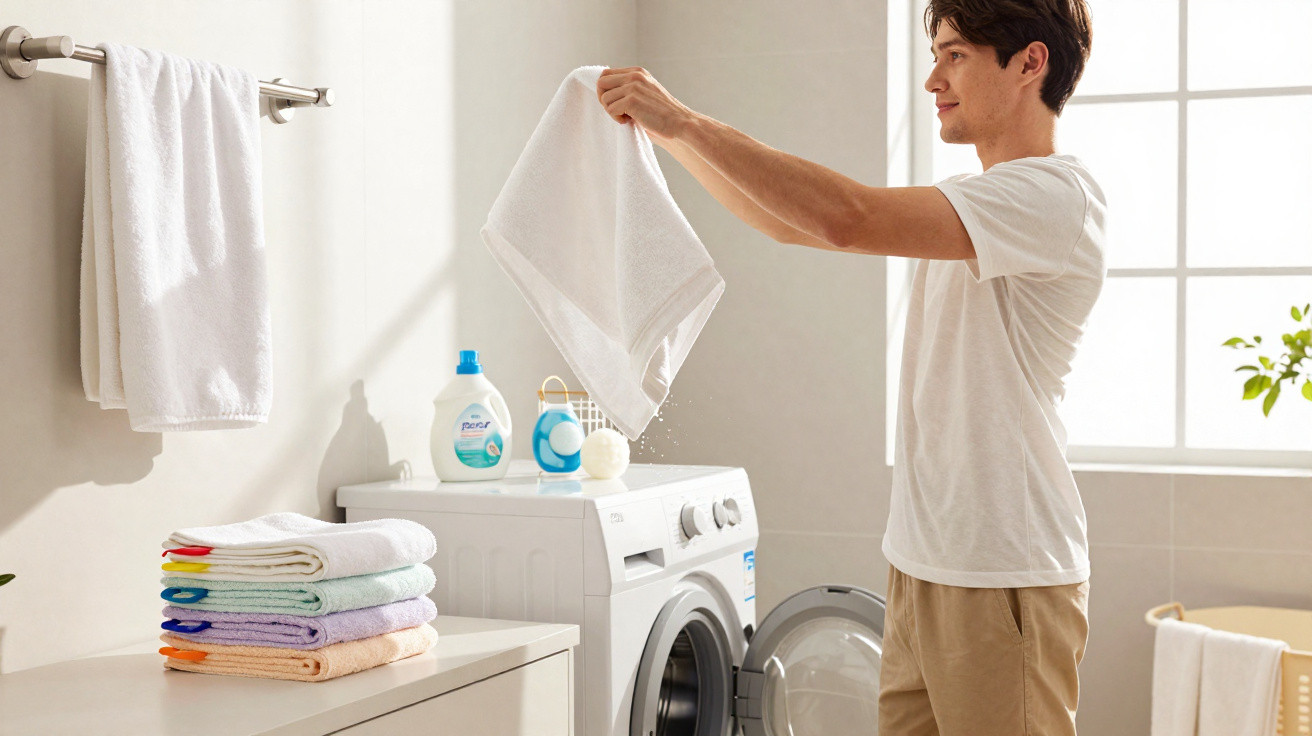
In the bathroom, that fluffy towel sits dutifully on the rail, gets used several times a day, and seems completely harmless. Who’s thinking about germs? A microbiologist is now sounding the alarm: the washing routine in many households is well off the mark - and it can put your skin and health under strain.
How dirty is a towel, really?
After a shower we feel clean, fresh, and squeaky. So the towel can’t be that dirty, can it? That’s exactly the misunderstanding. Every time you dry off, you leave something behind - even if you can’t see it.
- dead skin cells
- skin oils and sweat
- residue from shower gel, shampoo, moisturiser, or make-up
On top of that, there’s moisture. The fabric often stays slightly damp for hours, especially in small or poorly ventilated bathrooms. For microorganisms, that’s the perfect breeding ground.
“A towel isn’t a sterile rag - it’s a warm, damp collection point for germs. The longer it hangs there, the more comfortable they feel.”
Philip Tierno, a US microbiologist at New York University, points out that bacteria and fungi multiply noticeably after just a few uses. In humid rooms, they can reproduce very quickly. Studies show that on a wet towel, germ levels can double within 20 minutes.
The everyday risks people underestimate
Healthy skin can cope with a lot. But the more germs that build up in the fabric, the greater the chance that something goes wrong. It becomes particularly sensitive in certain situations:
- sensitive or cracked skin - for example after shaving, sunburn, or eczema
- acne and blemishes - contaminated towels can make spots worse
- allergies and breathing issues - damp textiles can also accumulate mould spores and bacteria
- people with weakened immune systems - such as those with chronic illness or older adults
There’s another factor too: anyone using inhalers, sprays, or nasal irrigation devices can transfer germs from the mouth and nasal area on to facial skin. If you then keep using the same face towel, those microbes end up in the fabric - and the next time, back on to your skin.
How often should towels actually go in the wash?
Many households wash bath towels weekly, or even only every fortnight. Hygiene researchers consider that far too infrequent. A better approach is to base the schedule on use, not the calendar.
A practical rule of thumb is this: wash a bath towel after three to four uses. If you shower daily, that works out at roughly every two to three days.
| Towel type | Recommended washing frequency |
|---|---|
| Bath towel / shower towel | after 3–4 uses |
| Hand towel by the sink | every 1–2 days |
| Sports or sauna towel | after each use |
| Face towel / flannel | daily |
In some households it’s worth washing even more often - for instance if the bathroom stays humid, lots of people share the space, or there are young children at home. If you live in a very dry home and hang towels properly, you can stretch the interval slightly - but not to weeks.
“The question isn’t, ‘How often do I feel like doing laundry?’, it’s, ‘How often do I actually use this towel?’”
How to care for towels hygienically - without ruining them
It’s not only how often you wash, but how you look after them that determines how clean and long-lasting a towel will be. A few straightforward habits can make a big difference.
Let them dry properly
- After showering, spread towels out fully - don’t throw them on the rail in a damp bundle.
- If the bathroom is very humid, hang the towel in a bedroom or hallway instead.
- Open the bathroom window regularly or use an extractor fan so moisture can escape.
The faster the towel dries, the less chance bacteria and fungi have to thrive.
Washing temperature and detergent
- Wash at 60°C if the fabric allows - this significantly reduces germs.
- Standard powder biological detergent often works better against bacteria than liquid-only detergents.
- Don’t overfill the washing machine, so water and detergent can reach everything properly.
If you’re washing very damp or heavily used sports towels, don’t leave them sitting in the laundry basket for long. Otherwise that familiar musty smell can develop - and it can be difficult to remove.
Fabric conditioner - yes or no?
Fabric conditioner can make towels feel softer, but it can also coat the fibres like a film. That may reduce absorbency and make cleaning less thorough. Many experts therefore advise:
- use fabric conditioner sparingly, or avoid it altogether
- alternatively, add a splash of white vinegar to the conditioner compartment - it can neutralise odours without gumming up the fibres
How long can a towel stay in the cupboard?
Even the best wash cycle won’t turn an old, thinning towel into a hygiene champion. Over time, fibres break down, the fabric becomes rough, and it absorbs water less effectively. Those damaged structures can also give germs more places to cling.
This is a helpful guide:
- replace bath towels roughly every two years, depending on how they’re used
- frequently used hand and sports towels may need replacing sooner
- discard towels that are heavily discoloured, have holes, or smell permanently musty
No sharing: why everyone needs their own towel
Especially in families with children, it’s tempting to grab the nearest towel “just this once”. From a hygiene perspective, that’s a bad plan. If you share a towel, you also share bacteria, viruses, and fungal spores - even when nobody looks ill.
“One towel per person significantly reduces the risk of skin infections and transmissible germs - particularly in the colder months.”
A practical tip: colour-code towels, for example by:
- giving each family member their own colour
- adding small tags or stitched-on markers
- installing separate hooks with names in the bathroom
That way children don’t accidentally pick up the wrong towel, and you can quickly hand visitors their own towel too.
Why “smells fresh” doesn’t automatically mean “is clean”
Many people rely on their nose: if the towel doesn’t smell musty, it must still be fine. The issue is that bacteria and fungi are often present long before any odour appears. On the flip side, a towel can smell of detergent yet still not be particularly low in germs - for instance if the machine was too full or the wash temperature was too low.
That’s why hygiene experts recommend not relying on gut feeling, but setting clear routines: a specific hook, a set number of uses, then straight into the wash - no debates required.
What do we actually mean by “germs” - and when do they become a problem?
The word “germs” sounds alarming, but it simply refers to microorganisms: bacteria, fungi, and in some cases viruses. Many are harmless, and some are even beneficial. It becomes an issue when:
- too many disease-causing organisms build up in one place
- the skin is injured or irritated
- immune defences or the skin’s natural flora are out of balance
A towel on its own doesn’t make anyone ill. But combined with small wounds, shaving nicks, picked spots, stress, or lack of sleep, the risk rises that the body can’t fend everything off. Then even a small number of aggressive pathogens can be enough to trigger inflammation.
If you wash towels regularly and properly, you push that threshold much higher. In simple terms, your skin faces fewer “attacks” each day and can focus on handling the unavoidable ones.



Comments
No comments yet. Be the first to comment!
Leave a Comment