
Where is the hidden mistake?
Every spring, lots of households face the same puzzle: the home has been cleaned, crumbs have gone, the bin is empty - and yet ants appear as if from nowhere. Suspicion quickly lands on uncovered food or a forgotten chopping board. Often, though, the real cause is something else entirely: a small detail in how the floor is mopped that quietly turns into a scent buffet for insects.
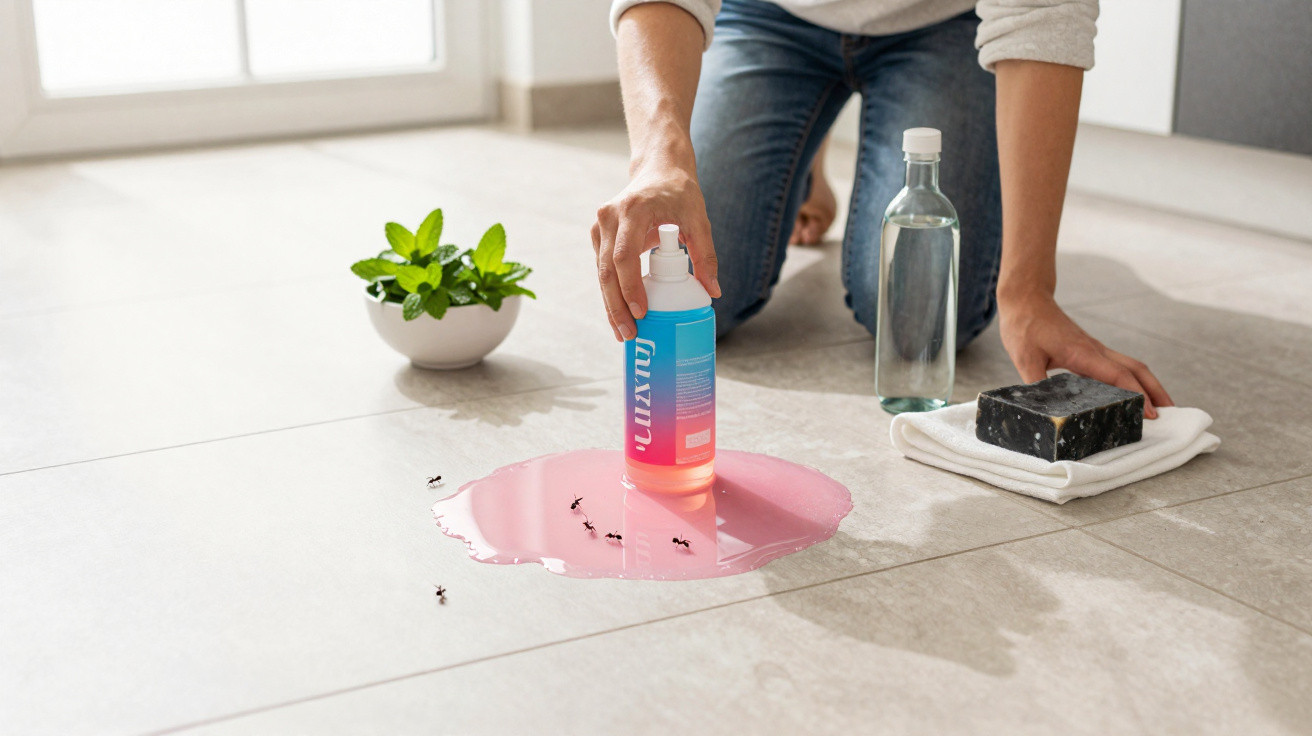
When the floor smells fresh - and ants take it as an invitation
Ants are expert sniffers. Their antennae are extremely sensitive to smells, especially anything that suggests sugar or ripe fruit. That is exactly where the trouble starts in many kitchens and hallways.
If you use heavily perfumed floor cleaners, you can unintentionally lay down a scent trail. Products with fragrances such as “red fruits”, “apple” or “citrus” are particularly popular. To us, that reads as freshness and cleanliness. To an ant, it sounds like a promise of sweet pickings.
"A shiny floor that smells fruity doesn’t seem clean to ants - it feels like a table set for them."
A second factor makes it worse: products labelled “no rinsing required” or “no need to wipe over again”. These often leave a thin film on tiles. That residue can become slightly tacky, holds on to fragrance - and, in day-to-day life, also traps tiny sugar traces, for instance from spilled juice or a splash of lemonade.
When a single ant finds this combination of scent and minimal sugary residue, it marks the route with pheromones. Not long after, a whole column follows the same path - the familiar ant trail running along the skirting boards.
Health and ants: why strongly perfumed cleaners are a double problem
Powerfully scented cleaning products are not only a risk when it comes to ants. Indoor air specialists have warned for years about products containing high levels of fragrances and other volatile components, because they can measurably burden indoor air.
Many measurements have shown that indoor air can be noticeably worse than outdoor air - especially in rooms where strongly perfumed cleaners are used regularly. Poor ventilation makes the effect even stronger.
The fix is surprisingly straightforward: fewer gimmicks, more basics. Simple floor-cleaning products are usually more than enough, and they bring two benefits at once: fewer air pollutants and fewer attractants for ants.
- Neutral cleaners without a strong fragrance
- Classic black soap cleaner
- Diluted white household vinegar (depending on the flooring)
- Hot water and microfibre cloths
With options like these, the floor gets properly clean without smelling like fruit salad.
The real cleaning trap: not dirt, but the wrong mopping ritual
Many people clean very thoroughly: vacuuming, removing any crumbs, emptying the bin. The trap comes at the end of the routine - in the mopping itself.
Common mistakes include:
- Overdosing strongly scented, fruity cleaners
- Not rinsing with clean water
- Always mopping the same walking routes, effectively “perfuming” them every day
Over time, this creates a persistent scent film. For residents it may seem pleasant. For ants it is a clear signal: this is a place where something worthwhile regularly turns up.
"The critical combination is: sweetish scent + thin cleaning film + no rinsing."
By spring at the latest, when colonies become active, one ant is enough - it picks up a tiny sweet trace, or even just the supposedly fruity smell. It lays a trail that others follow, and suddenly the column is marching through the kitchen.
How to mop the floor without attracting ants
If you want to keep ants away, you only need to tweak your cleaning habits slightly. The point is not to clean more - but to clean differently.
Step 1: switch to simple cleaners
Heavily perfumed products can be replaced easily with no-fuss alternatives. Many households do well with a proper black soap cleaner, which has a subtle smell yet cleans thoroughly. A neutral all-purpose cleaner without a dominant fragrance is also suitable.
Step 2: vacuum and sweep thoroughly
Before you mop, it pays to check the usual problem areas carefully:
- Skirting boards and corners
- Under the cooker and under the dishwasher
- Under the fridge
- Around pet feeding areas
Small, easily missed crumbs often collect there - and ants will happily help themselves.
Step 3: mop with hot water - and don’t skip the rinse
For the main mop: use hot water, dose the cleaner sparingly, and avoid creating lots of foam. The key point is the second pass:
- First, mop normally with hot water and a small amount of cleaner
- Then, go over the floor a second time with clean, also hot, water
This second step removes the leftover film that would otherwise bind fragrances and sugar residues. Many households skip it to save time - and end up laying an ant motorway without meaning to.
Vinegar and black soap: the anti-ant routine
Alongside normal mopping, a regular “special round” helps by removing the ants’ own trails. Even if there is no visible food, their pheromone traces can remain on the floor for a while.
A proven approach is warm water with a little white household vinegar. It works well for tiles, engineered stone and many laminate floors. With sensitive natural stone such as marble or lime-rich slabs, it is best avoided, because acid can damage the surface.
"Vinegar water doesn’t just clean - it also wipes away the ants’ ‘memory’ in the form of scent trails."
Focus areas for this clean are:
- Direct routes between the front door and the kitchen
- Edges along skirting boards
- The area around the bin or food waste caddy
- Under cupboards, where scraps often end up
If you mop these zones once a week with a vinegar solution, ants lose their bearings and new columns reduce noticeably.
Menthol barrier: how peppermint scent confuses ants
If you want an extra barrier, reach for peppermint oil. A few drops in the mop water can be enough to confuse these smell-sensitive insects. The strong menthol scent masks their pheromone trails.
The right dose matters: three to five drops in the bucket is plenty. Using more does not increase the effect, but it can irritate residents’ noses and mucous membranes. In areas where food might end up on the floor, you should mop again afterwards with clean water.
A typical ground-floor case - and how it was solved
An example from a block of flats shows how quickly a pattern can form. A family on the ground floor mopped the kitchen every day with a sweet, citrus-scented cleaner. They never rinsed; the floor looked glossy anyway. After nearly three weeks in spring, full ant trails appeared in the mornings - first in one corner, then in several spots.
The change was simple:
- Switching to black soap as the main cleaner
- For every mop: one pass with cleaner, then a second pass with clean water
- Once a week, a vinegar mop round along skirting boards, door thresholds and around the bin
- Three drops of peppermint oil in the bucket when ants became more active again
Within a few days the trails became thinner; after a few weeks they disappeared completely. Not because the ants were exterminated, but because the flat stopped being attractive as a food source.
Why ants seem so persistent - and what they are really looking for
Ants live in tightly organised colonies. Individual workers constantly explore new areas. When one finds food remnants, it marks the route. Others follow the trail and strengthen it with fresh scent marks. The feeling of “more and more ants” is created by this reinforcing effect.
They mainly seek:
- Sugar and sweet drinks
- Proteins, such as tiny bits of meat
- Fatty crumbs, for example from crisps or baked goods
A floor cleaner that smells like sweet fruit can steer ants in the same direction as a drop of lemonade. If that scented film is renewed daily, the area stays permanently interesting.
What else households should watch for
Beyond the right cleaning product, a few everyday habits also matter. Leaving bowls of fruit or open glasses of juice out overnight raises the risk significantly. Pet bowls can also attract ants if leftovers sit around for a long time.
A quick check before bed helps: is anything sweet left out? Is the bin overflowing? Is there still a glass with juice residue under the table? Small evening adjustments prevent major ant trails in the morning.
If you mop with simple cleaners, rinse, avoid scented films, and use vinegar water in key areas, you make your home simply boring for ants. And that is the best protection: no lure, no column.

Comments
No comments yet. Be the first to comment!
Leave a Comment