
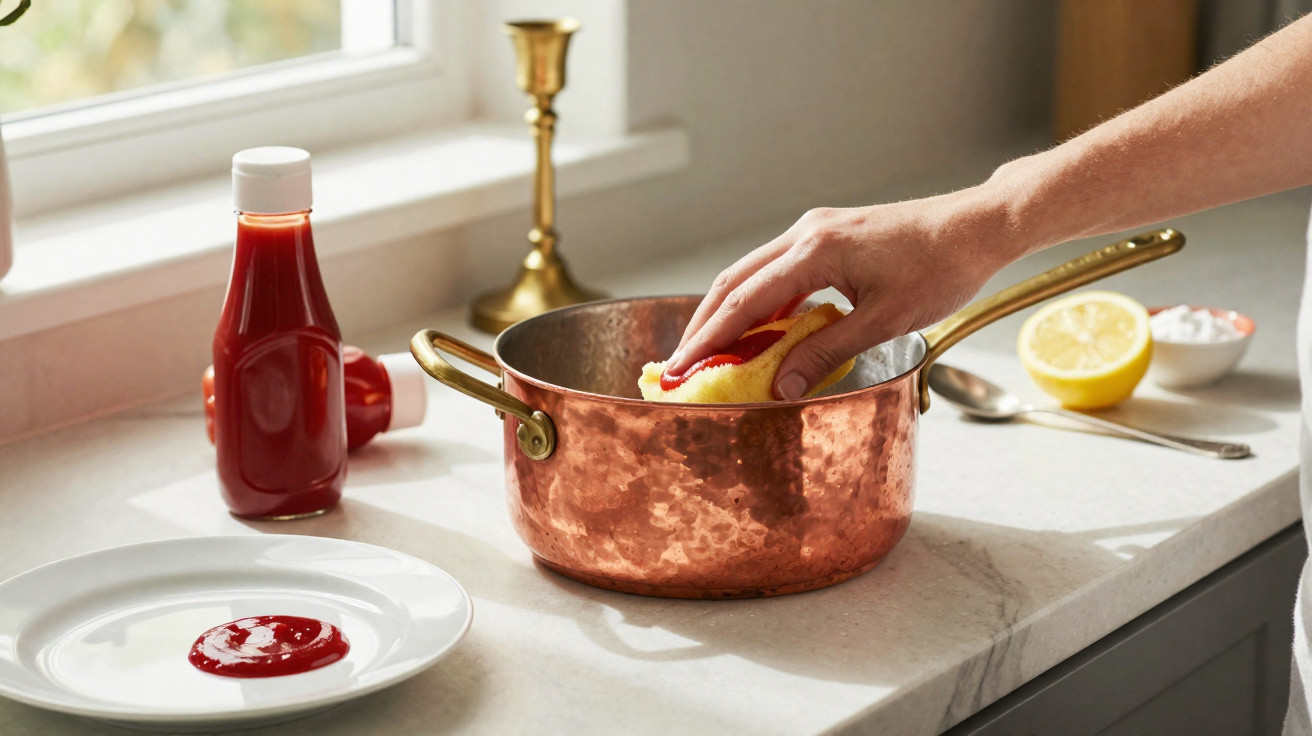
Faded copper pots, dull fittings, darkened silver spoons: in many homes they sit hidden away in a cupboard.
A fridge staple can bring them back to a shine without any hard scrubbing.
Anyone who has tried to polish a heavily discoloured copper pan or old silver cutlery with sheer elbow grease will know the routine: lots of effort, little reward, and aching arms afterwards. Chemical cleaners can smell harsh, cost money and often leave the metal feeling rough. The surprising bit is that a food you usually keep next to the mustard and mayonnaise can do most of the work for you - in roughly a quarter of an hour.
Why ketchup is able to clean metal
On chips, burgers or sausages, ketchup seems completely harmless. Put it on metal, though, and the same red sauce shows a far more powerful side. It is not the tomato flavour that matters, but the combination of acidity, sugar and its creamy, clingy texture.
"Ketchup is mild enough for delicate pieces - and at the same time strong enough to break down oxide layers on copper, brass, bronze and even silver."
Inside the bottle is a sort of do-it-yourself metal cleaner: vinegar provides acetic acid, while tomato purée contributes citric acid. Together, these acids attack the oxidised layer - the dull, greenish or blackened film that builds up over time.
How the acids work in detail
Oxide and patina layers are made of metal that has changed chemically. The acids in ketchup loosen these compounds at the surface without penetrating deep into the material. The metal underneath remains intact; the coating is softened and can then be wiped away with minimal effort.
- Acetic acid: reacts particularly well with copper oxide and brass oxide
- Citric acid: boosts the effect and helps with the darker tarnish layer on silver
- Sugar and starch: create a thick, adhesive consistency - the sauce clings to the metal rather than running straight off
Unlike plain vinegar or lemon juice, ketchup does not immediately drip from vertical surfaces. That gives the acids time to work properly, without you having to keep reapplying it.
pH value: why ketchup is not too harsh for metals
Ketchup sits in the mildly acidic range. It is harmless for people, but very noticeable to oxide layers. Compared with specialist cleaners, which often rely on much stronger acids or abrasive particles, the effect is gentler: it lifts the layer rather than "grinding" it away.
"The acid in ketchup attacks the build-up, not the metal underneath - and that balance is exactly what makes the trick practical for everyday use."
This softer approach is especially worthwhile for older silver cutlery, antique brass lamps or decorative bronze items. Aggressive products can damage fine engravings, dull polished surfaces or roughen thin silver plating. Ketchup works more slowly - and therefore more controllably.
How to clean with ketchup step by step
You do not need specialist knowledge or much equipment for this method. A few everyday household items are enough.
What you will need
- Ketchup (avoid "light" versions or unusual added flavours)
- A soft cloth or a very soft brush (for example, an old toothbrush)
- A bowl of lukewarm water
- A clean cotton or microfibre cloth for drying
Application in four simple steps
- Prepare: Remove dust and loose dirt with a dry cloth so the sauce can work directly on the oxidised layer.
- Apply: Spread a thin, even layer of ketchup over the metal. Do not drown it - a "sandwich-thin" coating is enough. Cover grooves, corners and awkward spots carefully.
- Leave to work: Let it sit for 15 to 30 minutes depending on how severe the discolouration is. During this time, the acid does the work and you do not need to.
- Wipe gently and rinse: Use the soft cloth or brush to lift off the ketchup, which will now look brownish. Rinse thoroughly with lukewarm water and dry immediately.
"The key moment comes after the waiting time: the red sauce turns into a brownish paste - that is where the loosened oxide layer ends up."
If you dry the item straight after rinsing with a clean, dry cloth, you reduce new water marks and streaks. For glossy surfaces such as silver or polished copper, a few extra seconds spent drying carefully can make a real difference.
Which metals the ketchup trick is genuinely suited to
Copper, brass and bronze benefit the most
These three metals respond particularly well to ketchup. Typical household candidates include:
- copper pots, pans and bowls
- brass candlesticks, picture frames and door handles
- bronze figurines, fittings and decorative furniture details
The often greenish or brown patina fades gradually, revealing a much warmer, fresher-looking tone underneath. With older finds from a car boot sale or second-hand shop, the before-and-after difference can be striking.
Silver and silver-plated items: use a light touch
Silver also responds well to the acid mixture. Cutlery, trays or jewellery that have darkened over time can brighten visibly. With thinly silver-plated items, it pays to be cautious when rubbing:
- rub only as much as needed to remove the loosened layer
- avoid abrasive sponges or stiff, rough brushes
- test first on an inconspicuous spot to see how the material reacts
If you have particularly delicate family pieces, try a single item first before moving an entire set into a "ketchup bath".
Limits and risks: where you should take extra care
This cleaning technique is not suitable for every metal or surface. A few points are worth keeping in mind:
- Coated metals: avoid painted or clear-coated surfaces - the acid may soften or lift coatings
- Iron and steel: proceed carefully, as prolonged dampness can encourage rust
- Sensitive stones: with jewellery, do not leave gemstones, pearls or glued settings covered in sauce for long
If you are unsure, apply ketchup to a small patch first and watch what happens. If the test area turns out well, you can move on to larger sections.
Why many people stick with ketchup after the first try
People who try this trick often describe a similar moment of surprise: an old copper mould suddenly looks bright again, the brass on a chest of drawers appears almost new, and the black film on silver disappears - without sore arms or sharp fumes.
"Success depends on three things: patience during the waiting time, gentle wiping, and thorough drying at the end."
Once you have seen how dramatic the contrast can be, the ketchup bottle stops being just a barbecue staple. Many then keep it as a general-purpose helper for tarnished metal - right alongside bicarbonate of soda, vinegar and lemon juice.
Useful kitchen add-ons and combinations
Ketchup is not the only helper from the fridge or cupboard. For specific situations, combining it with other household staples can be worthwhile:
- Salt: a pinch of table salt mixed into ketchup can increase the cleaning power on very stubborn layers (use only on robust surfaces)
- Baking powder: after the ketchup treatment, a damp cloth with a little baking powder can remove light remaining residue
- Oil: a drop of cooking oil applied to fully dried metal at the end can help the shine last a little longer
This style of cleaning is also kinder to the environment: the sauce goes down the drain without bringing aggressive chemicals that later need to be removed in sewage treatment.
So if you are next faced with dull copper or spotty silver, you may not need to hunt for another specialist cleaner. A quick reach into the fridge, around 15 minutes of patience and a soft cloth are often enough to make hidden metal treasures presentable again.
Comments
No comments yet. Be the first to comment!
Leave a Comment