
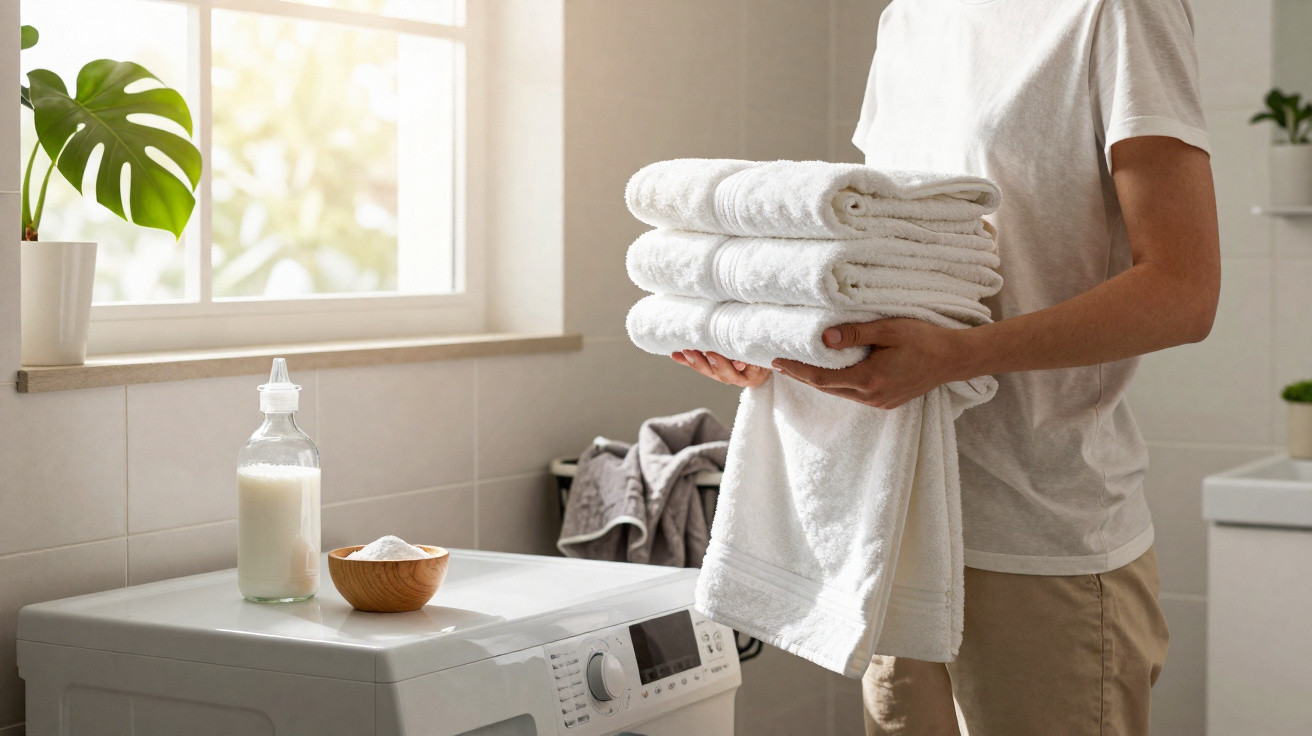
Towels are one of those everyday household items you barely notice. You step out of the shower, dry off quickly, hang the towel back up - done. Yet hygiene researchers warn that if you leave towels too long between washes, you may be creating a mini germ factory right beside the shower.
Why towels become germ magnets so quickly
At first glance, towels seem harmless. After all, they only touch freshly washed skin - and that’s exactly what misleads many people. Even straight after showering, far more ends up on the fabric than you might expect, including:
- dead skin cells
- natural skin oils and traces of sweat
- residues of shower gel, shampoo, creams and make-up
This combination sits in the fibres. If the towel is then hung up while still damp, it creates ideal conditions for microbes. Warmth, moisture and limited airflow are exactly what bacteria and fungi thrive on.
"A slightly damp towel hanging in a poorly ventilated bathroom can be covered in bacteria within a short time."
Specialists report that germ levels on a wet towel can rise noticeably after only a short period. Studies show that on damp textiles, bacteria can sometimes double within 20 minutes. The longer the towel stays hanging in a corner, the more this invisible colony grows.
This matters particularly for anyone with sensitive skin, eczema, acne or allergies, as they can react more quickly to these microbial hotspots. People who regularly use inhaled medication may also introduce additional micro-organisms around the face - making a clean face towel especially important.
How often should you actually wash towels?
A classic household line is: “Bath towels? I just wash them once a week.” Hygiene researchers tend to be much stricter. The broad consensus is that towels should go into the wash far sooner than many assume.
Typical expert guide values look like this:
| Type of towel | Recommended washing frequency |
|---|---|
| Shower towels / bath towels | after 3–4 uses |
| Hand towels by the sink | every 1–2 days |
| Sports and gym towels | after every use |
| Face towels / flannels | change daily |
If you shower once a day, these recommendations usually work out at a washing interval of roughly two to three days for bath towels. Anyone who sweats heavily, showers very hot, or lives in a damp home should lean towards the shorter end of that range.
"The idea that ‘once a week is enough’ is outdated for towels - especially in damp bathrooms with little fresh air."
On the other hand, if you live in a very dry home, always air towels properly, and truly only use them after a fresh shower, you may be able to leave it slightly longer in individual cases. These expert figures should be treated as an upper limit, not a compulsory schedule.
Which factors affect how often towels need washing
How strict you need to be with towels depends heavily on everyday life. There are several common situations where washing more frequently makes sense:
- Damp bathrooms: no window, limited ventilation, and wet walls after showering - microbes multiply especially quickly in these conditions.
- Large families: if several people share a small bathroom, there’s often one shower after another and the air stays humid for longer.
- Sensitive or damaged skin: anyone prone to spots, eczema, fungal infections or broken skin needs consistently clean textiles.
- Allergy sufferers: towels can also trap pollen and dust, and frequent washing reduces exposure.
- Pets in the bathroom: letting a dog or cat into the bathroom introduces additional sources of dirt and germs.
If you recognise your household in any of these points, it’s sensible to increase your washing frequency. Hand towels and face towels, in particular, should then go into the machine at short intervals.
How to care for towels hygienically and gently
How often you wash is only part of the picture. Just as important is what happens between washes - and what you do in the washing machine itself.
Drying properly after every use
The most important step comes immediately after drying yourself. If you simply throw the towel over a radiator in a bundle or leave it scrunched on a hook, you encourage microbial growth.
- Spread the towel out rather than folding it in half or thirds.
- Hang it on a hook or rail so air can circulate on both sides.
- If the bathroom is very humid, let the towel dry in a hallway or bedroom.
- Open the window or switch on the extractor fan until the air is no longer steamy.
"The faster a towel dries completely, the worse the odds are for bacteria and fungi."
The right washing-machine temperature
Hygiene researchers generally recommend washing towels at 60°C. At this temperature, most germs are removed reliably. If you usually wash at 30°C or 40°C for environmental reasons, it’s worth making exceptions for towels - particularly in:
- households with small children
- homes with people who have a weakened immune system
- situations involving open wounds or fresh tattoos
- athletes whose towels are heavily soaked with sweat
Avoid overfilling the machine, otherwise the textiles won’t rinse through properly. A biological powder or liquid with a bleaching component can help with discolouration and many micro-organisms.
Fabric conditioner, vinegar and other “tips”: what actually helps
Many people reach automatically for fabric conditioner because it makes towels feel softer. The drawback is that these products coat the fibres like a film, reducing absorbency. Instead of soaking up water, the towel can start to repel it.
A common alternative is a splash of white vinegar in the fabric-conditioner compartment. It can reduce odours and limit limescale build-up without sealing the fibres. If you have sensitive skin, it’s sensible to check whether you tolerate vinegar and to use it sparingly.
When towels have truly reached the end of their life
Even the best care doesn’t change the fact that towels eventually wear out. With every wash, fibres break down; the fabric becomes thinner and the texture rougher.
A practical rule of thumb is that after around two years of heavy use, it’s time to replace them. Sometimes it should be sooner, for example if:
- the towel still smells musty even after washing
- the material has clearly thinned or become stiff
- stains remain despite a 60°C wash
- absorbency noticeably drops
Old towels don’t have to go in the bin. They often work well as cleaning cloths or for the car - they just shouldn’t be used on your body anymore.
What many people underestimate: towels and skin health
Invisible germs may sound abstract, but the consequences aren’t. If you use the same face towel for weeks and only wash it occasionally, you may eventually notice:
- frequent spots appearing in the same places
- redness after drying your skin
- small, itchy bumps on the body
People with acne or sensitive skin often report a clear improvement when they switch to a fresh face towel every day. It’s also crucial for razor burn or after cosmetic treatments: otherwise, open pores come into direct contact with a mix of microbes from previous days.
There’s also the question of sharing. What seems “practical” between siblings or partners can turn into a bridge for germs. Experts clearly advise that each person should have their own set of towels - ideally in different colours so nothing gets mixed up.
How to build simple routines into everyday life
If you’re thinking, “That sounds like a lot of washing,” a few straightforward routines can make it manageable. Useful approaches include:
- keeping at least three bath towels per person, plus several small face towels
- planning fixed wash days, such as a towel wash every two to three days
- assigning towel colours to each person so they don’t get mixed up
- using a separate laundry basket in the bathroom just for towels
After a short time, it becomes an automatic habit you hardly think about. The overall germ load in the home drops noticeably, and your skin often responds with fewer irritations.
"A fresh towel only costs a few extra minutes in daily life - but it can save you trouble with skin and health."
If you consistently let towels dry properly, wash them more often, and replace old ones in good time, you create a simple but effective barrier in everyday life. It’s not dramatic and you can’t see it - but it can be surprisingly important for a healthy home.
Comments
No comments yet. Be the first to comment!
Leave a Comment