
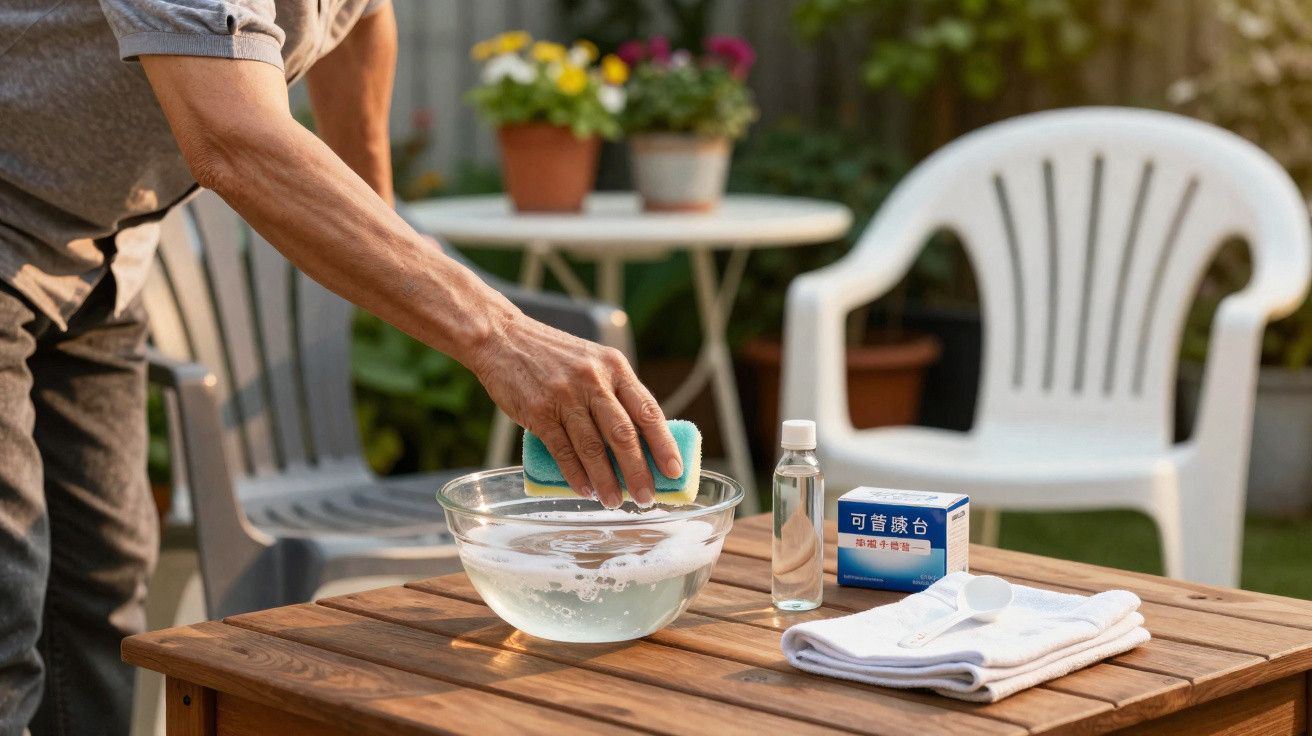
As soon as spring arrives, many people excitedly haul the table and chairs out of the shed-only to freeze in disbelief: a grey film, yellowish stains, black specks. The plastic looks tired and dull, even when the set was bought only a year or two ago. And at exactly this point, plenty of perfectly usable pieces end up at the recycling centre for no good reason.
Why plastic garden furniture turns shabby so quickly
Plastic is often considered easy-care and largely unfazed by rain, hail and pollen. Outdoors, however, the reality is less forgiving: sunlight, moisture and grime slowly attack the material. Over time the once-smooth surface becomes slightly rough, fades a little and can turn porous. Those tiny pores then trap whatever happens to be floating around outside.
Common culprits include:
- UV radiation, which bleaches colour and accelerates ageing
- Rain and condensation, which encourage algae and mould
- Temperature swings, which create fine cracks and microscopic damage
- Dust, pollen and soot, which settle into a grey film
Even a fairly new seating area made from PVC or plastic weave can look as though it has been outside for a decade after just one damp winter. It may be frustrating to look at, but it doesn’t automatically mean the furniture belongs in the bin.
When cleaning is enough-and when the chair really is scrap
Before you start scrubbing, it pays to assess the condition calmly. Broadly speaking, there are two situations:
- Just dirty: a grey, green or black film, stains, and a surface that feels slightly rough-thorough cleaning usually fixes this.
- Structurally damaged: the material feels chalky, “crumbles” when rubbed, shows cracks, or has already been patched-then its remaining lifespan is limited.
If you spot deep cracks or legs that have started to split, the issue isn’t just appearance. A plastic chair can fail suddenly under load. For safety, anything like that should be removed from use-especially if children or older people might sit on it.
Before the bucket comes out, do a quick check: would the chair still hold me safely if it had to-or is it already wobbling and creaking?
The kitchen mix for grey film: water, vinegar and bicarbonate of soda
If the problem is purely cosmetic, a simple homemade blend of everyday items is often enough. The foundation is warm soapy water, vinegar and bicarbonate of soda-things many households already have in the cupboard.
For a bucket with around three litres of warm water, this mix works well:
- about 250 millilitres of clear household vinegar
- roughly three tablespoons of bicarbonate of soda
- a generous amount of soap (soft soap, bar soap or washing-up liquid)
The mixture will start to foam-this is intentional and shows the bicarbonate of soda and vinegar are reacting. Use the solution straight away so you get the full effect.
Step-by-step guide to brighter plastic furniture
- Remove loose dirt: sweep away cobwebs, leaves, sand and dry soil with a hand brush or a dry cloth.
- Mix the solution: pour warm water into the bucket, stir in the soap, add the vinegar, then sprinkle in the bicarbonate of soda last.
- First clean: rub the furniture all over using a soft sponge or cloth-don’t forget undersides and backrests.
- Leave it to work: on heavily soiled patches, let the solution sit on the surface for 10 to 15 minutes.
- Go over it again: work on stains and grey areas gently but thoroughly with the soft sponge.
- Rinse: wash everything off with plenty of clean water-ideally using a garden hose.
- Dry: finish with a microfibre cloth so new water marks don’t form.
If white surfaces are badly yellowed, a little extra bicarbonate of soda can help. Some people also use a few grains of washing soda directly on stubborn spots. The rule here is: test first on an inconspicuous area and use sparingly, because too much can leach the surface.
Take care with coloured furniture
With chairs or loungers in strong colours, reduce the bicarbonate of soda. Its mildly abrasive action can make pigments look duller. In these cases, rely more on warm water, soap and vinegar, and allow a longer dwell time rather than scrubbing harder.
With colourful plastic, patience beats aggressive chemicals-so the colour stays fresh for longer.
Common mistakes that permanently ruin plastic
Many well-intentioned cleaning attempts end in damage that can’t be undone. Certain products should therefore be kept well away from the patio table.
- Bleach: high-chlorine cleaners can attack plastic, leave blotchy discolouration and make it brittle.
- Harsh solvents: products designed for limescale or heavy grease in bathrooms and kitchens can soften and dissolve surfaces.
- Abrasive tools: wire wool, tough scouring pads or wire brushes create scratches where dirt reattaches extremely quickly.
- Pressure washers: used too close, the jet can tear material away-especially at edges and on already-aged surfaces.
- Oil as a “shine product”: cooking oils may give a short-term gloss, but over time they can make the surface more porous and attract dust.
If you’re unsure about a cleaner, always test it somewhere hidden-such as underneath a chair leg. If a pale patch appears within minutes, that product is off-limits for the rest of the furniture.
How to keep chairs and tables looking good for longer
Once the plastic looks presentable again, a few simple habits will keep it that way far longer. It doesn’t require intensive maintenance.
Quick in-season routine
During the warmer months, a light clean every two weeks is usually enough:
- wipe over with lukewarm soapy water
- remove pollen, bird droppings and blossom dust immediately-don’t let them dry on
- after rainfall, wipe away standing water from flat surfaces
This prevents typical algae and mould build-up from taking hold in the first place. What doesn’t stick now won’t need laborious removal at the end of the season.
Proper storage in autumn and winter
Before storing the furniture, give it one thorough clean and let it dry completely. If you use a cover, make sure air can still circulate underneath. Trapped moisture under an airtight sheet otherwise leads to new staining.
Ideally, keep the furniture dry in a garage, shed or cellar. If you don’t have space, place it at least by a sheltered wall under a roof overhang or awning. Frost rarely destroys plastic immediately, but it does noticeably speed up the ageing process.
Every month without harsh sun and constant rain noticeably extends usable life-plastic no less than wood or metal.
When painting is worth it-and when it isn’t
Some heavily aged sets can only be made to look good again with paint. Specialist plastic spray paints tend to adhere reasonably well and can turn greyed chairs into real eye-catchers. Whether the finish lasts depends on preparation:
- clean thoroughly and remove all grease
- wipe off loose, chalky layers or lightly key the surface (using very fine abrasive fleece)
- only use products explicitly labelled for plastic
- apply several thin coats rather than one thick layer
If load-bearing parts are already brittle or cracked, it’s not worth investing time and money in paint. In that situation, replacing the set is often the more sensible option-ideally with furniture that stays low-maintenance over the long term and is better protected during winter.
Why simple home remedies are often the best option
Vinegar, bicarbonate of soda and soap aren’t just inexpensive-they’re also generally well tolerated in everyday use. When used correctly, they are kinder to both the material and the environment. Many specialist garden-furniture cleaners rely on stronger surfactants or solvents that can be harsher on surfaces and create a greater burden in wastewater.
Another plus: mixing it yourself lets you control the strength. Tough grime can be tackled with a touch more bicarbonate of soda, while sensitive coloured surfaces can be cleaned with a milder dose. That kind of fine-tuning is often missing from ready-made products.
Treating your furniture this way doesn’t only save money; it can significantly extend how long you can use it. Looking after what you already own also helps conserve resources-while making your favourite garden spot feel inviting again, rather than fit for the tip.
Comments
No comments yet. Be the first to comment!
Leave a Comment