
Bundles of white, green and purple spears are piling up at market stalls again. They look crisp and smell of spring - yet they come straight from the soil, often carrying traces of sand, dirt and agricultural treatments. Many people give them a quick rinse under the tap and assume that’s job done. Specialists disagree: if you want to clean asparagus properly, you need a slightly more considered approach.
Why a quick rinse under the tap isn’t enough for asparagus
Asparagus grows in the ground, often in sandy ridges. The spears have lots of tiny scales and a tightly closed tip. That’s exactly where particles can lodge - including ones you can barely see. Nutrition experts point out that it isn’t just soil that clings to the spears; residues of plant-protection products and, occasionally, tiny insects can also collect there.
There’s another issue: modern plant-protection products are designed to withstand rain. Tap water is, in effect, just “rain” delivered differently. If you only run the spears briefly under the tap, you’ll wash off surface grime, but you won’t shift everything hiding in the fine gaps around the tip.
"Specialists recommend combining mechanical cleaning - rubbing, swishing, brushing - with a sufficiently long soak in water."
Studies in food chemistry show that plain water can reduce some residues, but it quickly reaches its limits with many active substances. Compounds that cling strongly, or those that interact with waxy or fatty layers on the surface, can remain to some extent.
The standard professional trick: how to wash asparagus step by step
If you’re cleaning asparagus at home, it’s best to do it in stages. It only takes a few minutes, but it makes a noticeable difference to both hygiene and enjoyment.
Step 1: remove woody ends
The bottom centimetres are usually fibrous, dry and have had the most contact with soil. Many chefs snap the spear where it naturally “breaks”. A reliable approach is:
- Cut or snap off 2.5 to 5 centimetres from the end
- With thick, white spears, peel the lower section as well
- Only use peelings and ends if you’ll simmer them for a long time (for example, for stock) - otherwise, dispose of them
This way, part of the potential surface residue ends up in the bin rather than on your plate.
Step 2: soak in cold water
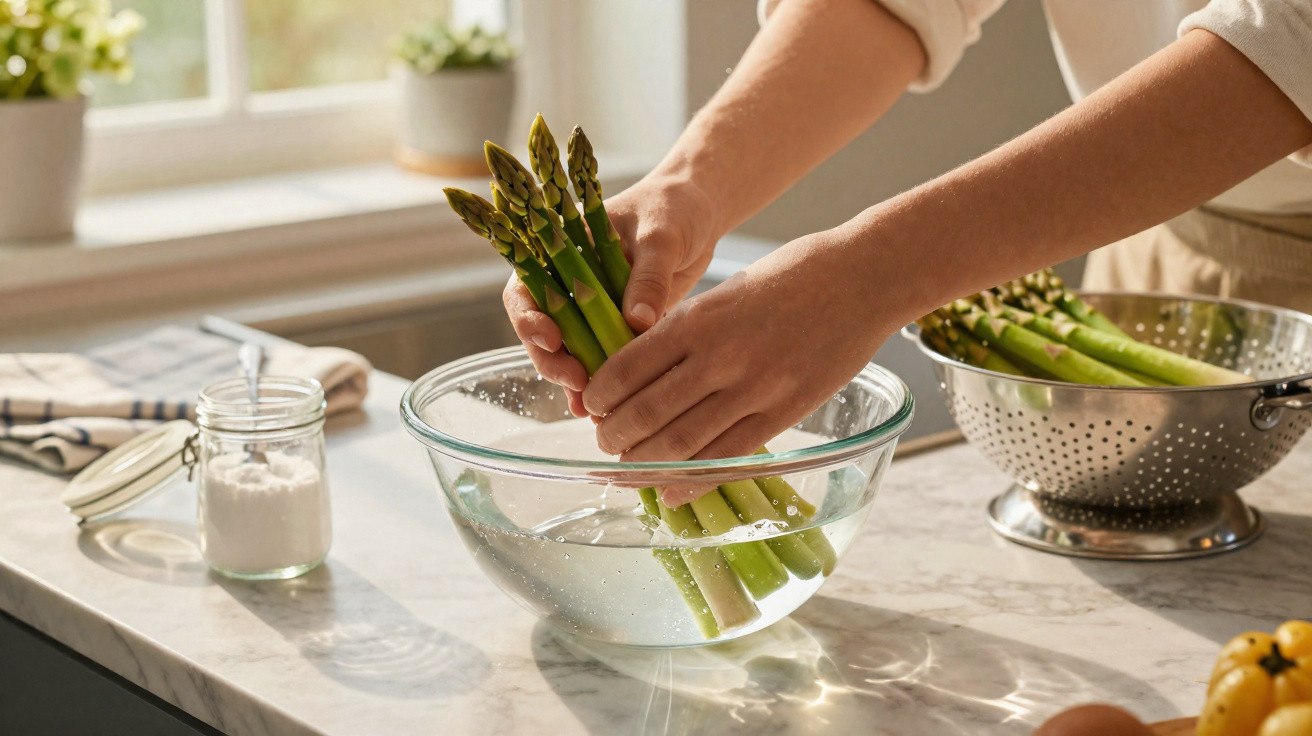
Instead of only rinsing, it’s worth giving the spears a proper bath. Use a large bowl or the kitchen sink, fill it with cold tap water, and submerge the asparagus. Ideally, leave it to soak for five to ten minutes.
During this time, grains of sand, soil and insects can loosen and sink to the bottom. The spears need enough room to move. Gently swishing them back and forth with your hands boosts the effect.
"If you lightly ‘lift and shake’ the tips in the water, you dislodge dirt trapped between the tightly overlapping scales."
Step 3: finish under running water
After soaking comes the detailed work. Hold each spear individually under cold, gently running water. Run your fingers from the bottom upwards along the spear, and massage the tip very carefully. For very thick spears, a soft vegetable brush can help.
Important: don’t press too hard, or the heads can break. The aim is light friction that lifts the last particles away. If you’re highly sensitive or cooking for small children, it’s worth taking a couple of extra minutes at this stage.
Step 4: drain well or pat dry
Freshly washed asparagus shouldn’t go into the pan or oven dripping wet. Excess water dilutes flavour and increases cooking time. Lay out a clean tea towel or kitchen paper, place the spears side by side, and gently pat them dry. Alternatively, leave them to air-dry for five minutes.
"Properly dried asparagus browns better and tastes more intense, because it doesn’t steam in its own wash water."
Maximum option: a bicarbonate of soda bath for extra-cautious eaters
For people with weakened immune systems, pregnant women or small children, some experts suggest a slightly more robust method. This involves bicarbonate of soda - specifically sodium hydrogen carbonate (household bicarbonate). The substance is mildly alkaline and can loosen certain surface residues more effectively than water alone.
How to do the bicarbonate of soda bath, step by step
- Remove the ends as described; peel thick spears if needed.
- Pour 1 litre of cold water into a bowl.
- Stir in about 10 grams of bicarbonate of soda (roughly one heaped teaspoon).
- Add the asparagus and leave it to soak for 12 to 15 minutes.
- Stir with your hand occasionally and move the tips.
- Then rinse very thoroughly under clear water.
- Dry as usual or pat dry.
Tests on different types of fruit and vegetables show that a mild bicarbonate solution like this can remove a large share of certain contact pesticides. In some cases, the reduction rates were clearly above 80 percent. The figures vary depending on the active substance, but they underline one thing: the bicarbonate bath provides an additional effect.
"Bicarbonate can significantly lower surface contamination, but it doesn’t replace an overall mindful approach to food."
What you should avoid when cleaning asparagus
Many “home remedies” sound plausible, but they’re not a good idea for asparagus in the kitchen. Some damage the vegetable; others simply aren’t meant for consumption.
- Washing-up liquid: made for dishes, not food. Residues don’t belong on your plate.
- Bleach or similar cleaners: strictly off limits - they attack surfaces and pose health risks.
- Neat vinegar or very strong acids: can affect the delicate structure of asparagus, change the colour and throw off the flavour.
- Extremely long soaking: draws out flavour and leaves the spears soft and watery.
If you want to play it safe, stick to the proven combination: trim the ends, soak in water, rinse with attention, optionally use a bicarbonate solution, and dry carefully.
How much does washing actually reduce residues?
Laboratory results show a clear pattern: thorough washing noticeably reduces residues on the surface, but it doesn’t remove every trace. Substances that have penetrated deep into the plant aren’t reached by either water or bicarbonate. They sit within the tissue - much like nutrients.
In everyday terms, this means: if you buy asparagus from regions with strict controls, ideally from integrated or organic farming, and then clean it carefully, you reduce risk on several levels. Each measure adds to the overall effect.
| Measure | Benefit |
|---|---|
| Remove ends | earthy, more heavily exposed sections go in the bin |
| Water bath | sand, dirt and loose particles lift off |
| Targeted rinsing | residue between the scales is loosened |
| Bicarbonate solution | part of the chemical surface residue is broken down or dissolved |
| Drying | better texture and more flavour when cooking |
How you’ll notice the difference when eating
If you compare unwashed asparagus with carefully cleaned spears, the difference is obvious. Clean asparagus snaps more evenly, tastes purer and feels cleaner in the mouth. No gritty sand, no dark specks in the cooking water, no brownish marks in the sauce.
For sensitive people, washing can even help prevent stomach upset, because less dirt and fewer potential irritants make it to the plate. Restaurants treat this cleaning step as standard - at home, it’s often underestimated.
Practical everyday tips for asparagus
To stop washing turning into a science project, a few routines help. Buy asparagus as fresh as possible and store it in the fridge wrapped in a damp cloth. Only wash the spears shortly before cooking; otherwise they can soften more quickly in the fridge.
If you eat asparagus often, it can help to “set aside” a small spot in the kitchen: a bowl for soaking, a soft brush and a clean cotton cloth. Then the process becomes almost automatic while potatoes or sauce are already on the hob.
The effort pays off for grilling, too. When you cook directly over high heat, any dirty spots and leftover grit show up faster. Clean, well-dried spears develop attractive charred flavours on the grill without tasting bitter.
In the end, asparagus is delicate but rewarding. Give it a few minutes of attention while washing, and you’ll be repaid with fuller flavour, better texture - and a much better feeling when you eat it.

Comments
No comments yet. Be the first to comment!
Leave a Comment