
It sounds sensible at first glance, but specialists say it’s actually a very bad idea.
Plenty of people still look after wooden chopping boards, cooking spoons and spatulas the way they learnt from their parents or grandparents: grab a saucepan, pour in very hot water, scrub hard - done. A kitchen expert from a television breakfast show is now challenging that habit head-on and explains how to get wood properly hygienic without destroying it in the process.
Popular kitchen trick exposed: boiling wooden utensils does more harm than good
The reasoning feels straightforward: if hot water kills germs, then boiling water must disinfect a wooden spoon even more thoroughly. That assumption has taken root in many homes and is cheerfully shared online as a “life hack”.
However, a kitchen specialist who appeared on a well-known TV morning programme strongly disagrees. He describes boiling wooden utensils as a “massive wrong decision” - one that’s bad for the spoon and doesn’t improve hygiene either.
“When you boil wood, its natural components leach out, the material swells and, over time, becomes soft, stained and unattractive.”
He explains what happens in a bubbling pan: the wood fibres release tannins and pigments into the water. Many people recognise this from new chopping boards whose surface can discolour after heavy contact with water. At the same time, the wood absorbs more moisture, swells and may warp.
Rather than staying compact, smooth and easy to keep clean, the surface turns dull and slightly spongy. Dirt then settles back into tiny dents and pores. In other words, the supposed hygiene trick creates exactly the porous texture that germs thrive on.
Expert-recommended care: gentle cleaning, then a mechanical “refresh”
On the show, the TV expert shared how he treats his own wooden utensils. The first step is simple but reliable: normal washing-up with a mild detergent.
- Everyday cleaning: warm water and a gentle washing-up liquid
- If there’s a strong smell: add a little vinegar to the washing-up water
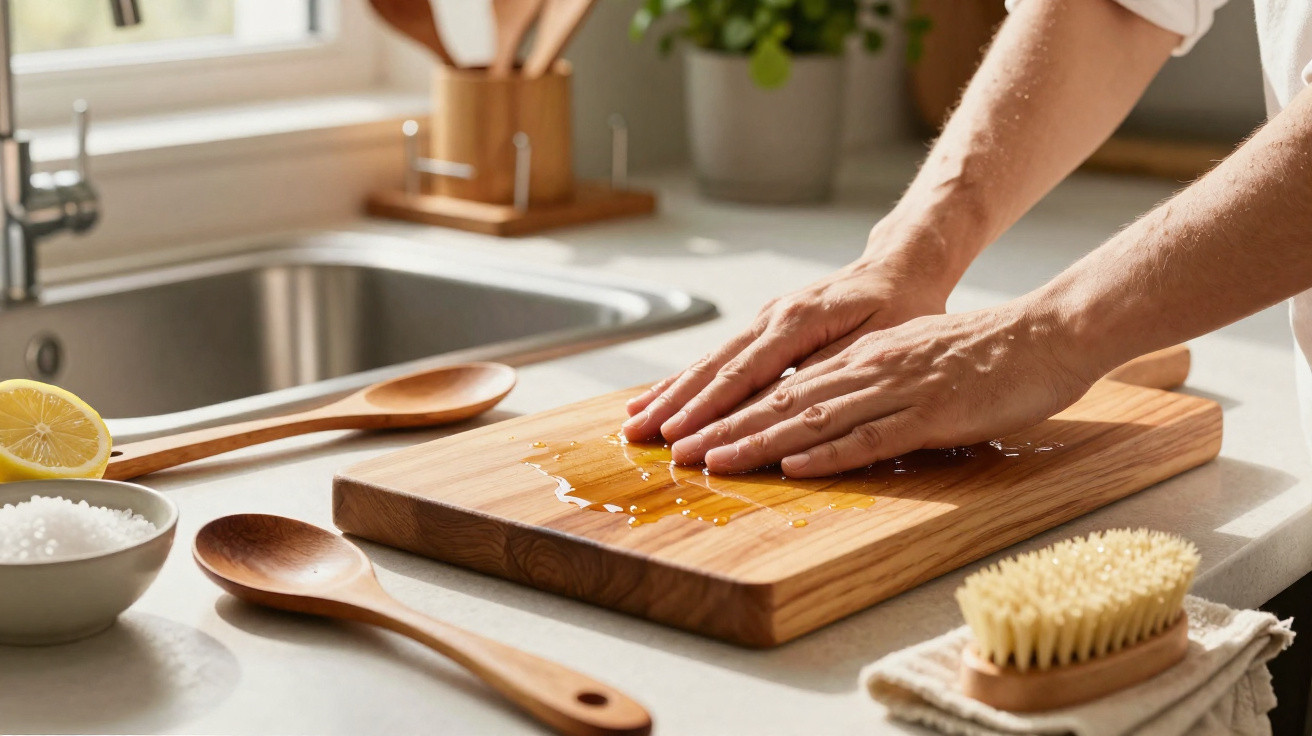
- For a deep refresh: fine sandpaper and cooking oil
When it’s time for a proper “overhaul”, he doesn’t reach for a saucepan - he reaches for fine sandpaper, such as 180 grit. This allows you to carefully remove the worn top layer of the wood.
The result is that the surface feels smooth again, small grooves are reduced and discolouration fades noticeably. Unlike boiling, the wood isn’t softened; it’s carefully levelled and compacted.
“A quick sand with fine sandpaper can make old wooden spoons look surprisingly fresh - almost like they’ve just been bought.”
To finish, the expert recommends applying a thin layer of plant-based cooking oil. Oiling lightly seals the pores, helps protect against moisture and brings out the natural grain. That way, spoons, boards and spatulas stay hard-wearing without losing their character.
Step-by-step guide: how to care for wood in the kitchen properly
Daily cleaning after cooking
After each use, a few quick steps are usually enough:
- Rinse the wooden utensil under warm water straight after use.
- Clean with a soft sponge and a small amount of washing-up liquid.
- Rinse briefly with clean water.
- Dry thoroughly with a clean tea towel.
- Leave to finish drying in the air, standing or lying flat - not on a radiator.
Anyone who has chopped garlic, onions or fish will know the issue: the smell can linger in the wood for days. A simple fix helps here: rub a little vinegar or lemon juice onto the damp board, leave it for a short time, then rinse. The acid neutralises odours and has a mild antibacterial effect.
Regular “wellness day” for chopping boards and wooden spoons
Depending on how often you use them, it’s worth giving wooden items a more thorough treatment every few months. You only need a small “workstation” on the kitchen table:
- fine sandpaper (around 180–240 grit)
- a cotton cloth or kitchen paper
- a neutral cooking oil, such as sunflower or rapeseed oil
Method:
- Make sure the wood surface is clean and completely dry.
- Sand gently in the direction of the grain until the surface feels smooth.
- Wipe away dust with a dry cloth.
- Apply a few drops of oil and rub in a thin layer.
- After a few minutes, wipe off any excess oil.
Important: the wood should not be dripping with oil. A whisper-thin coat is more than enough. Too much oil can turn rancid and cause unpleasant smells all over again.
Why wood is a clear favourite over plastic in the kitchen
Wooden utensils don’t just look homely; they’re increasingly seen as a much healthier option. A well-known doctor, frequently invited onto TV health programmes, has been highlighting potential risks linked to plastic in the kitchen.
His criticism is that many plastics contain substances that can leach out under heat, fat and acid and migrate into food. These substances are suspected of interfering with the body’s hormone balance.
“Plastic kitchen tools are coming under increasing fire because chemicals within them can leach out and influence health over the long term.”
The doctor mentions, among other things, a higher risk of hormone-dependent cancers such as breast or prostate cancer. He also links certain plastic components with disruptions to children’s development. His blunt recommendation is that anything made of plastic in the kitchen that comes into contact with heat or food should gradually be phased out.
Compared with plastic, wood offers several advantages:
- no plasticisers or other soluble additives
- gentle on non-stick coated pans and pots
- comfortable grip and less likely to slip in the hand
- warm, timeless appearance
- potentially sustainable sourcing, for example from regional woods
So, switching to wood isn’t merely an aesthetic choice - it’s primarily a sensible health decision, provided you look after it correctly.
Wood is tough - but not indestructible
Despite all its benefits, there are pitfalls to avoid. Wood does not cope well with long-lasting moisture. Spoons, boards and bowls belong neither in the dishwasher nor left for hours in washing-up water. The combination of heat, aggressive detergents and pressure inside the machine damages the structure, encourages cracking and promotes warping.
Wood also dislikes sudden temperature changes. Rinsing in ice-cold water straight after contact with hot oil can create tension and, in the worst case, lead to fine cracks. Once those appear, it’s difficult to keep the item truly hygienic.
| Do | Don’t |
|---|---|
| Wash by hand with mild washing-up liquid | Put it in the dishwasher |
| Dry immediately and store somewhere airy | Leave it sitting in water for a long time |
| Sand lightly and oil regularly | Boil it in a pan or pour boiling water over it |
| Use separate boards for meat and vegetables | Cut everything on one old board indefinitely |
How long can you use wooden utensils?
With proper care, wooden utensils can last for many years. Even so, there are points where it’s better to let them go. A spoon that is badly split or feels noticeably soft and spongy should be thrown away. The same applies to boards with deep, dark grooves that still don’t feel clean even after sanding.
A practical rule of thumb: if you can’t get a wooden item properly smooth again, or it holds onto an unpleasant smell, replace it. For day-to-day cooking, it’s worth having a small, sturdy set - for example two to three spoons, a spatula and at least two chopping boards for different food groups.
Why stopping the boiling routine makes a noticeable difference
If you’ve long been used to “sterilising” wood in a saucepan, you’ll need to change your routine. In practice, though, it’s hardly any extra work: instead of putting a pot of water on, you simply reach for sandpaper and a little oil. The utensils keep their shape, stay hard and smooth, and are much less likely to take on unpleasant odours.
Mechanical cleaning also makes you more aware of what condition your kitchen tools are in. When you sand, cracks, stains or soft patches become obvious straight away. That means you can spot earlier when something should be replaced - and avoid a seemingly “clean” spoon that has already become a magnet for bacteria.
If you consistently avoid plastic, choose wood and care for it properly, you improve several things at once with simple steps: fewer chemicals near your food, longer-lasting kitchen utensils and a much better feel when you cook. There’s just one habit to drop for good: trying to “disinfect” wooden spoons and boards in a rolling, boiling pan.
Comments
No comments yet. Be the first to comment!
Leave a Comment