
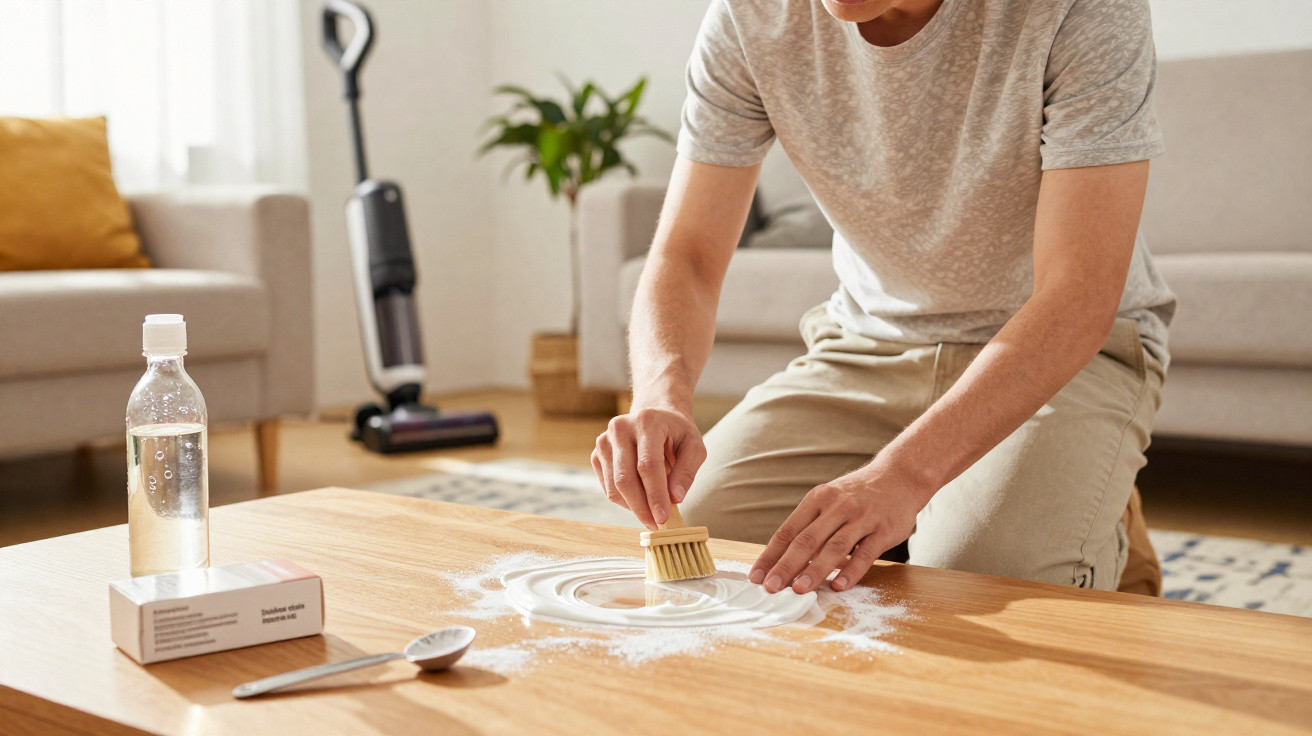
Before you put pricey specialist cleaners in your trolley, it’s worth checking what you already have in the kitchen. In most homes, the basics are already there to lift stains, draw unpleasant smells out of the fibres and noticeably brighten colours - without putting any strain on your budget.
Why home remedies work so well on carpet
Bicarbonate of soda (sodium bicarbonate, commonly sold as “baking soda”) and plain white household vinegar are long-standing staples in many cleaning cupboards. When combined, they fizz on contact, loosen old, ground-in dirt and neutralise odours that have been trapped in the pile for months.
"Used correctly, the combination of soda and vinegar can replace many supermarket carpet cleaners - especially on synthetic carpets."
The big plus: each use costs only pennies, the ingredients are easy to measure out, and you’re not leaving an aggressive chemical cocktail lingering in the air at home.
The basic mix: how to make the cleaning paste
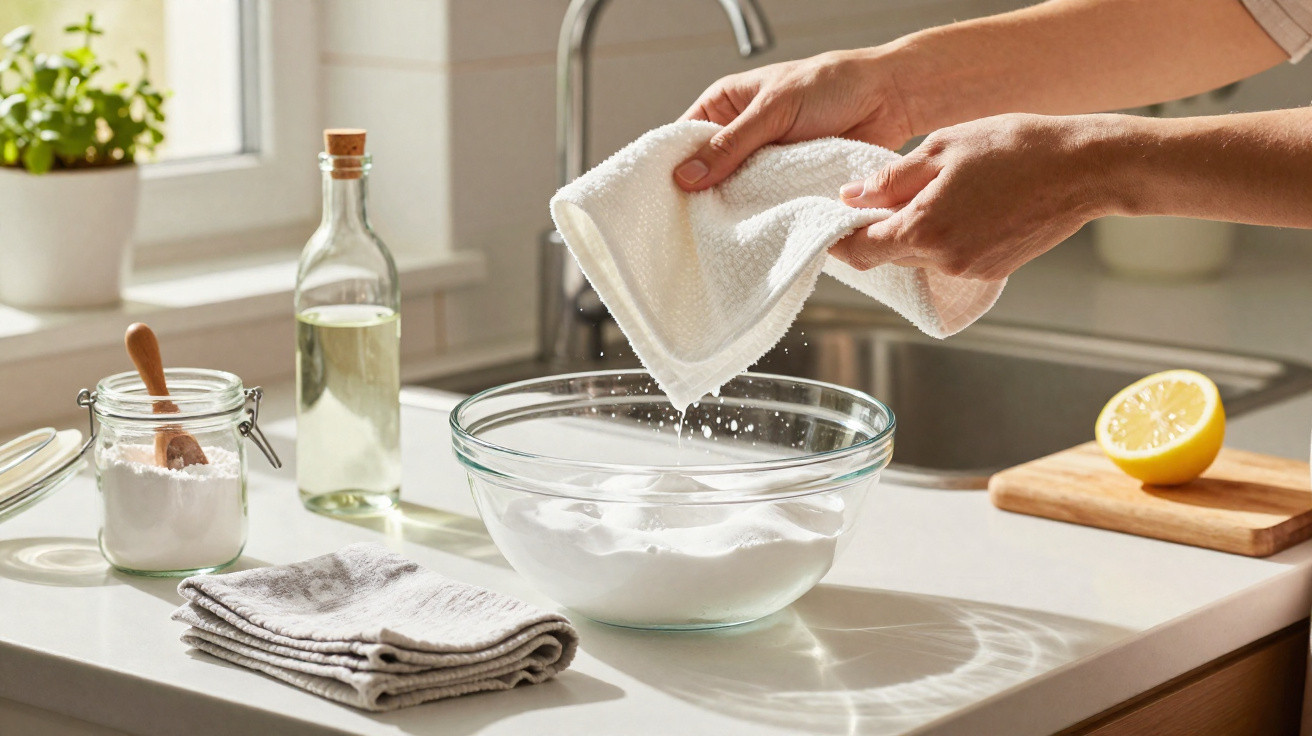
The main trick is a lightly foaming paste that you spread over the affected area. It takes seconds to mix.
Recipe for the carpet paste
- 2 tablespoons bicarbonate of soda (baking soda)
- 1 tablespoon clear/white household vinegar
- optional: a little hot water
- optional: one drop of mild washing-up liquid for greasy marks
Start by putting the bicarbonate of soda into a small bowl. Then add the vinegar. It will immediately begin to foam slightly - that reaction is exactly what helps to loosen the dirt.
If you’re dealing with greasy stains or old walk marks, mix in a single drop of washing-up liquid and a tiny splash of hot water. Important: the final mixture should be thick, but easy to spread. It shouldn’t be so runny that it pours off the spoon.
"The paste needs to sit on the fibres and must not soak the carpet - only then does it work properly."
Apply without damage: step-by-step use
A lot of carpet-cleaning mishaps happen because there’s too much water involved or too much pressure. The bicarbonate-and-vinegar method relies on patience rather than brute force.
Preparing the carpet
- Vacuum the carpet thoroughly, ideally slowly in both directions.
- Remove loose crumbs or sand completely.
- For fresh liquid spills: blot carefully with a cloth - do not rub.
Only once the surface is genuinely free of loose dirt is it worth using the paste.
Applying the paste properly
Using your fingers or the soft side of a sponge, spread a thin layer of paste onto the stain. Work in the direction of the fibres and avoid scrubbing. The aim is to lift the dirt towards the surface - not push it deeper into the pile.
Leave the paste on the carpet for around 15 to 20 minutes. During this time it will dry slightly and often shifts colour a little. That change is a sign it’s binding to the grime.
Afterwards, lift away the residue gently with kitchen paper or a mop, and let the area dry out completely. Finally, vacuum thoroughly again to remove any dried bicarbonate residue.
"If you’re patient, you’ll usually be rewarded after a single pass with visibly brighter fibres and a neutral smell."
When the whole carpet looks tired: full treatment for small runners
With synthetic bathroom mats or kitchen runners, spot-cleaning isn’t always enough. In that case, you can use the paste across the whole surface.
How to refresh the whole surface
This works particularly well for small synthetic rugs such as:
- bath mats
- kitchen runners
- budget rugs made from polyester or polypropylene
Instead of applying it only to one area, spread the paste in a very thin layer over the entire top - ideally using the soft side of a sponge. After a few minutes the carpet will have absorbed some of the mixture; wipe away the remainder with a cloth.
This helps remove the greyish film from high-traffic zones and makes colours look stronger again, without leaving the rug absolutely soaking.
When there are no stains: dry cleaning with bicarbonate of soda only
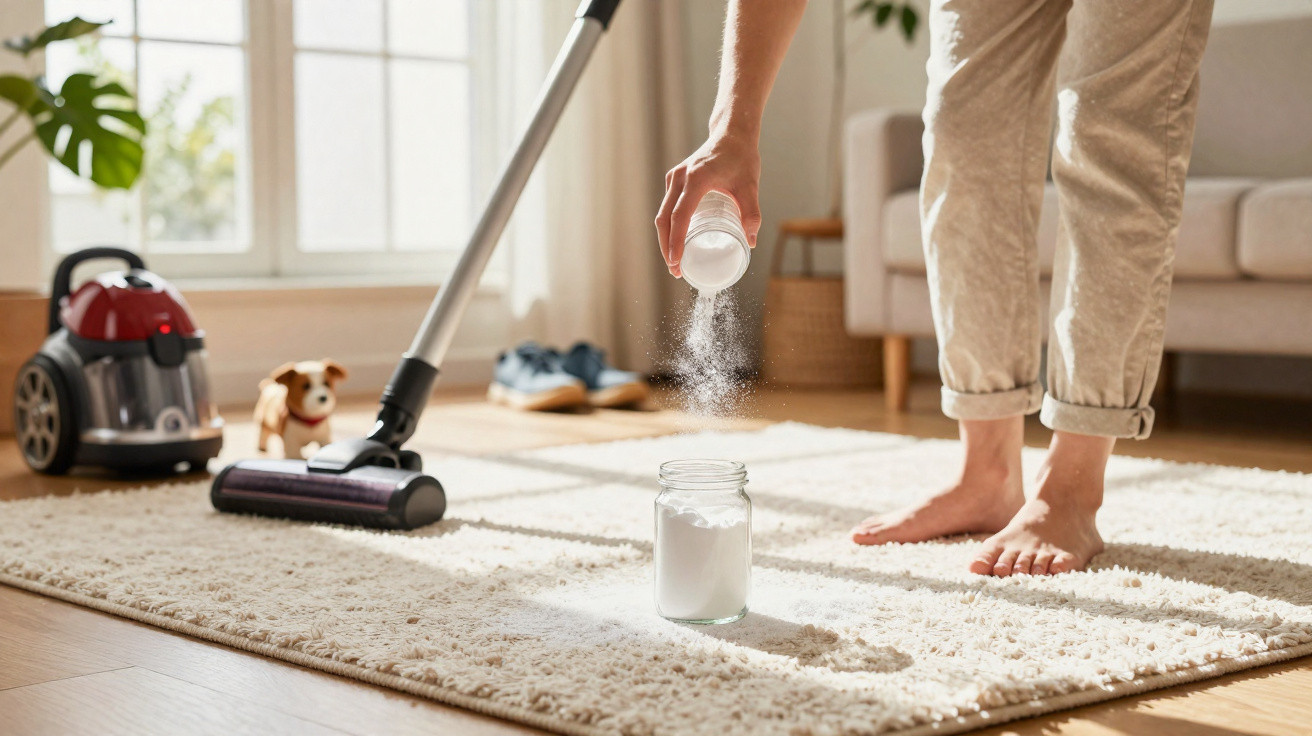
Some carpets don’t show obvious marks but smell musty or simply seem a bit “flat”. In that situation, using bicarbonate of soda alone as a dry powder is often enough.
Freshen your carpet with the powder method
- Vacuum the carpet.
- Sprinkle a thin, even layer of bicarbonate of soda over it.
- Work it in lightly by hand or with a soft brush.
- Leave for at least 30 minutes; for strong odours, leave overnight.
- Vacuum carefully.
The powder absorbs moisture and odours while also slightly lifting the fibres. Pet smells, cigarette smoke or cooking odours often lose a noticeable amount of intensity.
Where buying bicarbonate of soda in bulk pays off
The small packs in supermarkets are meant for the occasional bit of baking, not for a proper carpet deep clean. If you use it for cleaning regularly, larger bags are a better buy.
Chemists and household stores often sell 1-kilo bags, which are far cheaper per kilo than the tiny packets. Online, you can even find 5-kilo sacks - packaged much like laundry powder.
"If you use soda not only for carpets but also for cleaning, laundry or stopping smells in the fridge, bulk packs save a noticeable amount of money."
Common mistakes with the bicarbonate-and-vinegar trick - and how to avoid them
As effective as the paste can be, there are a few easy traps to fall into. Most issues are simple to prevent once you know the typical errors.
Using too much water
The most common mistake is mixing it too thin. The carpet then becomes saturated, and you risk drying marks and yellowish edges. Better: start with a teaspoon of water and increase slowly until the texture is right.
Scrubbing too hard
If you scrub vigorously, you drive dirt further into the weave. The result is a larger, more stubborn stain. A light spread is enough - the soda-and-vinegar reaction does the work.
Forgetting the vacuum
If you don’t vacuum first, you mix dust and crumbs into the paste - essentially turning it into muddy grit. After treatment, any residue also needs to be removed from the fibres, otherwise a fine film can remain. So always vacuum before and after.
A risky combination for delicate fibres
Wool rugs, Oriental rugs, viscose and other delicate natural fibres can react badly to vinegar. The surface may turn dull, colours can darken or become patchy, and in the worst case the vinegar can act like a mild burn.
"The vinegar-soda paste is intended for synthetic carpets - polyester, polypropylene and most bath or kitchen rugs. For delicate natural fibres, it’s better to use a professional cleaner."
How to check whether your carpet can handle the method
If you’re unsure, test in an inconspicuous corner, such as under a piece of furniture. Apply a small amount of paste, let it dry, then check: has the colour changed? Do the fibres look dull? Are there stiff patches?
If everything looks unchanged - or even improved - there’s little reason not to clean the rest of the area. This quick test is particularly worthwhile on inexpensive synthetic carpets, before spending unnecessary money on specialist cleaners.
Practical additions for a fresher carpet routine
If you use the bicarbonate trick regularly, a simple routine helps: once a month, do a dry treatment with bicarbonate of soda; two to three times a year, use the paste on heavily used zones such as walkways or the area in front of the sofa.
If you have pets, speed matters as well: blot fresh messes immediately while dry, then apply the paste to the spot. That way, smells don’t get the chance to sink deep into the fibres.
Checking the carpet labels also helps you choose the safest method. If it’s marked “synthetic fibres” or lists polyester and polypropylene, the paste is where this approach really shines. For hand-knotted pieces made from natural materials, a gentle professional clean is usually the better option.
Comments
No comments yet. Be the first to comment!
Leave a Comment