
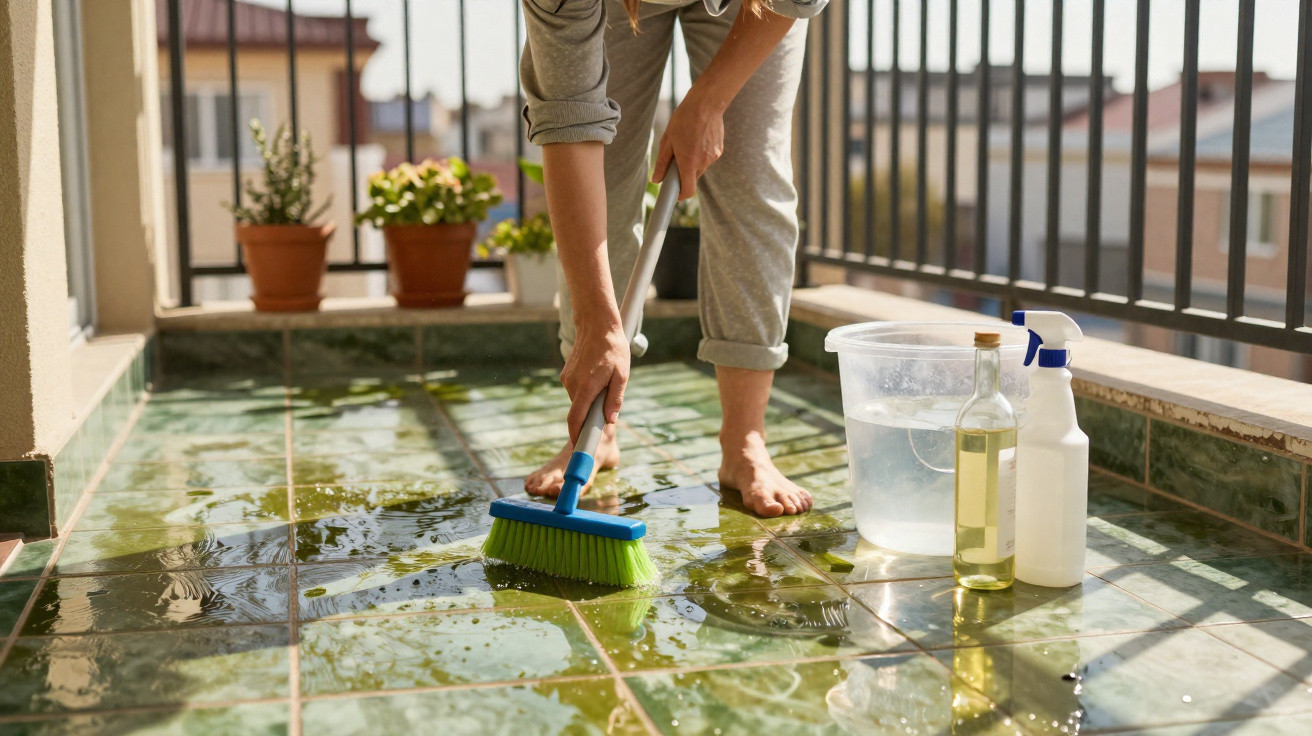
With a simple kitchen staple, you can make it walkable again in around an hour.
Plenty of homeowners recognise the moment: as soon as the first mild days arrive, the outdoors reveals what a wet, gloomy winter has left behind. All at once the paving has a green tinge, footing feels less secure, and children can slip before you can say “spring”. Rather than paying for pricey specialist cleaners or spending ages scrubbing, there’s a surprisingly straightforward alternative - and it’s usually already sitting in the kitchen cupboard.
Why the terrace turns into a skating rink after winter
Rain, limited sunshine, lingering damp and fallen leaves: together, this is the perfect recipe for moss and algae to thrive on patio slabs. Shadier corners and areas where water doesn’t drain well encourage that green layer most of all.
What looks like nothing more than “a bit of dirt” is actually a safety hazard. That slimy film behaves much like soap, and anyone walking over it in socks, Crocs or shoes with smooth soles can go down quickly. It’s particularly risky for children who run about, and for older people whose balance isn’t as steady.
Green growth on terraces doesn’t just look neglected - it can become as slippery as an ice rink.
There’s another catch: waiting and hoping “the sun will sort it out” usually makes things worse. Moss and algae don’t simply dry up and disappear. They work deeper into the stone’s pores, dark marks set in, and later you may only shift them with heavy pressure or harsh chemicals.
The cheap kitchen product that finishes off moss and algae
The tip currently getting a lot of attention - particularly from the UK - relies on something most people already have at home: ordinary household vinegar, typically the clear variety sold in supermarkets.
This vinegar is alcohol-based and contains a relatively high level of acetic acid. That acidity attacks the thin biofilm moss and algae feed on. It weakens the plants’ cell structure, which helps the green coating detach from the surface.
Vinegar works like a natural biofilm remover: it deprives moss and algae of what they need, without hours of hard scrubbing.
In many households, a bottle costs well under a pound. Used on the patio it’s heavily diluted, so the cost per clean remains just pennies. For a small to medium-sized area, half a bottle is often enough.
Step-by-step: make the terrace safe again in one hour
This approach works best on concrete, brick pavers, ceramic tiles and standard patio slabs made from non-calcareous stone. If you’re unsure, try it first in an inconspicuous spot.
Preparation: remove loose dirt
Before the vinegar solution goes down, do a quick dry clean:
- Sweep away leaves, small twigs and loose soil.
- Shift stubborn build-up (for example, trodden-in leaf mulch) with a scraper.
- Clear any gullies or drains so the rinse water can run away easily later.
The better the surface is prepared, the more directly the vinegar can reach the green coating.
The mix: how much vinegar the terrace really needs
A roughly 50/50 mix of vinegar and water is a proven starting point. For a 10-litre watering can, that means:
| Amount | Contents |
|---|---|
| 5 litres | Water, ideally hand-warm to hot |
| 5 litres | Household vinegar (clear) |
If you’re only dealing with light staining, reduce the vinegar. If the joints are heavily overgrown or the moss is thick, the vinegar proportion can be a little higher.
Apply, leave to work, then brush lightly
Once the solution is mixed, the main cleaning begins:
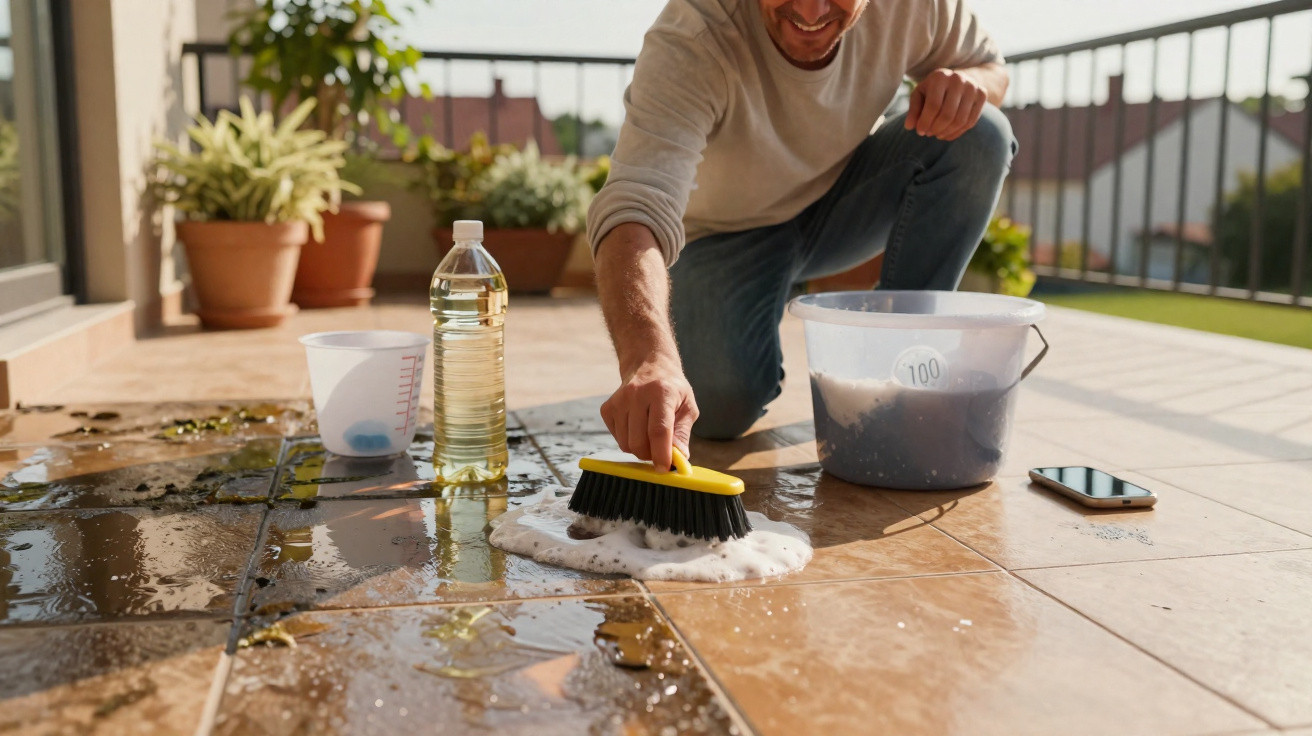
- Spread the mixture generously over the affected areas using a watering can or a pump sprayer.
- Re-wet especially green patches and the joints more thoroughly.
- Leave it for at least 45 to 60 minutes - and don’t walk on it during this time, as the surface can become very slippery.
- After the dwell time, go over the area lightly with a stiff brush or a broom with hard bristles.
- Finally, rinse everything thoroughly with clean water - a garden hose is usually more than enough.
Ideally, you’ll see lighter tracks as you brush, while moss and algae lift as a greasy layer and wash away with the rinse water.
Where vinegar doesn’t belong: tricky materials and beds next to the terrace
As handy as the method is, it isn’t suitable for everything. Acetic acid can attack certain materials - and in those cases, a well-intended spring clean can cause more harm than good.
- Calcareous natural stone: marble, travertine, some sandstones, or concrete blocks with a high lime content can develop a bloom, turn dull or end up stained.
- Untreated wood: decking boards without a protective finish may roughen up and discolour unevenly.
- Metals: avoid soaking railing feet, screws or fittings, as they may corrode more quickly.
It’s sensible to lightly wet nearby flower beds or lawn edges with water before applying the vinegar solution. That way, anything that seeps into the greenery is diluted. Delicate potted ornamentals are best moved out of the way temporarily.
Vinegar may seem harmless, but it’s still an acid. A small test on a hidden spot can save you an expensive surprise.
Handy side effect: it tackles weeds in the joints too
Small grasses and other weeds often take hold between paving stones or patio slabs. The vinegar-and-water mix weakens them noticeably. Many leaves yellow within a few days, and the shoots either pull out more easily or rot away on their own.
A note for gardeners: anyone deliberately using vinegar as a broad weedkiller on hard surfaces enters a legal grey area, because household remedies are not officially approved as “plant protection products” for use on paved areas. If you’re simply cleaning the patio and then rinsing the solution away thoroughly, you’re in a much less contentious position.
How often you should clean the terrace this way
Depending on the setting, using this method once or twice a year is enough in many gardens. North-facing areas, very shaded courtyards or balcony floors above watercourses can turn green again more quickly.
To make the job easier, choose your timing:
- A dry, overcast day is ideal - it allows the solution to work without evaporating too fast.
- After a long wet spell, the growth is usually softest and comes away more easily.
- Doing it just before a larger family gathering or the first barbecue season has the biggest impact.
More practical tips for a terrace that stays safe
If you want to keep the problem under control long-term, a few everyday habits help:
- Clear fallen leaves regularly in autumn rather than leaving them for weeks.
- Move plant pots around from time to time so algae and mould don’t build up underneath.
- If you’re laying a new patio, build in a slight fall so water drains away properly.
- Wear shoes with a deep tread when the surface is visibly wet and green.
For heavily used areas, a sealant can be worthwhile. Some impregnating products soak into stone or concrete and make the surface more water-repellent. Less dirt sticks, and moss finds it harder to establish itself. If you take this step, choose products explicitly approved for outdoor patios and make sure they don’t reduce slip resistance.
What’s behind the green film - and why the vinegar trick fits so well
Moss thrives in damp, shaded spots. It doesn’t form deep roots; instead it clings close to the surface. Algae, meanwhile, do well on slightly dirty, permanently moist areas, especially where a thin layer of water lingers. Together they create a slick mix that plain water can hardly shift.
Acetic acid penetrates that layer, alters the pH and disrupts the plants’ delicate cell structure. At the same time, it loosens light limescale and grime films that help the growth cling on. That’s why a short dwell time plus a bit of mechanical help with a stiff brush is often enough to lift the green coating.
Once you’ve treated your patio thoroughly like this, the next rainfall makes the change obvious: water drains more freely again, the surface feels rougher and therefore grippier. And being able to take the year’s first coffee outside without worrying about the next slip makes reaching for the vinegar bottle well worth it.
Comments
No comments yet. Be the first to comment!
Leave a Comment