
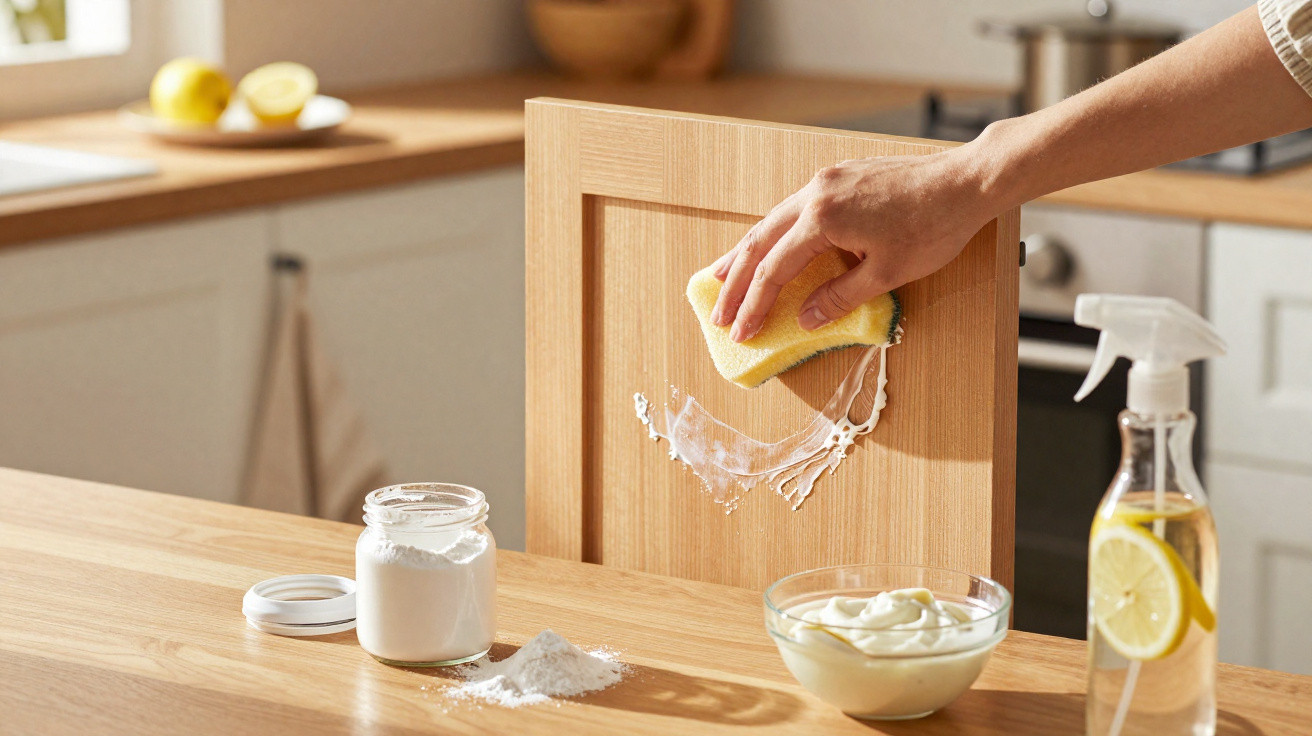
A simple little trick makes it surprisingly easy to remove.
A lot of people only notice it when the light hits at an angle: suddenly the kitchen cupboard fronts look greasy, blotchy and somehow grey. Cooking fat from frying, the fine mist that lingers in the air while you cook, and everyday dust all combine into a stubborn layer. The good news is you don’t need harsh chemicals or heavily marketed “special” cleaners to get the fronts looking clean again - in many cases, an everyday household staple is more than enough.
Why kitchen cupboards get greasy so quickly
When you cook, tiny droplets of fat rise into the air with steam. They land on any surface they can reach - especially wall units and the doors right next to the hob. Once there, they mix with household dust and turn into a sticky film that plain water can barely shift.
If you don’t clean often, or only give things a quick wipe, you’ll recognise the result: the fronts feel tacky, the sheen looks patchy, and a wet cloth just smears the grease around rather than removing it. Many people then automatically reach for strong kitchen sprays, but that can lead to damaged finishes or unattractive dull patches.
“A mild powder from the cupboard is often all you need to loosen grease and grime - without any harsh chemicals.”
Bicarbonate of soda: the underrated powder for grease and grime
Bicarbonate of soda (also known as baking soda) is something many households keep for baking or as a remedy for indigestion. Far fewer people realise it can work wonders as a gentle kitchen cleaner. It has several qualities that make it particularly effective against greasy dirt:
- a lightly abrasive effect without heavy scratching
- binds grease and loosens stubborn build-up
- neutralises odours
- contains no fragrances or aggressive solvents
How to clean kitchen cupboards with bicarbonate of soda, step by step
For this method, you only need a small amount of powder and lukewarm water. Here’s how it works:
- Put 1–2 teaspoons of bicarbonate of soda into a small bowl.
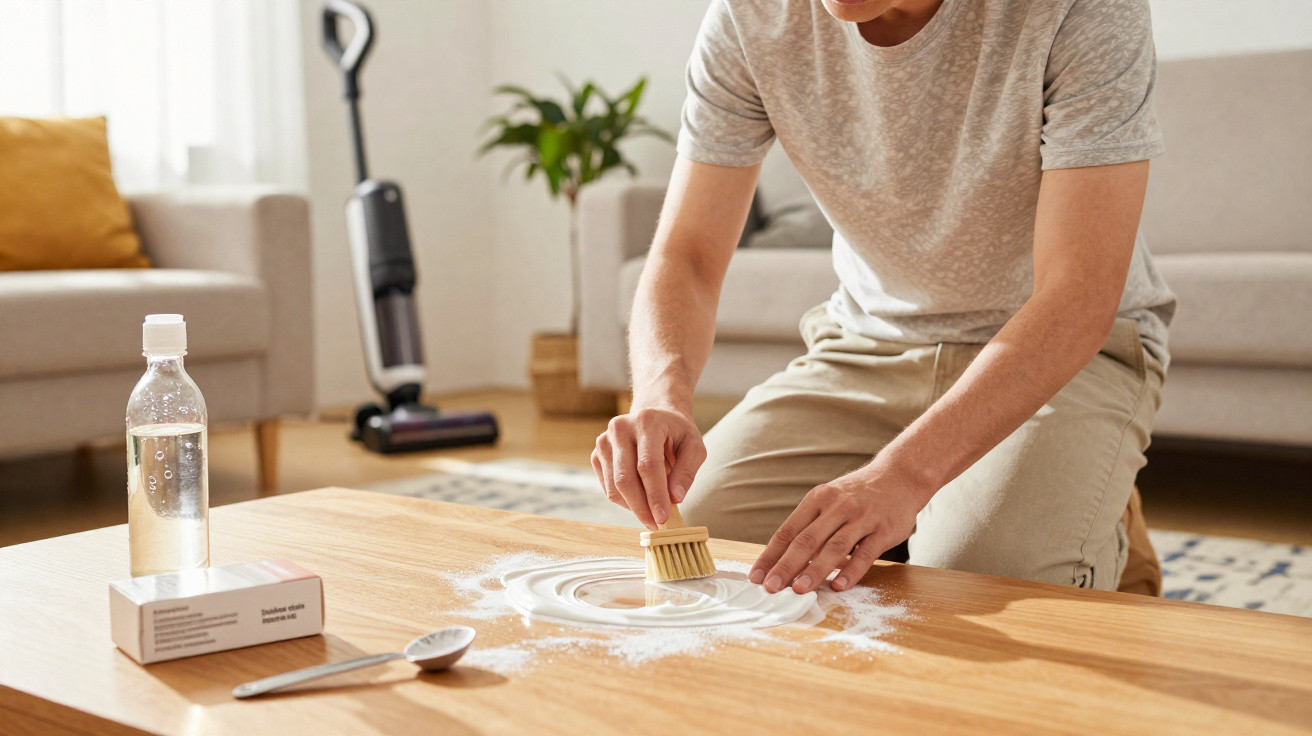
- Add a little lukewarm water gradually until it forms a thick paste.
- Apply the paste to greasy areas using a soft sponge or cloth that’s slightly damp.
- Leave it briefly to work - usually 5–10 minutes is enough.
- Wipe the surface in gentle circular motions with the sponge.
- Go over it thoroughly with a clean, damp cloth until no residue remains.
- Finish by buffing with a dry microfibre cloth.
Because the crystals are so fine, bicarbonate of soda behaves like a mild scouring agent. It softens the greasy layer without typically damaging smooth finishes such as lacquered fronts or many plastics - as long as you don’t apply excessive pressure.
“For particularly stubborn grease, a small squirt of washing-up liquid in the bicarbonate of soda mixture is enough - it noticeably boosts the grease-cutting power.”
Which surfaces bicarbonate of soda suits - and where to be cautious
Many common kitchen cupboard finishes tolerate bicarbonate of soda well. Typical examples include:
| Material | Suitability of bicarbonate of soda |
|---|---|
| Melamine or plastic fronts | usually well suited; use a soft cloth |
| Lacquered fronts | suitable; don’t rub too hard; test first in an inconspicuous spot |
| Veneer and solid wood | only very carefully and not too wet; dry immediately |
| High-gloss surfaces | possible, but use minimal pressure to avoid micro-scratches |
With more delicate materials, it’s always worth testing underneath the door or on a barely visible area first. That way you can check the finish keeps its shine and doesn’t end up with streaks.
Other household remedies that help tackle kitchen grease
Bicarbonate of soda isn’t the only option in the cupboard. If you like trying different home staples, there are other workable alternatives.
Vinegar water for grease and germs
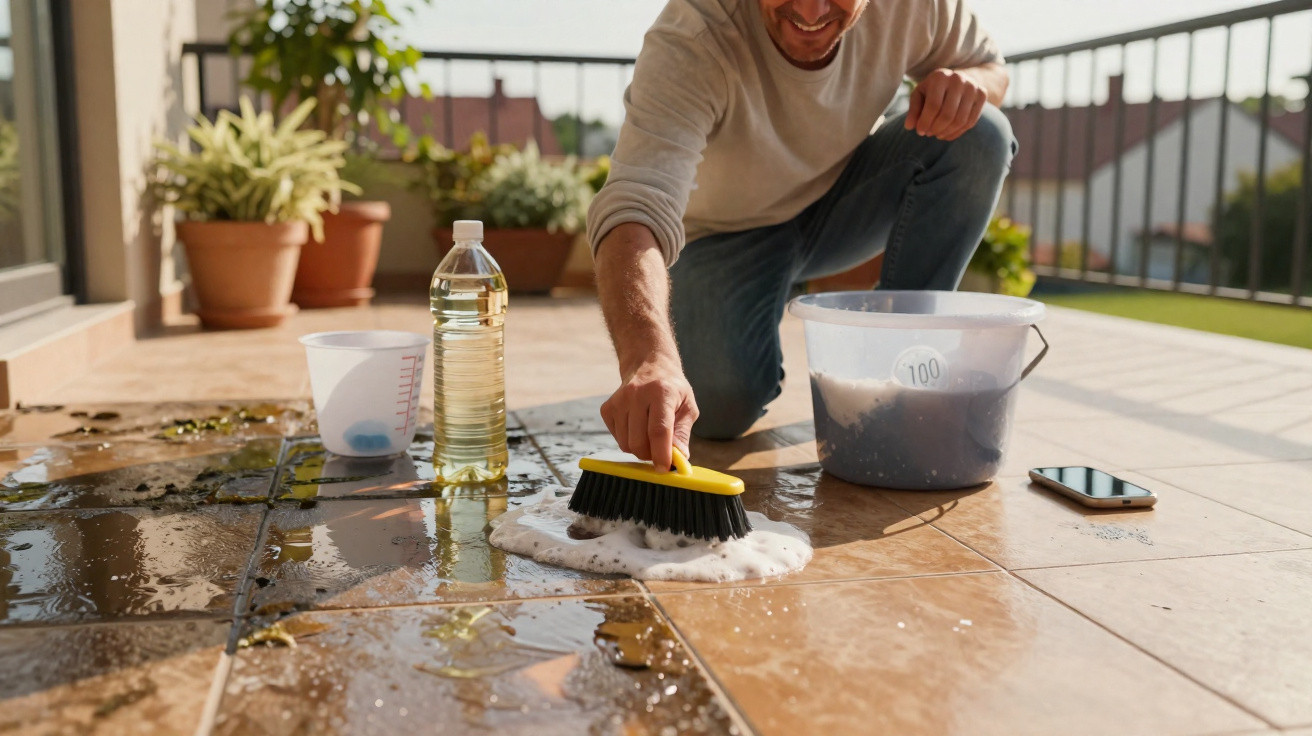
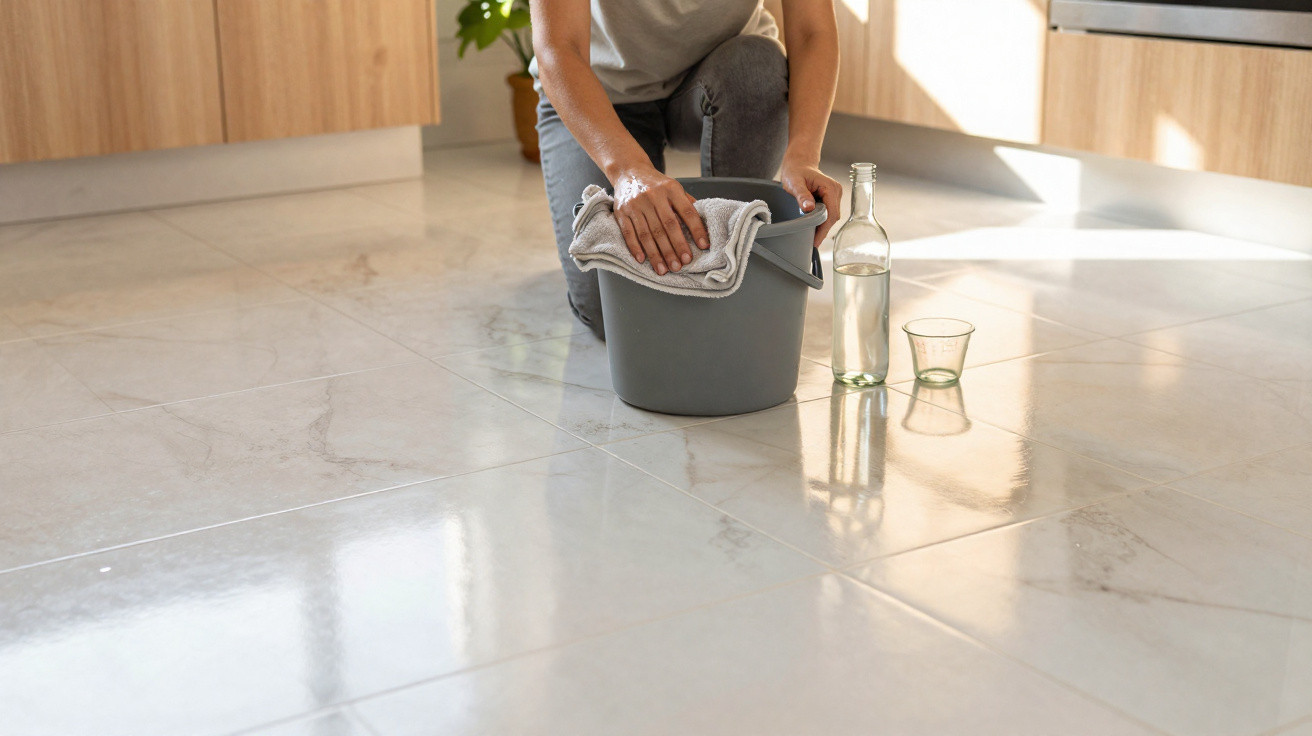
A mix of warm water and a little vinegar can loosen greasy deposits and is also mildly antibacterial. On robust surfaces, a splash of vinegar essence in a bucket of water is enough. Apply with a cloth, let it sit briefly, then wipe again with clean water.
However, take care with more sensitive fronts: the acidity can attack wood, certain plastics and some painted or lacquered finishes. If you’re unsure, use a much weaker mixture or choose bicarbonate of soda instead.
Lemon juice for a fresh smell and a light shine
Lemon juice also helps cut through grease. A few squeezes into warm water can remove light dirt. A nice bonus is that the kitchen smells fresh and clean afterwards. For heavy grease build-up, this approach alone is usually too gentle, but it works well as an add-on.
How to stop the grease film becoming stubborn in the first place
If you only deep-clean wall units once a year, you’ll be battling a thick layer every time. It becomes much easier if cleaning turns into a small routine.
- Wipe fronts after cooking with a slightly damp microfibre cloth.
- Check cupboards near the hob at least once a month and touch up as needed.
- Switch on the extractor hood and clean or replace the filters regularly.
- Use a lid when frying to reduce grease splatter.
One interesting trick: once the surfaces are completely clean, applying a very thin layer of cooking oil can make new dirt less likely to stick. The oil acts like a smooth barrier that grease and dust struggle to grip. The key is to use only a few drops and rub them in extremely well - otherwise it can backfire and make things worse.
How to avoid common kitchen-cleaning mistakes
A lot of damage to kitchen fronts comes not from dirt, but from the wrong cleaning products. Scratchy sponges, cream cleaners and aggressive sprays can leave dull areas, scratches or discolouration that you can’t undo. That’s why a quick check before you start scrubbing is worth it.
Useful rules of thumb:
- Never use wire wool or coarse scouring pads on cupboard fronts.
- Don’t let cleaners dry on - wipe them off in good time.
- Never clean on a hot surface; let it cool first.
- Don’t use pure solvents such as acetone or cellulose thinners.
Why bicarbonate of soda deserves a place in every home
Once you’ve seen how well bicarbonate of soda works on greasy film on kitchen cupboards, you’ll often start using it elsewhere too: in the oven, on burnt-on pan bases, or on yellowed plug-socket surrounds. It does its job quietly, costs little, lasts a long time, and combines easily with other basics - for instance, a squirt of washing-up liquid or a little lemon juice.
Especially at a time when many people want to avoid strong fragrances and harsh chemicals, bicarbonate of soda fits neatly into everyday life. Few ingredients, a straightforward method, and a visible result - and the kitchen cupboards finally feel the way they’re meant to look: smooth, clean, and free of that sticky film that always shows up when the sun shines into the room.

Comments
No comments yet. Be the first to comment!
Leave a Comment