
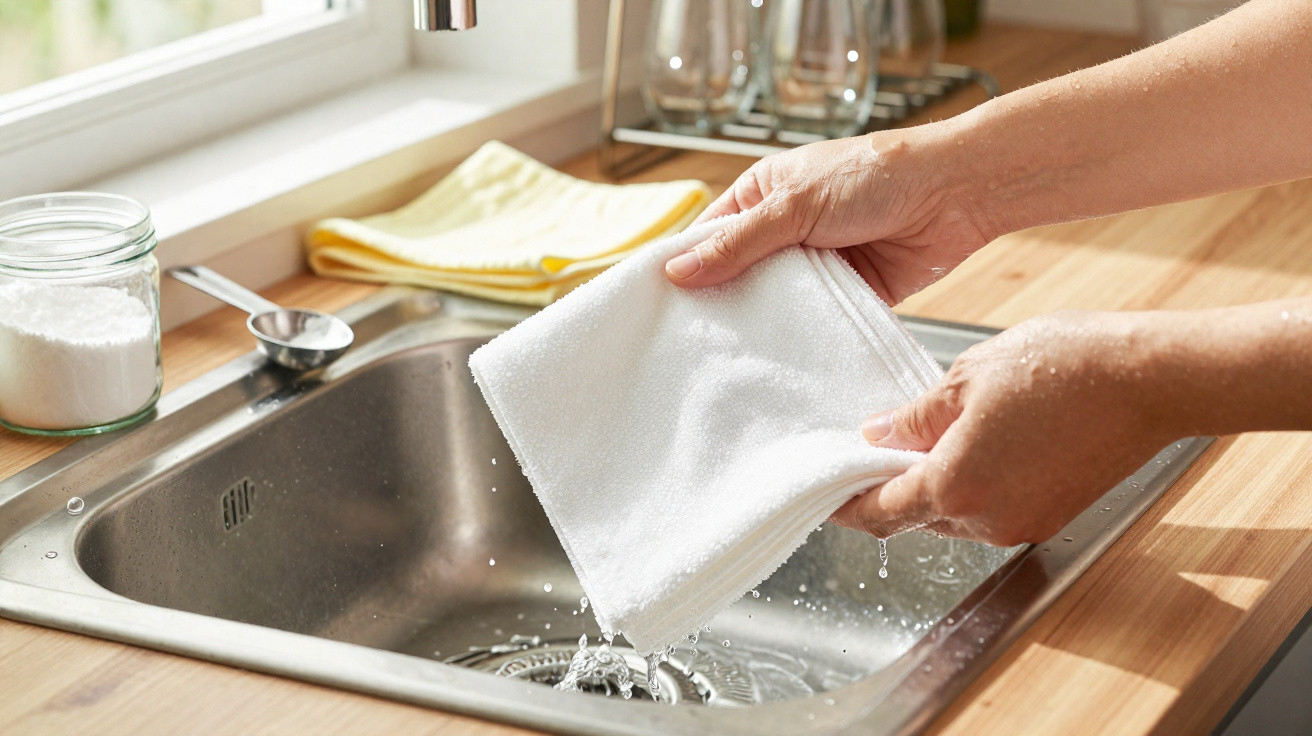
A humble powder from the cleaning cupboard can make all the difference.
Plenty of households know the frustration: tea towels that were once bright white can end up looking dull and grey, even after hot wash programmes, and they can start to smell unpleasant quickly. Traditional chlorine bleach is harsh on fibres, leaves fabric feeling stiff, and often only shifts the greyness on the surface. Yet there’s another cleaner-often forgotten at the back of the cupboard-that works far more thoroughly while being kinder to both textiles and the environment.
Why tea towels stay grey even after hot washes
Kitchen towels are among the hardest-working textiles in the home. They deal with everything: splashes of frying fat, tomato sauce, coffee, tea, red wine, stock. Residues like these work their way deep into cotton fibres.
Hard tap water makes matters worse. Limescale can effectively encase dirt particles and hold them in the weave. Over time, layer upon layer builds into a grey film. The towel becomes less absorbent, takes longer to dry, and develops a musty smell more quickly.
Another common mistake sits in washing habits: if heavily soiled towels go straight into very high temperatures, stains can effectively bake in. The heat “cooks” proteins and colour pigments into the fibre, much like dyeing fabric. Strongly perfumed biological or universal detergents may leave a “fresh” scent, but deep-down grime often remains.
"Bleach may brighten, but it barely tackles fats and tannins-so the greyness stays deeper inside the fibre."
Chlorine-based products come with another drawback: over time, they can weaken cotton, roughen the fibres and leave the fabric looking yellowish. The towels may look as though they have been “treated”, but they no longer feel hygienically clean or inviting.
The underestimated alternative: oxygen power in powder form
A better option comes as a white granular powder that is often mistaken for bicarbonate of soda: an oxygen bleach based on sodium percarbonate. The name sounds technical, but the mechanism is straightforward.
This powder is a compound of soda and a bound hydrogen peroxide component. When it meets hot water, it breaks down into:
- Soda (crystalline washing soda) – dissolves grease and loosens dirt
- Hydrogen peroxide – releases active oxygen
Those oxygen bubbles lift organic residues-such as coffee, tea, sauces, wine, and baked-on grease-from within the fibres. Ideally, the reaction begins at around 40 °C, but it becomes genuinely powerful at roughly 60 °C-exactly the temperature many cotton and linen towels can handle.
The big advantage is that the fabric lightens without a yellowish haze, looks clearly white, and is cleaned in a more hygienic way at the same time. After the reaction, only water, oxygen and a small soda residue remain-far less problematic than classic chlorine products.
"Active oxygen breaks down the building blocks of stains instead of merely masking them-so the fabric is genuinely cleaned from the inside out."
The powder is particularly suitable for:
- white cotton tea towels
- linen towels and tea towels in light, colourfast shades
- heavily greyed, musty laundry such as cleaning cloths or dishcloths
It is not intended for wool, silk, or very delicate colours, where the action may be too strong. When measuring and stirring, household gloves are advisable, as the alkaline solution can irritate skin.
How to make greyed tea towels white again
The key step doesn’t happen in the washing machine, but beforehand in a prepared soak. If you adopt this small extra phase, you can get surprisingly good results from older towels.
Step-by-step instructions
- Fill a heatproof bowl or bucket with very hot water-at least 40 °C, ideally around 60 °C.
- Stir in one to two tablespoons of the oxygen powder per litre of water, mixing until it is well dispersed.
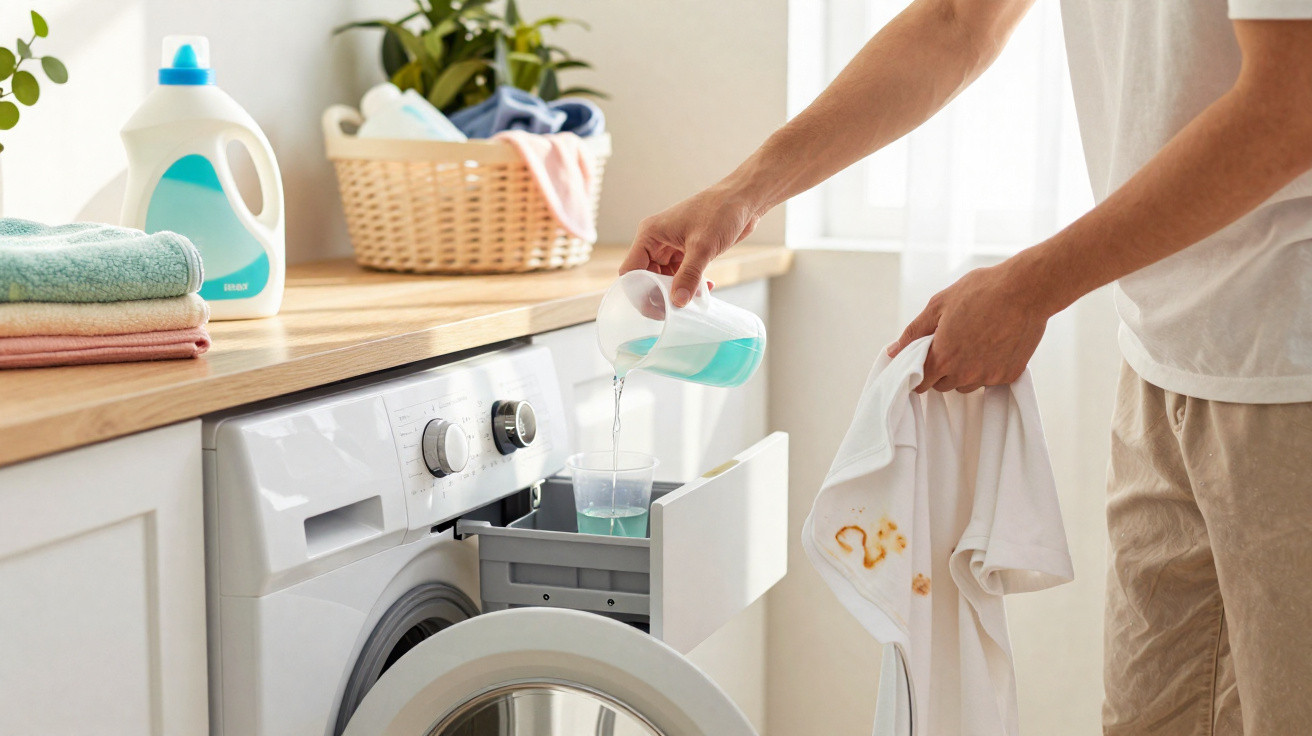
- For fresh stains, briefly rub with soap (such as traditional household soap or natural soap) under lukewarm water to loosen surface dirt.
- Place the tea towels fully into the bath; nothing should sit above the waterline.
- Leave to soak for two to six hours depending on how dirty they are; for extremely greyed towels, an overnight soak can be worthwhile.
- Gently wring out the towels, then wash immediately in the machine at a minimum of 40 °C-without fabric conditioner.
- Dry by hanging them up where possible-ideally outdoors in fresh air and sunlight.
After a few hours, the soaking liquid often turns a milky, cloudy colour-a clear sign that grease and dirt have genuinely been drawn out of the fabric. In a cold wash, the powder would barely be able to achieve this effect, which is why the hot soak is such valuable groundwork.
What matters when using the powder
- Do not add it straight into a cold wash cycle, as it will remain largely inactive.
- Do not mix it with vinegar or lemon juice in a sealed container-gas is produced during the reaction and pressure can build.
- Store the pack dry and tightly closed; moisture causes the granules to clump.
- If you have sensitive skin, wear gloves.
A hygienic kitchen routine: how to keep the results for longer
If you only do a drastic treatment every few months, you will constantly be battling fresh discolouration. A small routine is more effective-easy to keep up day to day, and it prevents greyness from forming in the first place.
Practical everyday rules:
- Change tea towels every one to two days, or daily if you cook a lot.
- Do not leave heavily soiled towels scrunched up and damp for days-spread them out and let them dry instead.
- Wash at 60 °C whenever the care label allows.
- Skip fabric conditioner; it coats fibres like a film and traps dirt.
- Plan a regular oxygen soak as a “deep clean”, roughly once a month.
If you live in a hard-water area, you can counteract it by adding a little washing soda to the main wash. This binds limescale and supports the detergent’s performance, so fewer residues accumulate in the fabric.
Why so many households underestimate the powder
Many people buy an oxygen cleaner as a “more natural” alternative, try it briefly, and then let it sit unused in the cupboard. One reason is that results depend heavily on temperature and soaking time. If you simply tip it into the machine on a cold cycle, you will see little change and the pack quickly gets ignored.
Used correctly, the powder can replace aggressive chlorine versions in many cases. Its smell is far more neutral, it is less harsh on metal components inside the machine, and it is noticeably gentler on light cotton textiles. Families with young children or people with sensitive skin also appreciate that there are no sharp fumes or stubborn residues left after washing.
Risks, limits and sensible combinations
This helper has limits too. Very old, fragile fabrics can be weakened further by repeated intensive soaks. Towels with heavy prints and poor-quality dyes may fade over time. That is why it is sensible to check the care label and test on an inconspicuous corner first.
If you want the best possible outcome, combine several steps:
- Pre-treat fresh stains with soap
- Use an oxygen soak for deep-seated residues
- Run a hot wash with universal detergent for hygienic cleaning
- Finish by drying outdoors to remove lingering odours completely
For coloured towels or delicate materials, manufacturers now offer specifically labelled colour-safe or delicate versions that work more gently. It is worth checking the packaging guidance before your favourite bathroom towel ends up lighter than intended.
Once you have tried these methods, it becomes clear that retired kitchen towels do not automatically need to be demoted to the cleaning cupboard. With a well-measured oxygen soak, many old favourites can look fresh enough for plenty more turns in the kitchen-without the smell of chlorine and without the grey haze.
Comments
No comments yet. Be the first to comment!
Leave a Comment