
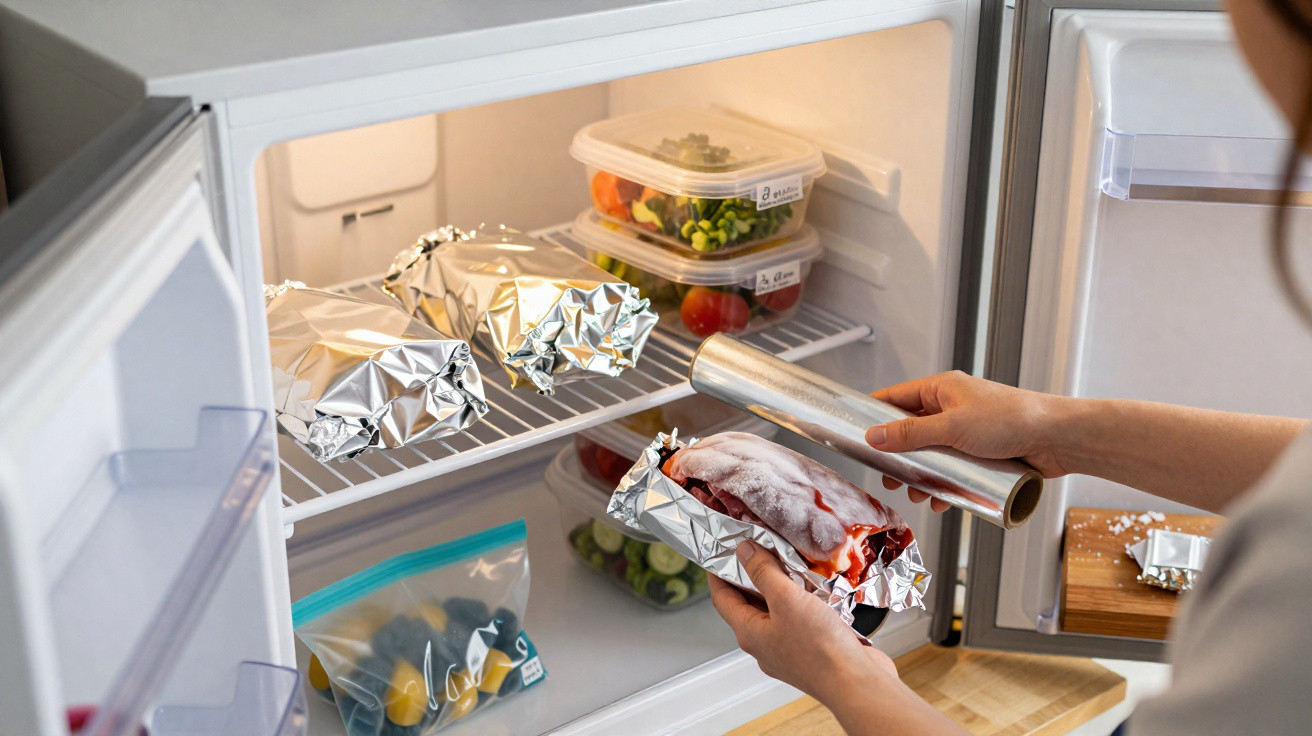
Not every food combination is suited to this trick.
Reaching for aluminium foil is almost automatic in many kitchens: leftovers from a bake, a piece of meat, wrapped up quickly and straight into the freezer. It saves time, reduces the need for containers, and seems harmless. But that silver sheet is about more than convenience. Some foods react with aluminium, and others spoil faster than you might expect.
Why aluminium foil in the freezer isn’t automatically off-limits
From a practical point of view, there’s little reason to rule out aluminium foil in the freezer. The metal copes well with cold, and temperatures around -18 °C are not an issue. That’s why many guides describe aluminium foil as generally suitable packaging for freezing.
In terms of health risks at typical freezer temperatures: as long as the food is dry or only slightly moist, and not heavily seasoned, nothing dramatic usually happens. The bigger concerns around aluminium mainly arise with heat - for example, in the oven or on the barbecue.
"Aluminium foil in the freezer isn’t a health drama - but only if the foods suit it and the storage time stays limited."
The real everyday drawback is different: thin foil tears easily, air gets in, and moisture escapes from the food. The result is classic freezer-burn patches and a noticeable loss of flavour. For longer storage, sturdy containers are clearly the better option.
When aluminium foil in the freezer works well
There are still plenty of occasions where aluminium foil makes sense - especially if you have nothing else to hand, or the food will only be stored for a few weeks.
Foods that are suitable for aluminium foil in the freezer compartment
Foil works best with firm, relatively dry items without a strong marinade or very high salt content:
- raw meat without marinade (e.g. escalopes, pieces for roasting)
- raw fish, plain and not pickled
- baked goods such as bread, rolls, brioche
- dry cakes and biscuits without a very wet filling
- leftover portions with little sauce and a moderate salt level
It’s important that food is completely cooled before you wrap it. Warm dishes create condensation, which attacks the surface, forms ice crystals and damages the structure.
How to wrap with aluminium foil as safely as possible
A few simple steps make a last-minute foil wrap much more reliable:
- Let the food cool down completely.
- Press the foil tightly against the surface, pushing out as much air as possible.
- Fold corners and edges over twice so the package is less likely to split.
- Ideally place the parcel inside a freezer bag as well, or sit it in a container.
- Clearly label the contents and the date.
Handled this way, bread or pieces of meat can usually be stored for a few weeks to a few months without major quality loss.
When aluminium foil in the freezer becomes risky packaging
Aluminium can react chemically when it comes into contact with certain foods. Very salty or very acidic products are particularly problematic. In these cases, more aluminium may dissolve and transfer into the food.
These foods shouldn’t be wrapped in aluminium foil
In the freezer, the following are especially critical:
- tomatoes and tomato-based sauces
- citrus fruits and their juices
- strongly salted cheeses
- cured or very salty sausage and meat products (e.g. salami, ham, bacon)
- sauces with lots of vinegar or lemon juice
- ready-seasoned marinades with high salt or acid content
This is where experts see the greatest likelihood that aluminium particles can migrate into food over longer periods. A possible link to neurological symptoms and illnesses such as Alzheimer’s is discussed. The evidence is not fully conclusive in every detail, but warnings from various health authorities are still fairly clear: avoid contact with strongly acidic or salty foods where possible - whether in the freezer compartment or in the oven.
"Hot, spicy marinade plus aluminium foil is not a good combo - neither in the oven nor in the freezer."
A second issue is what happens after freezing. Aluminium foil should not go in the microwave, nor in combination appliances with a microwave function. Sparking, damage to the appliance and unevenly heated food are all likely. It’s better to unwrap frozen foil parcels first and defrost or heat the food in a suitable dish.
Which everyday alternatives make more sense
If you want to organise your freezer in a safer and more sustainable way, it helps to use materials that protect food better and don’t carry the same reaction risk with acids and salt.
Long-term options instead of disposable foil
These choices have proved themselves in many households:
- Plastic freezer boxes: sturdy, often stackable, easy to label; only use products that are designed for freezer use.
- Glass containers with lids: great for ready meals and sauces, don’t take on odours; choose models designed to be robust.
- Freezer bags (standard or reusable): space-saving and well sealed; reusable versions cut waste significantly.
- Baking paper plus a container: for baked goods, a layer of paper in a box often works well as a separating layer.
If you don’t want to give up aluminium foil entirely, you can use it as an outer layer: keep the food inside a suitable container or bag, and use a layer of foil on the outside to help protect against odours or freezer burn - without direct contact with the metal.
How long can food stay frozen in aluminium foil?
Even with suitable foods, storage time matters. As a rough guide, the table below applies when aluminium foil is the main packaging and is wrapped reasonably tightly:
| Food | Recommended maximum time |
|---|---|
| Rolls, bread | 1–2 months |
| Raw meat (plain) | 2–3 months |
| Raw fish fillet (plain) | 1–2 months |
| Cake, pastries | 1–2 months |
| Cooked leftovers with little sauce | up to about 1 month |
For longer periods, a sealed container or a vacuum bag is almost always worth it. This not only preserves flavour, but also reduces the chance of discovering forgotten, unidentifiable parcels at the back of the drawer.
What many people underestimate about freezing in general
Regardless of packaging, some basic food-safety rules remain the same. Cold slows microbes down, but it doesn’t automatically kill them. If you freeze leftovers that were already on the turn, you won’t get a fresh meal back after defrosting - you’ll get the same issue as before, just with ice crystals.
A sensible approach is:
- Chill leftovers promptly and freeze within a day.
- Portion food into smaller amounts so it freezes through faster.
- Defrost frozen products in the fridge or in a cold-water bath, rather than leaving them at room temperature for hours.
- Avoid refreezing defrosted food, especially meat and fish.
Following these points significantly reduces the risk of stomach upsets - whether you end up using a container, a bag or a piece of aluminium foil.
How to use aluminium foil sensibly day to day
Aluminium foil doesn’t need to disappear from the kitchen completely. It can be a practical stopgap: when something is left over unexpectedly, when there’s no container spare, or when bread needs to go into the freezer for a week or two. But it needs clear limits: no highly acidic or salty foods, no microwaving, and no storage for months on end.
If you gradually switch your freezer set-up - for instance, with a few stackable boxes and reusable bags - you’ll quickly notice the difference: less chaos in the freezer, fewer spoiled leftovers, and the foil roll shifts from a leading role to a supporting one. That’s exactly where it belongs in a modern, health-conscious household.


Comments
No comments yet. Be the first to comment!
Leave a Comment