
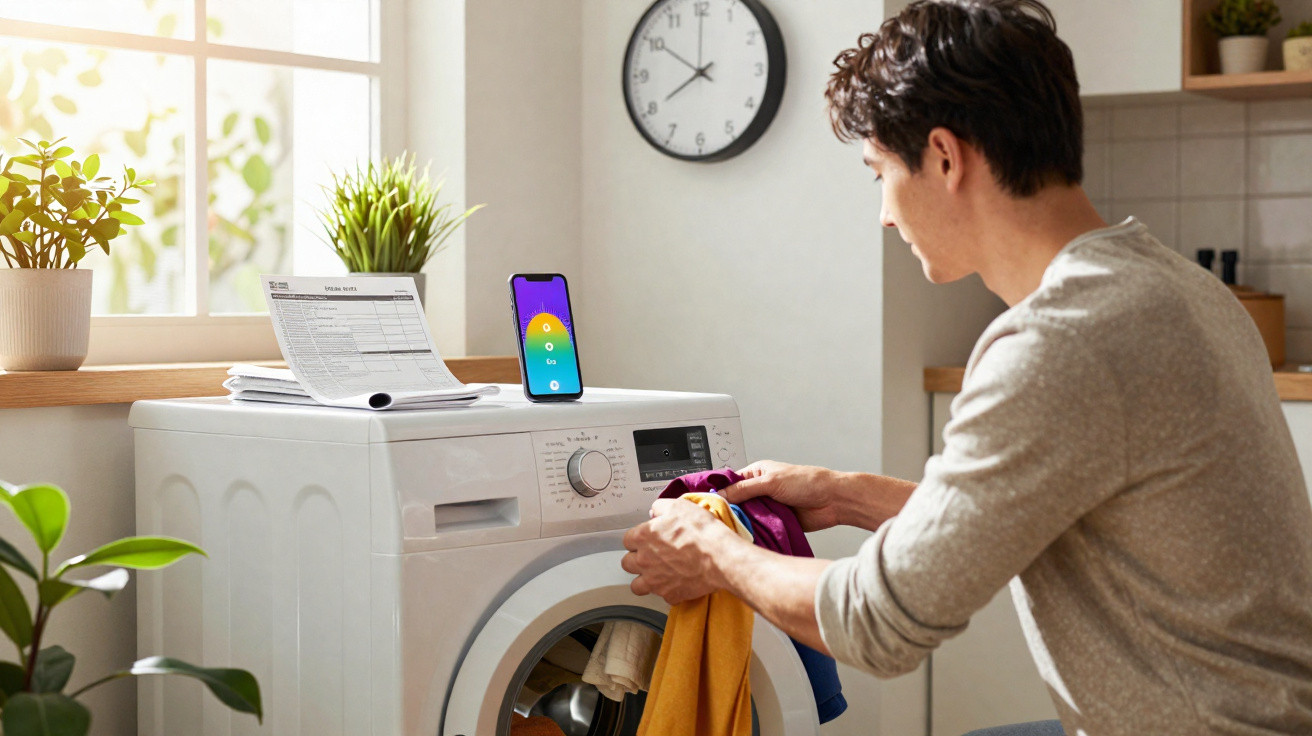
A washing machine is one of the quieter electricity guzzlers in the home. Even though it’s only one appliance among many, it can still make a noticeable difference to your annual bill. With a few straightforward tweaks to timing and programme choice, you can cut the cost significantly - without sacrificing clean laundry.
Why the time you do your washing matters so much
Electricity doesn’t cost the same all day. Energy suppliers distinguish between periods of high demand and times when far less power is needed. The more people cook, wash, dry and charge devices at the same time, the harder the grid is pushed - and the higher prices tend to be.
Energy specialists estimate that a washing machine accounts for roughly 6% of a household’s total electricity use on average. In families with children, or for anyone washing lots of sports kit, that share can be higher still. Adjust the right levers here and you’ll feel it directly in your wallet by year end.
"The trick is less about expensive tech - and much more about when and how the machine runs."
The time of day that pushes your electricity bill up
The worst time to switch on the washing machine is early evening. From roughly 18:00 to 22:00, demand peaks: people get home, put the hob or oven on, start the dishwasher and washing machine, charge phones and laptops, and often plug in an electric car as well.
During this window, many tariffs move into a pricier rate band. If you wash then, you usually pay more per kilowatt-hour - often without realising it. There’s also a system-wide issue: when demand is especially high, additional power stations have to kick in behind the scenes, and these often run less efficiently.
There’s another factor too. In densely populated areas, evenings don’t just mean more washing machines - they also mean lots of tumble dryers running. That intensifies the demand spike on the grid. Starting your machine at exactly that point means you’re effectively working against the direction of energy saving.
What does that mean for day-to-day life?
If you consistently run your washing machine during peak hours, you pay more for every load than you need to. This hits hardest with contracts that use time-based pricing with expensive and cheaper windows. But even on many standard tariffs, grid strain and wholesale purchasing costs feed through indirectly.
"Rule of thumb: if the machine runs at typical after-work time, it becomes noticeably more expensive on your electricity statement."
Cheap hours: when running the washing machine actually makes sense
Things are far calmer late at night and early in the morning. Under many contracts, reduced rates apply from around 22:00 to 06:00 because demand is lower. Commuters are travelling, more lights are off, offices and shops are closed - and the grid gets breathing room.
Shifting your wash into this period can help in two ways: you benefit from a lower price per kilowatt-hour, and you also help smooth demand across the network. That reduces costly peaks and eases pressure on the infrastructure as a whole.
- Start between 22:00 and midnight: ideal for shorter programmes
- Start after midnight: well suited to Eco programmes with longer run times
- Start in the early morning: useful if you want laundry finished before work
Many modern machines include a delayed start or timer function. That makes planning easy: load the drum, choose the programme, set the delay - and the machine starts automatically at the cheaper time.
Special tariffs: when it’s particularly worthwhile
Contracts with time-dependent pricing (often described as a "day-night tariff" or similar) make washing outside peak periods especially appealing. Depending on the region, households on these tariffs can save a few pence per load - sometimes reaching into double-digit pence.
If you already have such a contract, or you’re considering one, check carefully how the time windows are defined. In some areas the cheaper hours begin earlier or finish later. A quick look at your paperwork or your supplier’s app is usually enough to confirm the details.
Eco programme: wash for longer, pay less
Timing is the first lever; programme choice is the second. Nearly all newer washing machines include an Eco mode. It’s designed specifically to use less energy - even if the cycle looks longer at first glance.
The biggest energy draw in washing is heating the water. Lower temperatures can save a great deal of electricity. An Eco programme typically runs below 40 °C and relies on longer soak and rinse phases to lift dirt gently.
"For everyday clothes with normal soiling, a wash at 30 or 40 °C is usually completely sufficient."
Many people still default to 60 °C cycles out of habit, even though it’s often unnecessary. Switching to Eco cuts the energy used per wash noticeably - and it also treats fabrics and colours more kindly. Clothes lose their shape less, prints stay readable for longer, and favourite items survive more wash cycles.
When higher temperatures make sense
That said, higher temperatures still have their place. Bed linen, towels, or laundry from someone who’s been ill should be washed at 60 °C regularly to reduce germs reliably. You can still save money here by collecting these items and washing them together in a fully loaded machine.
Maintenance and loading: the often-overlooked electricity traps
Even the best timing and the most efficient programme won’t help much if the machine is poorly maintained or loaded incorrectly. Over time, filters, hoses and seals can clog. Limescale and detergent residue force the appliance to work harder - and that means higher electricity use.
- Clean the lint filter regularly
- Once a month, run a hot empty cycle with machine cleaner or a vinegar-based cleaner
- Wipe dirt and detergent residue from seals and rubber edges
- Dose detergent according to the instructions and your local water hardness
Loading also makes a big difference. A half-empty drum wastes energy and water. A habitually overfilled machine can extend the run time, strain the motor and worsen cleaning results. Many manufacturers’ rule of thumb: there should still be a hand’s breadth of space between the laundry and the top of the drum.
Combine the washing machine, tumble dryer and other appliances intelligently
If you want to go a step further, don’t look only at the washing machine - consider all major electricity users at home. If a tumble dryer is running alongside the oven and perhaps a fan heater, the load on your home supply rises quickly.
It’s worth planning a rough sequence: run the washing machine at night or early morning first, then start the tumble dryer at a slightly offset time. If you have a balcony or garden, you can skip the dryer altogether on many days and air-dry your laundry - which cuts electricity use even more.
How the savings add up in practice
As a rough guide, an average household can easily reach 150 to 200 wash cycles per year. If each wash costs just a few pence less thanks to cheaper hours, Eco programmes and better maintenance, it adds up to a noticeable amount over the year.
There’s also an effect many people only spot on second glance: reducing strain on the grid at peak times lowers the pressure for expensive network upgrades and so-called peak-load power stations. By deliberately using your washing machine outside peak hours, you make a small contribution to keeping the whole system more stable and efficient.
For households with a smart meter or an energy-supplier app, this becomes particularly clear. You can usually see exactly how shifting laundry affects your daily electricity profile. Stick with the change for a few weeks and the difference often shows up clearly in the consumption curve.





Comments
No comments yet. Be the first to comment!
Leave a Comment