
You clear the lint screen with a quick swipe and assume the job is done, but the dryer keeps running and running. The hidden fluff is the real culprit: it blocks vents, restricts airflow, and costs both time and money. There is a quicker, smarter way to remove it - one that reaches the trapped lint your fingers cannot reach.
It is Saturday morning, the kettle is boiling and laundry is piled up like soft skyscrapers. I pull out the lint screen, already coated in what looks like a fluffy jumper. After one fast wipe, I put it back, turn the dial and hear that low, laboured exhale - a machine under strain. Steam hazes the window while the timer drags on. By the time I take out the sheets, they are warm but still not fully dry, rather like toast that remains pale around the edges. I peer into the dark, narrow lint slot. There is clearly something stuck down there.
Why lint slows your dryer - and your day
Each piece of lint may be thin as paper, but enough of it becomes a sandbag. The filter catches only the fluff that is easiest to collect; the rest travels further in, clinging to the duct, bends and corners of the lint housing. Instead of moving freely, airflow becomes slow and restricted. Heat cannot circulate properly, sensors receive confused readings and drying programmes quietly become longer. At first, it is easy to miss. Then you have time to make a cup of tea and fold a shirt, yet the towels are still turning.
Any appliance engineer will tell you that poor drying frequently comes down to poor airflow. Fire services in the UK and overseas have warned for years that obstructed vents increase heat and risk. Official figures differ between regions, but the trend is consistent: thousands of dryer-related fires have been reported in recent years, and lint accumulation is often involved. I spoke with a landlord who now schedules lint-cleaning days after a vent hose was scorched in a flat where nobody believed there was a problem. The dryer drum suggested otherwise.
The science behind it is straightforward and unforgiving. A dryer is primarily a machine that moves air, and only secondly one that produces heat. When the fan cannot force sufficient air through clothing and out of the vent, moisture remains trapped. The thermostat switches off, cools down and starts again, using extra time and electricity. In condenser and heat pump dryers, restricted airflow also prevents the condenser from removing water effectively. Open up the route and the machine no longer has to battle against itself. You can hear the difference straight away: a lighter, higher whoosh rather than a weary sigh.
The smart dryer hack for hidden lint
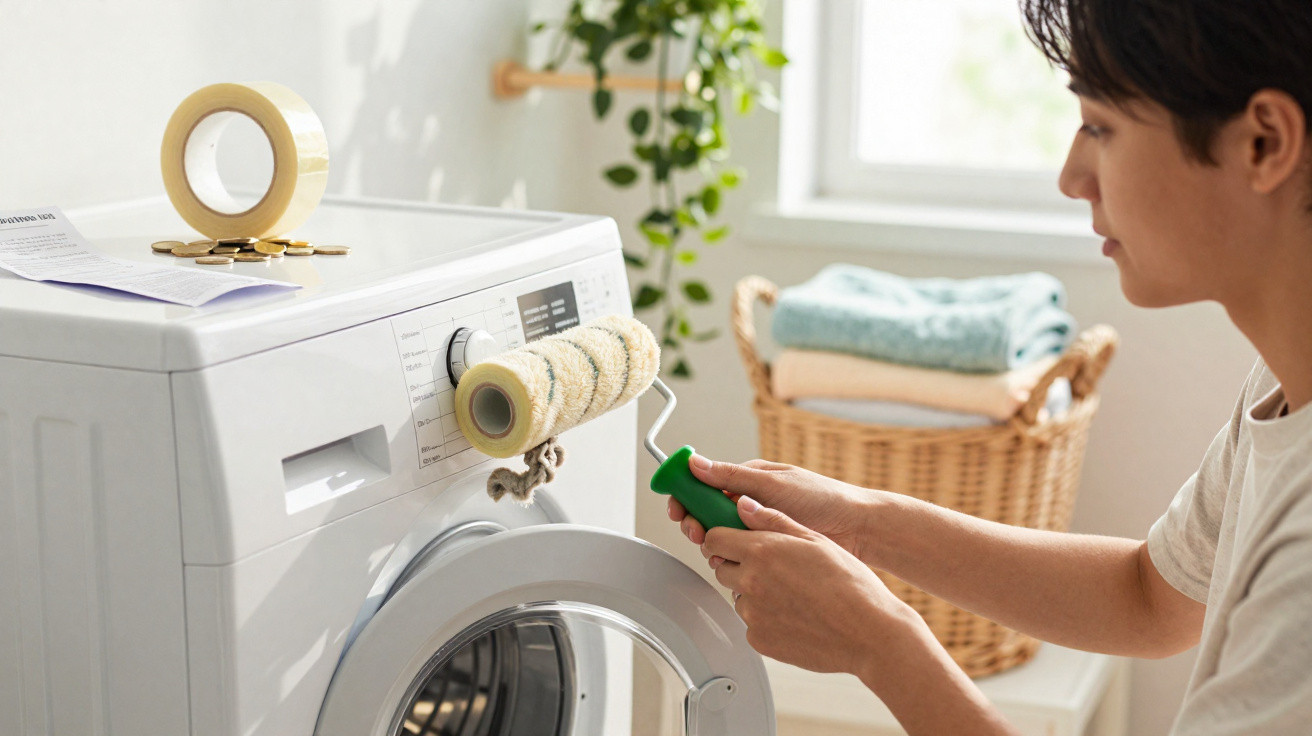
Here is the fast solution: use a reverse-tape roller hack with a slim vacuum nozzle. Cover a clean paint roller or rolling pin with strong tape, with the sticky surface facing outwards. Unplug the dryer first. Carefully slide the roller into the lint slot and rotate it; the tape will pick up layers of fluff that the screen did not catch. Then use a crevice attachment, or tape a flexible tube to your vacuum hose, guiding it around the housing and down towards the fan intake. Make several short passes. Pull out lint, vacuum, then repeat. Within three minutes, you can remove a surprisingly thick mat of grey fluff.
Take your time rather than attacking it aggressively. Larger clumps may come away easily, while fine fibres remain tucked behind ridges and screws. Reach those areas with a long bottle brush, and replace any weak vent hose with smooth-walled rigid or semi-rigid ducting. Inspect the outside vent cap too: when the drum is running, it should open freely and allow air through like a small open window. Realistically, no one will do this every day. Try a light clean each month and a more thorough clear-out every season - or earlier if you regularly dry pet bedding or heavy cotton items.
Treat it like a tune-up that you can both hear and notice. The drum warms up more quickly. Timers become more accurate. The quiet hum afterwards feels like a new machine. For a condenser or heat pump dryer, open the front grille and brush the condenser fins too, as lint gathers there as well; rinsing them under the tap can restore that quiet airflow in minutes.
“Airflow is the lifeblood of a dryer,” says Tom Jennings, a repair tech with two decades on the job. “People clean the screen, then ignore the airway. The lint you can’t see costs you the most.”
- What you need: a tape-wrapped roller, long bottle brush, vacuum with a crevice attachment or flexible tube, torch and a semi-rigid vent hose.
- Carry out a quick monthly sweep and a deeper seasonal clean. Shorter drying cycles are the sign that it is working.
- Stop and contact a professional if you can smell scorched dust, hear scraping from the blower or find crushed ductwork.
Keep the dryer airway clear and keep money in your pocket
You should see the improvements immediately: shorter programmes, a cooler dryer cabinet and fewer loads that need drying again. Clothes will emerge drier around the edges, where they previously stayed damp and clung together. If you use a smart plug, you may see its wattage graph level out as airflow improves and the heater switches on less often. It is a small habit with a worthwhile return, particularly as autumn arrives and drying racks take over the lounge. Try the hack once, then set yourself a reminder. A clear vent creates a lightness you can hear.
| Key point | Detail | Benefit for the reader |
|---|---|---|
| Reverse-tape roller + vacuum | Collects deep lint missed by the screen, then uses suction to clear the airway | Faster drying without purchasing expensive equipment |
| Smooth, short vent runs | Replace crushed foil ducting with semi-rigid ducting and avoid sharp bends | Improved airflow, less heat stress and lower bills |
| Seasonal deep clean | Brush the lint housing, blower intake and condenser fins | Restores performance, lowers fire risk and extends appliance life |
FAQ:
- How often should I clean beyond the lint screen? Carry out a quick monthly sweep and a thorough clean every three months. Reduce the interval if you dry pet hair, heavy cotton or use dryer sheets.
- Will this hack void my warranty? No - you are not altering any components, only clearing away fluff. Remain in accessible areas; if a new machine requires a panel to be removed, consult its manual or call a professional.
- What tools work best for tight spaces? A paint roller covered in tape, a long bottle brush and a narrow vacuum tube work well. Some people attach a silicone straw to the hose for an especially slim reach.
- Can I use compressed air to blow lint out? It may force debris further into the appliance. It is better to lift lint with tape and remove it with suction. If you do blow air, work from the outside vent towards the machine, while a vacuum collects fluff at the lint slot.
- My dryer still takes ages after cleaning. What next? Inspect the outer vent flap, duct length and any bends or kinks. If airflow is good, the cause could be a worn belt, weak blower or faulty sensors. It is time for a technician to inspect it.






Comments
No comments yet. Be the first to comment!
Leave a Comment