
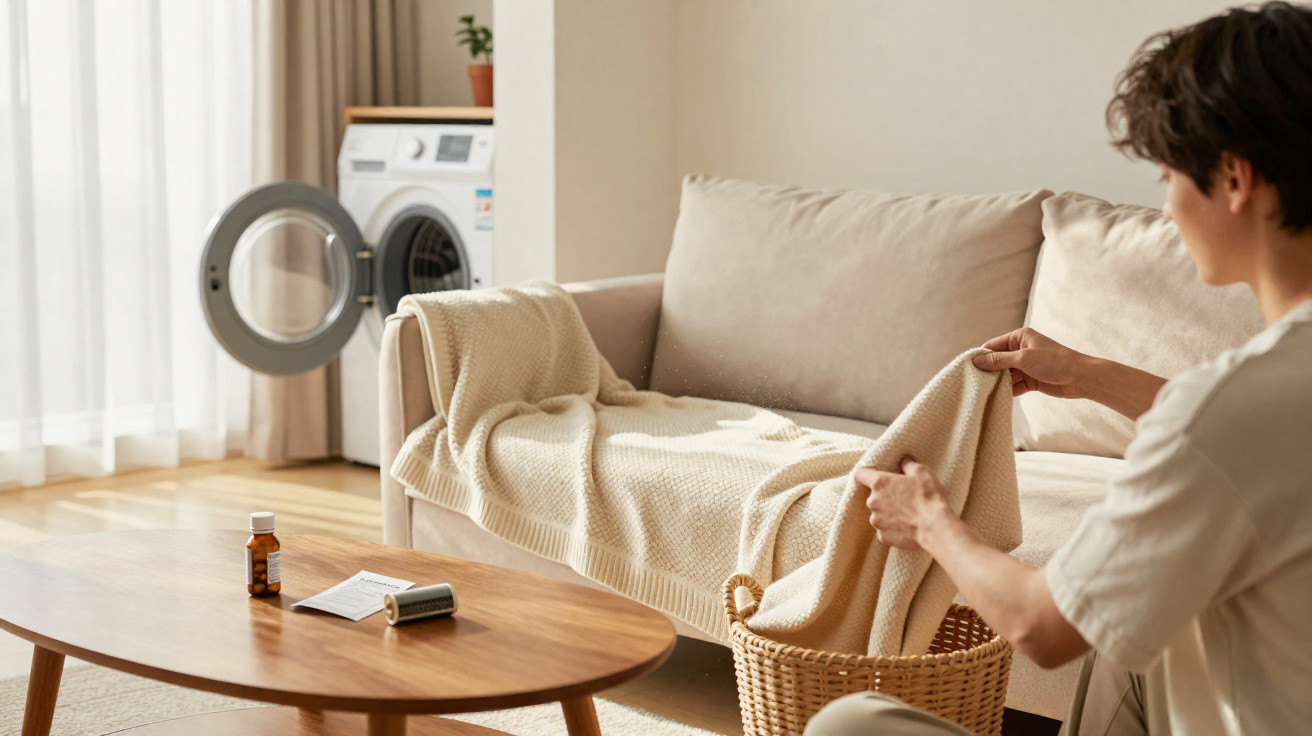
A discreet hygiene issue can sometimes undermine comfort in the living room and make itchy noses worse.
At the centre of evenings in front of the television, one item often escapes the cleaning routine: the throw blanket. Soft, comforting and moved between the bed, sofa and child’s bedroom, it collects hair, sweat, crumbs and dust. Household hygiene specialists advise against using it repeatedly without a scheduled wash, particularly where children or pets live.
Why throw blankets stay out of the laundry basket
Throws are often judged by whether they look clean. With no obvious stains, they end up rolled at the end of the sofa. This creates a blind spot: there is no visible prompt, so they do not get washed. Concern about damaging the fabric is another barrier. As a result, the gap between washes lengthens and the fibres hold on to what cannot be seen.
A throw blanket that is rarely washed accumulates dust mites, skin flakes, pollen and skin bacteria. Each shake releases some of them into the living-room air.
What the fibres contain after a few weeks
Every use leaves behind skin cells, traces of sebum and moisture. Pet hair clings to the knit, seasonal pollen becomes trapped in the weave, and tiny droplets from coughing settle on it. In a heated home, remaining dampness can encourage musty smells and throat irritation.
Allergists report sneezing and eczema flare-ups in sensitive people who sleep with an unwashed throw. Dust mites feed on skin flakes and multiply from 20 °C onwards, especially when humidity exceeds 50 %. The build-up may be difficult to spot, but its effects are noticeable: itching, watery eyes and wheezing.
Washing at 60 °C removes dust mites. If the fabric cannot tolerate this, the combination of a gentle wash, thorough drying and airing still reduces the allergen load.
Throw blanket washing frequency by use
Not everyone uses a throw blanket in the same way. Match the schedule to how your household actually uses it.
- Decorative throw, rarely used: wash every 6 to 8 weeks.
- Daily living-room use: wash every 2 to 3 weeks.
- Direct contact with bare skin, naps or overnight use: every 1 to 2 weeks.
- Household with pets or a baby: every 1 to 2 weeks, plus frequent airing.
- After an infectious illness at home: wash immediately.
Cleaning methods that protect the fabric
Before washing, remove hair and dust with a lint brush, a brief burst of steam, or 10 minutes in a tumble dryer on cool air with a dryer ball. Then follow the care label. Choose a lightly scented detergent to reduce irritation. Measure the amount carefully: too much detergent traps odours as the throw dries.
| Material | Cycle and care | Temperature | Drying | Recommended frequency |
|---|---|---|---|---|
| Wool | Wool cycle, mesh bag, gentle spin | Cold to 30 °C | Dry flat, away from a heat source | 3 to 6 weeks depending on use |
| Cashmere | Hand wash or wool cycle, specialist shampoo | Cold | Flat on a towel | 4 to 8 weeks |
| Cotton | Normal cycle, light load | 40 to 60 °C according to the label | Air dry or gentle tumble dry | 2 to 3 weeks |
| Fleece or microfibre | Delicate cycle, no fabric conditioner | 30 to 40 °C | Air dry, away from direct sunlight | 2 to 3 weeks |
| Merino wool | Wool cycle, dedicated detergent | Cold to 30 °C | Dry flat | 3 to 6 weeks |
| Polyester blend | Delicate cycle, lightly loaded drum | 30 to 40 °C | Air dry | 2 to 3 weeks |
Steps that extend its lifespan
- Air the throw for 10 minutes beside an open window after use.
- Rotate two throws to spread wear and maintain a washing routine.
- Store it dry in a breathable bag, never an airtight one.
- Remove pet hair before washing to prevent stuck-on lint.
Persistent odours: targeted solutions
A smell that lingers often points to organic residue or incomplete drying. Neutralise it rather than covering it up.
- Bicarbonate of soda: add a handful to the drum with the detergent, then use a long rinse.
- White vinegar: pour 1/2 glass into the fabric-conditioner drawer; do not combine it with fabric conditioner.
- Short cool-air tumble dry: 10 minutes with two dryer balls, followed by flat drying.
- Winter sun: 30 minutes on each side; UV light softens odours and dries the fibres.
A pleasant perfume smell does not mean an item is clean. Slow, complete drying remains the key to a throw that smells fresh.
Warning signs that call for a quick wash
- Tingling skin or redness after contact.
- A blocked nose or sneezing as soon as you wrap yourself in it.
- Greasy stains or dark patches in the folds of the fabric.
- Signs of damp after a spill or a sweaty nap.
- Use by an ill person within the last 72 hours.
Common mistakes that damage a throw blanket
Several habits harm the fibres and reduce comfort. Avoid the following traps.
- Fabric conditioner on fleece: the fibres become coated and lose their loft.
- An overloaded drum: friction causes pilling.
- Water that is too hot for wool: the knit felts and shrinks.
- Drying on a radiator: heat damages the fibres and locks in odours.
- A high-speed spin: twisting distorts the edges and stretches the knit.
When a throw blanket should be taken out of use
In certain situations, put the throw straight into the laundry without delay. A stomach bug, flu or skin infection can quickly contaminate the textile. A wet pet, a spilled cup of milk or a post-exercise nap can soak it deeply and feed odours. If the material stays damp for more than 24 hours, run a cycle and dry it completely.
After illness at home, use the hottest cycle compatible with the fibre, then dry it thoroughly before using it again.
Going further: indoor air, humidity and allergies
A throw blanket does not exist in isolation. Indoor air quality affects how clean it feels. Humidity between 40 and 50 % limits dust-mite growth. Briefly renewing the air twice a day helps remove excess moisture held by textiles. A vacuum cleaner with a HEPA filter reduces the dust that settles back onto throws left in the living room.
People with asthma or allergies benefit from choosing washable materials such as cotton or microfibre, while keeping to a regular schedule. A magnetic “contact textiles” calendar for sheets, pillowcases and throws makes this easier to track, especially in larger families.
Care tip for homes with pets
Before every wash, run the dry throw in the tumble dryer for 10 minutes on cool air with two dryer balls. Lint and hair move into the filter. This makes washing more effective and prevents residue from sticking to seams. Then use a lightly scented enzyme detergent to break down organic stains.
Budget and durability
Washing more often does not necessarily mean higher bills. A 30 °C cycle, a half-full drum and air drying lower the cost. Alternate between two throws: this protects the fibres while keeping the schedule realistic. Removable covers are also worth considering for decorative throws: a zip completely changes how easy they are to wash.


Comments
No comments yet. Be the first to comment!
Leave a Comment