
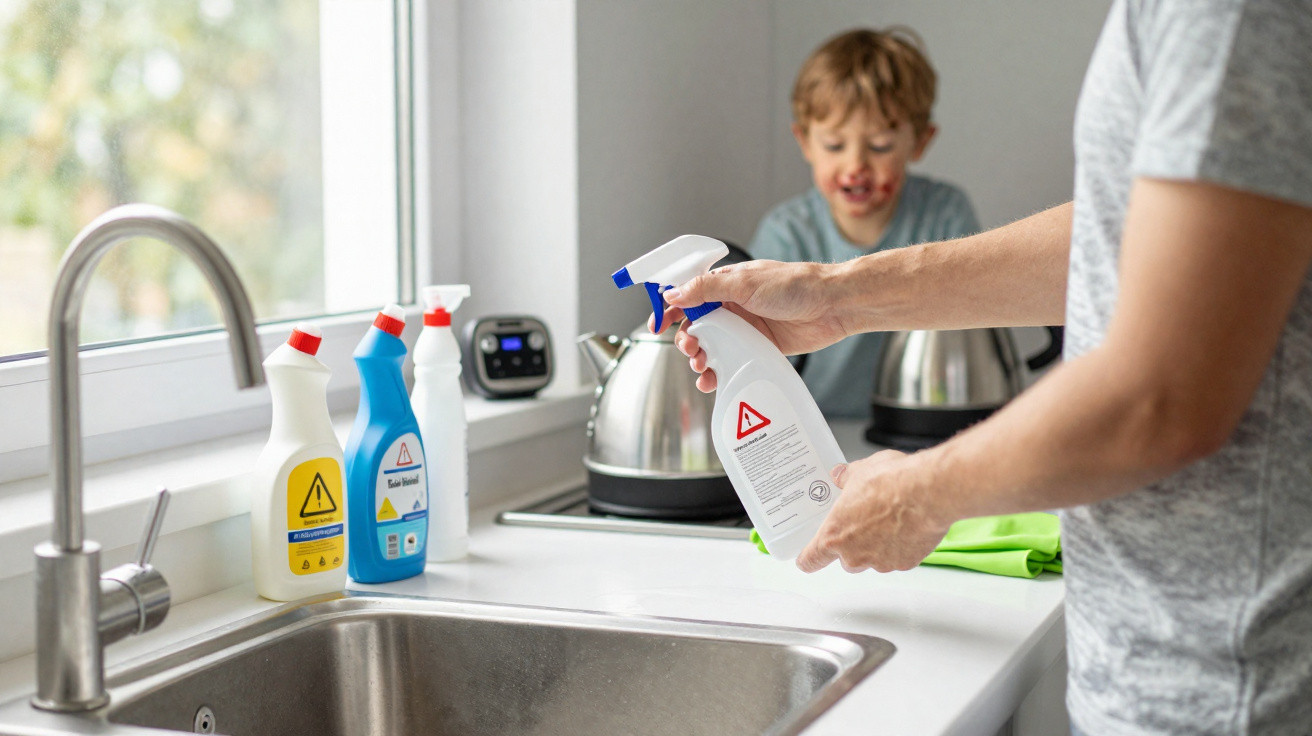
At home, they sit beneath the sink, arranged like a miniature army. Their labels carry minuscule print, tucked-away warnings and a language we assume we know. If something promises a “fresh” scent or calls itself “natural”, we tend to regard it as harmless. That is precisely where the danger can start.
It is a familiar Saturday-morning picture: the radio playing, the kettle coming to the boil and a bottle in your hand. The window is steamed up, a young child darts by with jam on their cheek, and your thumb is poised over the spray trigger. Then you notice a small red diamond on the rear label - a pictogram you have seen before but never properly examined. You pause to read it: wear gloves, ventilate the room, do not mix with acids. It feels unexpectedly personal, as though the product is sharing useful secrets with you. You clean more slowly, alter the way you breathe and open the window. The change is subtle. The label is the quietest safety device in your home. It begins with 20 seconds.
The quiet power of a label
A label works as an interpreter between chemistry and everyday life. It reduces complicated reactions to straightforward steps: dilute this, wait for that, avoid that combination. The red diamonds, warning words and small-print instructions on contact time are not there to frighten you; they show you how to manage risk while cleaning.
My neighbour once used bleach in her bathroom after applying a limescale remover. The fumes drove her into the garden coughing, with a sore throat and streaming eyes. When she cleaned the room again, she checked both labels first and saw the words “Do not mix with bleach” - four words that safeguarded her lungs and her weekend. UK poisons advice lines record thousands of accidental exposures to household cleaning products every year, often caused by basic mix-ups or using too much. Looking at the small print would have prevented many of those incidents.
There is a recognisable human tendency at work. Labels influence behaviour by introducing a useful pause at the crucial point: before spraying or pouring. Seeing “ventilate” prompts you to open a window; reading “dilute 1:50” sends you for a measuring jug; noticing “contact time: 5 minutes” stops the rushed spray-and-wipe routine that does not genuinely disinfect. Marketing can make you feel untouchable. Labels remind you that you are the one in control.
Turning cleaning product labels into small habits
Try this straightforward approach today: the 20-second label check. Look for four points - Purpose, Icon, Dilution and Contact time. Purpose means whether it is intended for kitchens, bathrooms, floors or fabrics. For Icon, check for red diamonds and alert words such as “Warning” or “Danger”. Dilution tells you whether the product is a concentrate or ready to use. Contact time is the number of minutes a surface needs to remain visibly wet for the product to work properly.
Many everyday mistakes begin with rushing. We spray then wipe straight away, despite the label quietly instructing us to “leave for 2–5 minutes”. We transfer products into unlabelled bottles to “save space”, and lose the safety directions in the process. We refill an old bottle with another brand without appreciating that the formulations may react badly together. We use hot water with bleach, worsening the fumes. We clean while children or pets are nearby, although the reverse label says “keep away until dry”. Most of us have experienced a moment when cleaning seemed like an innocent task rather than a succession of minor chemical choices. Twenty seconds of reading often saves hours of regret. Honestly, though, hardly anyone manages it every single day.
One helpful way to think about it is to treat the label as a recipe rather than a rule book. Read it as you would a cake recipe before cracking the eggs.
“Treat the back label like a map,” says a community nurse who fields home poisoning calls. “It shows you where the hazards lie and the safest path past them.”
- Check for “Do not mix” instructions before beginning.
- Take note of the contact time and use a timer on your phone.
- Put on gloves where an icon indicates skin irritation.
- Open a window if the label says “use in well-ventilated area”.
- Keep products up high rather than low when the label identifies a child hazard.
The bigger picture in plain sight
Reading labels is not an act of paranoia; it gives you control. You begin viewing your home in a new way: identifying rooms where vapour lingers, places small hands could reach and the difference between how frequently you clean and how effectively you do it. You can purchase fewer products yet make better use of them, because the label explains what the bottle is genuinely capable of doing.
Children observe adults more closely than we imagine. When they watch you stop, read the label and open a window, they learn a pattern of care. Partners notice it as well. The home becomes less like a hurried performance and more like a skill. You do not clean with greater force; you clean more intelligently. Those tiny icons beat loud marketing every time.
There is a modest financial benefit too. Concentrates last longer when diluted correctly. Surfaces endure for longer once you stop scrubbing them into a scratched, dull finish. Skin becomes less irritated when gloves are used with products carrying the irritant symbol. Read the small words; change the big outcomes. It is a minor ritual that creates a significant ripple effect.
When you begin reading labels, it is not only your technique that changes - it is your pace. Slowing down slightly leaves room for safer decisions: fresh air, gloves, a timer and no mixing. It is ordinary risk management contained within a normal Saturday. You might even take quiet pleasure in doing it correctly - not as a performance, but as calm competence. It becomes a habit you pass on almost unconsciously, much like rinsing the chopping board or fastening a seat belt.
| Key point | Detail | Benefit for the reader |
|---|---|---|
| Contact time matters | Disinfectants need minutes on the surface to work | Genuine hygiene rather than placebo cleaning |
| Never mix products | Bleach with acids or ammonia releases dangerous gases | Prevents coughing fits, A&E visits and damaged lungs |
| Dilution and ventilation | Use the correct ratio and open a window as instructed | Less irritation, improved results and longer-lasting products |
FAQ:
- Do I need to rinse after using a disinfectant? If the label says “rinse food-contact surfaces”, do so after the contact time has elapsed. Many products used on non-food surfaces do not need rinsing, but the label always takes priority.
- Is it safe to mix bleach with vinegar or limescale remover? No. Combining them can release chlorine gas. Use only one product at a time and check every label before starting.
- What exactly is “contact time”? It is the period, in minutes, that a surface must remain visibly wet for a product to meet its stated kill claims. Wiping too early mainly just moves microbes about.
- Are “eco” or “natural” cleaners always safer? Not necessarily. Some are concentrated or include powerful organic acids. Check for the same icons and directions, and give the label the same level of respect.
- How can I teach kids to be safer around cleaning products? Demonstrate the pause-and-read habit, keep bottles high up and locked away, and offer clear rules: “No touching, tell an adult, windows open.” Leave products in their original bottles with the labels undamaged.
Comments
No comments yet. Be the first to comment!
Leave a Comment