
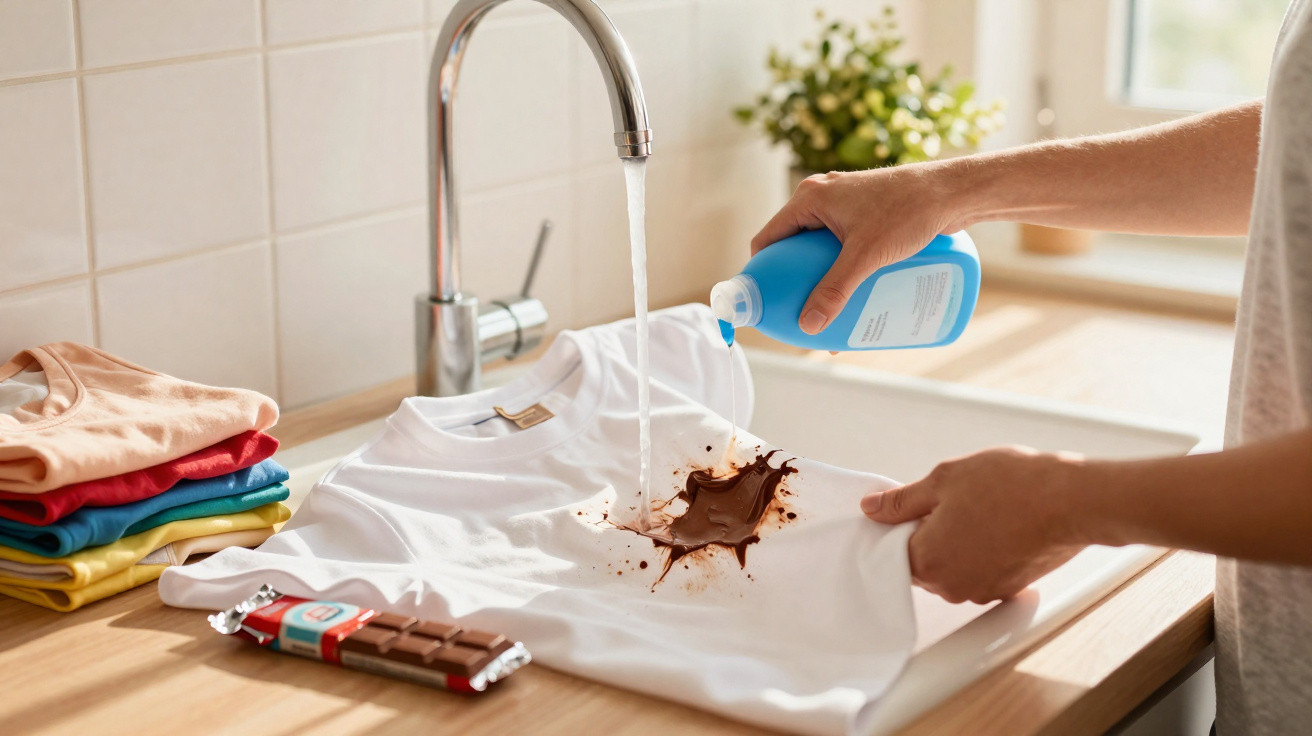
There it was: a dark crescent spreading beside the buttons, faintly sweet with a slightly bitter cocoa scent, like a secret refusing to stay hidden. My first instinct was to press a napkin against it, which inevitably spread it into a glossy, miserable smear. Time felt suddenly short. The mark seemed permanent, and somehow it made the entire day feel marked as well. Then I remembered a voice from a laundry-products aisle years ago: keep it cold, keep it simple, and do not rub like a bull in a china shop. I paused, ran the tap, and the situation changed completely. There is something deeply satisfying about undoing a small disaster, isn’t there?
The moment it lands: why chocolate feels unbeatable
Chocolate is more than sugar. It contains cocoa butter fat, sticky sugar, and a little protein from milk or cream. That mixture settles into cloth like an unwanted guest who will not take the hint, and darker chocolate makes its presence even more obvious. The first sight of the mark can feel like a final judgement. We have all looked down and thought, “Well, that shirt’s done for.”
Yet the outcome changes when you make the right first moves. Stop, breathe and deal with it steadily. Panic encourages us to scrub as though we are trying to wipe away an unpleasant memory, but that only forces the chocolate further into the fibres. You are trying to encourage it out, rather than fight it into surrender. Treat the fabric as you would skin: valuable, delicate and capable of recovery.
First moves matter: lift, flip, and flush with cold water
First, remove any solid chocolate using the edge of a spoon or a blunt knife. Avoid hard scraping, as this presses it into the threads. Keep the fabric taut and gently ease the sticky pieces away, much as you would slide a postcard from a tacky tabletop. There is no need to rush. It is more like persuading a child to hand back your phone.
Next, turn the stained section inside out and run a gentle stream of cold water over the reverse side of the fabric. This pushes the chocolate back out along the route it took in. The soft sound of running water can be reassuring, like white noise for minor emergencies. Keep the flow calm and consistent rather than forceful, and watch the brown colour lift away like paint being washed from a brush. Warm or hot water may seem helpful, but it can set the stain in the way eggs set in a frying pan.
The cold-water trick
Cold water keeps the proteins in chocolate from tightening and stops the fat melting further into the weave. It also gives you time, which is perhaps the most useful part of the process. One quiet minute at the sink while you breathe is far better than an hour of regret afterwards. It is straightforward, almost dull, and that is exactly why it is effective.
While the water runs, gently press the fabric between your fingers and allow the flow to do most of the work. If the stain begins to fade, you are already making progress. If it remains stubborn, do not worry. The next stage is where the real change begins. No fuss: simply water, soap and a little attention.
Detergent is the quiet hero
After the water has done what it can, use liquid laundry detergent. For a shirt, a pea-sized amount is sufficient; use more for a larger spill. Work it into the stain with your fingertips, treating both sides of the fabric so the detergent meets through the middle. Use small circles and a light touch rather than a vigorous scrub. If washing-up liquid is all you have by the sink, it can also work on a fresh stain.
Leave the detergent for ten minutes, almost like a brief marinade. During this time, the chocolate fat starts to release and the detergent’s surfactants carry it away. Cold water plus detergent is the whole medicine cabinet here. You do not need an elaborate solution or a viral trick that smells as though it belongs in a chemistry lab. Patience is enough, along with a sink that offers no judgement.
Soak, swish, and give it a beat
Fill a bowl or sink with cold water, then immerse the fabric so that the stained area is completely submerged. Swirl it gently before leaving it for 15 to 30 minutes. Allowing the detergent to work quietly can feel surprisingly calming. The stain loosens gradually, like a reserved guest slowly moving towards the exit. Return, lightly rub the fabric against itself, and rinse it under cold water to see how it is progressing.
Should the stain still be visible, repeat the detergent massage and follow it with another short soak. Two rounds are often enough. Do not be alarmed if the final trace disappears only in the last rinse; that is entirely normal. Not every modest win needs to be dramatic.
When the stain has already set
For older or dried-on chocolate, begin by soaking the item in cold water alone. Leave it until the stain softens, then apply your detergent and work it in. Take particular care with wool and silk, testing a discreet area first; both respond better to diluted detergent and extra time than to rubbing. Cotton and polyester are less demanding and can withstand a little more encouragement.
Allow yourself to repeat the process. An old stain is under no obligation to disappear quickly. That does not make it permanent; it merely means it is stubborn in a familiar manner, like a jar lid that needs two attempts before it finally loosens and turns.
Rinse well, then wash cold-and keep the heat off
When the mark is much lighter or almost gone, rinse it thoroughly from the back with cold water. Do not hurry this stage. Soap residue can conceal what remains, and you want every trace cleared before washing day. Then wash the item on a cold cycle using your usual detergent.
Heat is the enemy until the spot is truly gone. In other words, avoid the tumble dryer and a hot radiator until you are sure the stain has disappeared. Let the garment air-dry, then examine it in natural daylight. A shirt can look remarkably different when held near a window. If a pale shadow is still there, you have not failed; repeat the cold-water and detergent method once more before the next wash.
Little adjustments for different fabrics
Cotton T-shirts and school shirts usually give up chocolate without much difficulty. They can tolerate gentle rubbing along with a little patience. Denim responds in much the same way, although the stain may settle into its texture; soak it for longer and rinse generously. Polyester blends can feel slippery, which is helpful here: detergent moves easily across the surface and lifts residue with a little back-and-forth movement beneath the tap.
Wool and silk are more like cats than dogs: they need respect. Use only a small quantity of mild liquid detergent, diluted in cold water first. Press rather than rub, and let time do the job that force would otherwise do. Using a mesh laundry bag for the final wash helps preserve their shape and keeps your heart rate under control.
Upholstery and carpets make matters trickier, but the same principle applies. Remove the excess, dab the area with cold water, blot it using a clean cloth, then apply a small amount of diluted detergent and blot again. Keep the surface only slightly damp rather than soaking it, and draw out moisture with a dry towel. The aim is calm repetition, not a flood.
The two-minute rescue ritual
If chocolate accidents happen often in your home-whether through children’s uniforms, late-night trips to the fridge or snacks on the train-make a small ritual of it. Spoon, turn, cold rinse, a small dot of detergent, then back to normal. It takes less time than checking a weather app. Set a two-minute timer and approach it as you would making tea. The stain will not argue with the clock.
Two minutes now saves you an hour later. The tumble dryer can be hard to resist, particularly when the house is cold and the laundry pile resembles a soft mountain. Honestly, nobody manages this perfectly every day, and sometimes clothes travel straight from hamper to wash to dryer in one automatic sequence. But whenever you can act early, you stop the stain settling in for the winter.
Why cold water and detergent work so well
Chocolate causes trouble because it combines fat, sugar and a small amount of protein. Hot water sets the protein and drives melted fat deeper into the fibres, so the idea that hot water works for every stain is a myth in this case. Cold water keeps the components movable. Rinsing removes the loose material, while detergent surfactants surround the remainder and pull it free like tiny lifeguards with float rings.
Nothing mysterious is happening. You are simply allowing chemistry to do its work while keeping the drama under control. The magic is the lack of magic-small steps, done early, done gently. That is why a blob of chocolate does not require a cupboard packed with specialist products. All you need is a sink, a drop of soap and the willingness to pause.
When the stain laughs back
Occasionally, a faint halo remains after the first wash. Do not give up. Return to cold water and a little detergent, leave it to sit, then rinse and air-dry it again. If the fabric can tolerate it, repeat the process once more. The second attempt often removes what the first one loosened.
If it continues to linger like the ghost of a dessert, consider whether you are seeing an actual stain or simply remembering one. On busy patterns, it vanishes entirely. On pale shirts, another round will nearly always fade it beyond notice. If the slightest trace does remain, it is usually one that only you can detect. The next time chocolate leaves its signature, you will know how to move from panic back to calm-and you may even find yourself smiling at the sink, wondering what else a little cold water can put right.





Comments
No comments yet. Be the first to comment!
Leave a Comment