
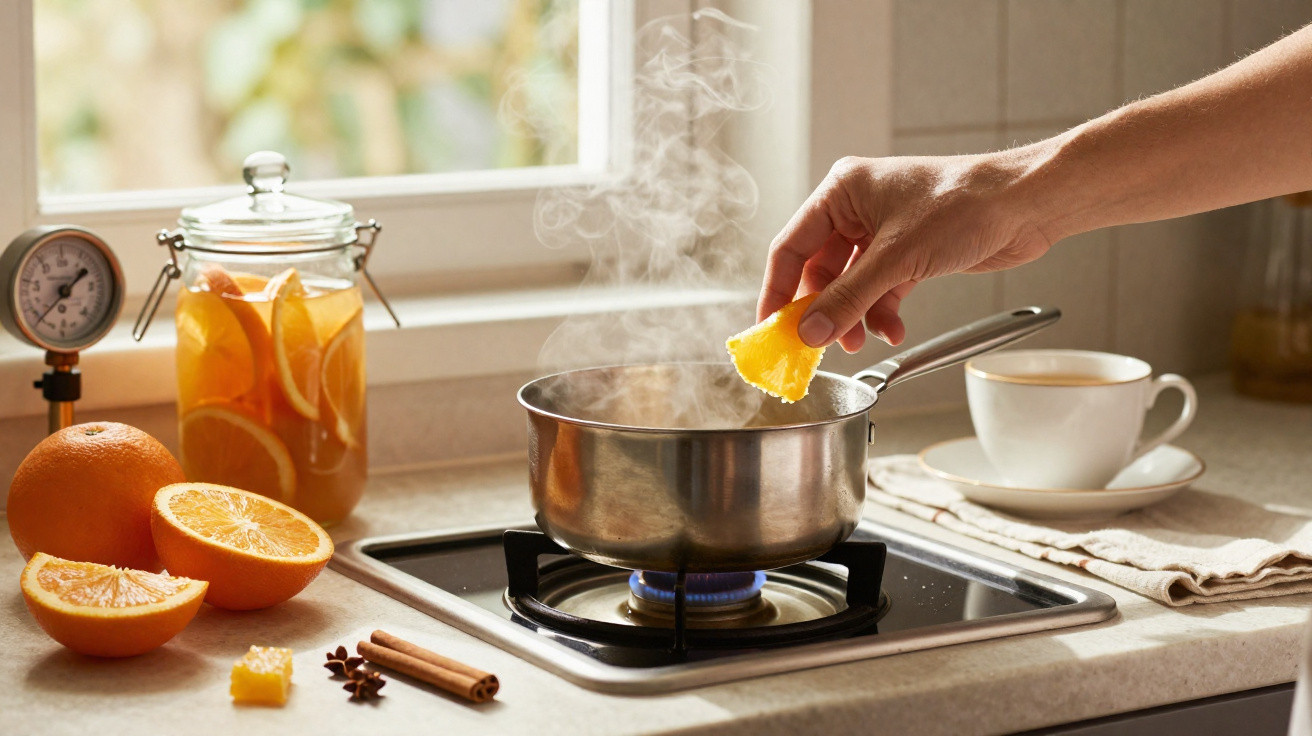
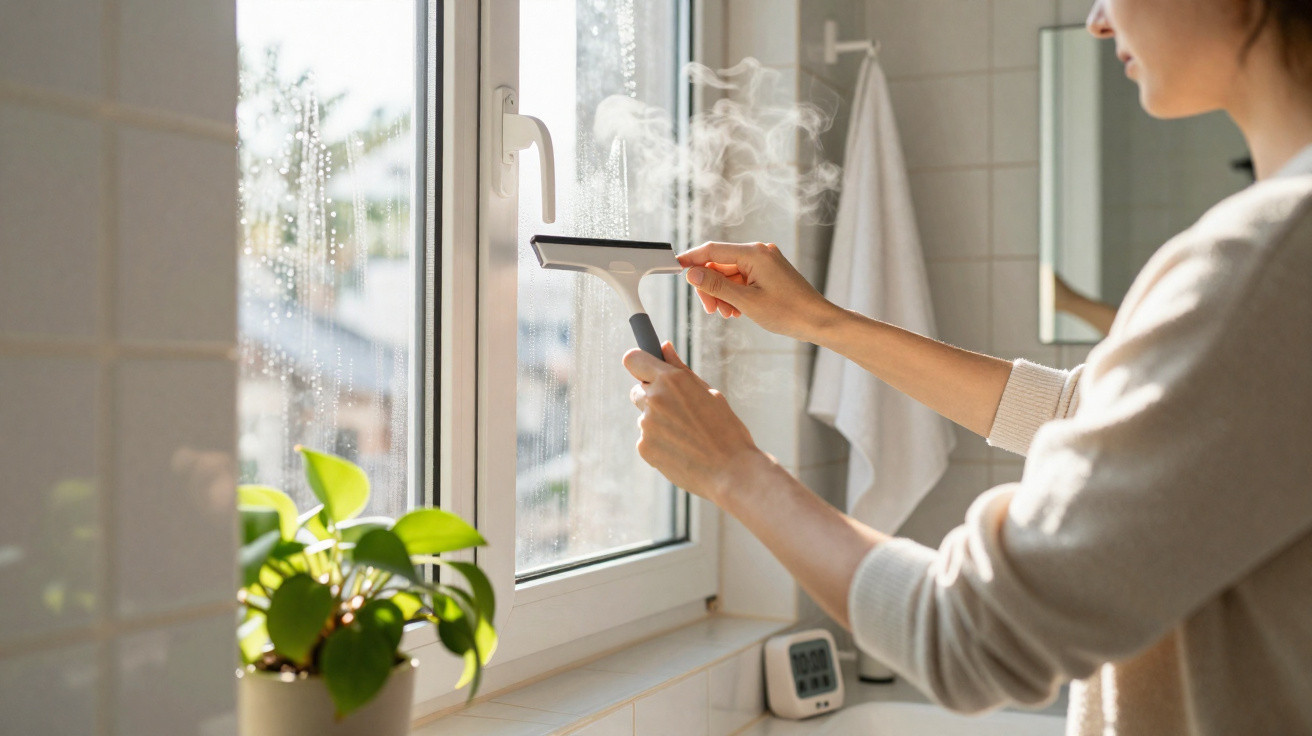
Inside, the kitchen window gradually misted up while the saucepan on the hob started to quiver and a few unhurried bubbles rose to the top. Several orange peels bobbed in the water like tiny blazing suns, giving off a fragrance that made the room seem less like January and more like a late-summer memory.
The heating hummed and the radiators clicked, but the air still seemed stale and overworked, laden with the remains of yesterday’s cooking. A social-media post had claimed that boiling orange peels could “reset the house” in 20 minutes. No chemicals or sprays were needed, it said - only a saucepan and fruit left over from the day before.
As the water reached a full boil, the citrus fragrance became sharper, and briefly the idea seemed convincing. Then an insistent question arose: was this a sensible winter ritual, or simply another comforting myth that consumes time, gas and optimism?
Does boiling orange peels actually freshen a winter home?
When you enter a small flat on a rainy January evening, the scent often registers before the furnishings. There may be damp coats, warmed-up pasta or perhaps the dog’s blanket tucked into a corner. Winter holds on to odours much as summer retains heat. Turning leftover orange peel into a subtle home fragrance therefore has obvious appeal: it is inexpensive, natural and a little romantic.
When heated, the peels give off essential oils containing limonene and other aromatic compounds. To your nose, those compounds signal “fresh”, “clean” and “bright”. There is a reason that so many cleaning products imitate citrus. In this case, however, the scent is not synthetic. It comes across as gentler and less forceful, more like background music than an advertising jingle playing in your sitting room.
Yet a pleasant fragrance does not necessarily mean the air itself is truly fresher. An appealing smell can mask yesterday’s fish, tobacco or the heavy dampness of a poorly ventilated bathroom. This is where the belief in orange peels becomes less convincing. They do not somehow absorb odour molecules; instead, their scent competes with them. The outcome may be enjoyable, but it is camouflage rather than a cure. The pot smells like a Mediterranean kitchen, the bin still smells like the bin.
Speak to those who rely on this method and similar stories emerge: a grandmother in Lisbon who kept orange peel simmering through winter; a student in Berlin who does it after raclette evenings; a young Manchester family seeking to use fewer sprays with a baby at home. It is seldom just a one-time test. More often, it becomes a ritual woven into household routines.
One London renter recalled that her flatmates once burned strongly scented candles after making pungent curries. The combination became too much: spices clashed with artificial vanilla and left everyone with headaches. Moving to citrus simmer pots altered the feeling in the flat. “The flat smelled like a warm bakery that sells oranges,” she laughed. The cooking smells remained, but were softened and covered by something kinder - easier to tolerate at 10 pm on a work night.
From a numerical perspective, there are few scientific studies specifically focused on “orange peel simmer pots”. Air-quality research tends instead to examine volatile organic compounds and ventilation rates. Citrus peels do release some VOCs when boiled, but far fewer than most synthetic aerosols. Unlike plug-ins, moreover, they give you control over both duration and strength. You can turn them off instantly, and that alone changes how you relate to fragrance in your home.
The key issue is not merely whether it works, but what “works” is meant to mean. If it means entirely eliminating persistent odours, boiling orange peels does not succeed. If it means giving the air a seasonal lift while using something that would otherwise be thrown away, the answer looks different. The logical approach is to see it as mood lighting for your nose, rather than a deep-cleaning method.
How to boil orange peels without wasting energy or nerves
When this trick feels effective, the small details make the difference. A basic approach is to take the peels from two or three oranges, give them a light rinse and place them in a medium saucepan with enough water to cover them by a couple of finger widths. Heat the pan on low to medium until gentle steam appears, rather than allowing the water to boil furiously.
When the water is steaming and the first vivid burst of fragrance reaches the room, reduce the heat as far as possible. Aim for a quiet simmer, with the surface only lightly trembling. At that point, essential oils are released steadily instead of splashing away or evaporating too rapidly. Leave it for 20–40 minutes, depending on the size of the space and how strong you want the scent to be.
If you are mindful of energy use, it makes sense to combine the ritual with cooking you are already doing. Make use of the residual heat from a recently used hob, or set the saucepan on after baking, while the oven is still warming the kitchen. Let’s be honest: nobody really does this every day. But when it is incorporated into times when the cooker is already in use, the effect on your energy bill is far smaller.
People disappointed by this technique often make the same errors. They turn the heat up too high and create a faintly burnt, bitter smell instead of a crisp citrus top note. Or they leave the pan, forget about it and return to find a dry, scorched residue stuck to the base. That is not a natural home freshener; it is another mess that needs scrubbing away.
Another mistake is expecting one saucepan to solve an entire winter’s stale-air problem. Circumstances matter. If the kitchen bin is overflowing, the cat litter has not been changed and no windows have been opened for three days, no quantity of orange peel will produce a miracle. In practical terms, it works best after a quick reset: open a window for five minutes, remove obvious odour sources, then let the citrus provide the finishing touch.
The ritual itself also delivers part of the value on an emotional level. Standing beside a warm hob on a cold afternoon, stirring peels and listening to the soft hiss of the simmer can slow the day down. On a difficult day, the action alone may change your internal weather. On a good day, it gently completes the mood. During a lonely evening, the fragrance can make a small flat seem less vacant. On a busy Sunday, it can create the sense that a home is being cared for rather than merely occupied.
“We’re not just scenting our homes,” says one environmental psychologist I spoke to. “We’re scenting our memories. In five years, someone might smell oranges boiling and remember this winter in perfect detail.”
There are, however, a few sensible rules to stop the romance becoming a fire risk. Never leave the saucepan fully unattended while the gas is lit. Keep children and inquisitive pets at a safe distance; a keen cat pawing at a handle can quickly turn a cosy moment into a small emergency. If you have asthma or particularly sensitive lungs, try the method for the first time with a window slightly open and keep the simmer extremely low, simply to see how your body responds.
For anyone who prefers practical guidance, here is a quick outline of how to use this traditional gesture in a modern, energy-conscious way.
- Use peels from oranges you would eat anyway, rather than purchasing fruit solely for boiling.
- Keep the pan at a low simmer to prevent burning, headaches and wasted gas or electricity.
- Simmer the peels while cooking or baking so that you benefit from heat already being used.
- Treat it as a final touch after airing rooms, not as a miracle deodoriser.
So, natural freshener or just another cosy myth?
The reality lies in the untidy middle ground where most household habits exist. Boiling orange peels will not transform a damp basement into a spa or remove the scent of old smoke from curtains. It will not sterilise the air, eliminate mould spores or take the place of a thorough clean. It is not a disinfectant; it sets a mood. And even a low flame still uses actual energy.
At the same time, the practice speaks to a quiet desire shared by many people during dark winter days: a wish for small, manageable comforts that do not require another online order or a plastic bottle. All it takes is a saucepan, water and kitchen scraps that would otherwise be put in the bin. When the balance is right, the ratio of cost to pleasure is surprisingly high.
On a strict environmental scale, one simmering saucepan has a less dramatic effect than your wider heating, appliances or transport. The greater risk of waste comes from doing it for hours every evening, rather than from one 20-minute session linked to cooking. If the gas flame is blazing and you’re on your phone in another room, that’s not a ritual, that’s just an unattended stove.
Some readers may consider all of this and decide the effort is not worthwhile. They might open a window, choose a neutral deodoriser or do nothing at all, and the world will not end. Others may try it on one bitter Sunday afternoon and place it in the “nice, maybe once a month” category. A small number will quietly adopt it as part of their winter identity, much as some people firmly believe in mulled wine or Friday-night soup.
On a human level, the matter extends beyond orange peels alone. It is about the ways we choose to care for our surroundings when daylight is limited and energy costs are high. Is a slow, fragrant saucepan on the hob a careful use of resources, or a small act of defiance against a season that smells of radiators and wet shoes? It is the sort of question people debate gently in group chats and around kitchen tables, as steam rises and brushes against the window.
| Key point | Details | Why it matters to readers |
|---|---|---|
| Ideal simmer time and heat | Keep the pan at a low simmer for 20–40 minutes, with gentle steam but no vigorous rolling boil. Use a small burner and do not allow the water level to become too low. | This helps create a clear, pleasant citrus fragrance without scorching the peels, wasting gas or having to watch the hob constantly. |
| Best peel-to-water ratio | Use the peels of 2–3 oranges with about 1–1.5 litres of water in a medium saucepan. Add a cinnamon stick or a few cloves only if you enjoy a warmer, spicier fragrance. | It provides sufficient scent to lightly fragrance an average flat without becoming overpowering or sickly in a small winter room. |
| Energy-conscious timing | Begin simmering immediately after cooking or baking, when the kitchen is already warm. Once the water is hot, switch off the heat and allow residual warmth to release the remaining fragrance. | This limits additional energy use and makes the habit easier to fit into a tight winter budget. |
FAQ
- Does boiling orange peels actually clean the air? Not in a strict scientific sense. The peels release natural aromatic oils that alter how the air smells, but they do not remove pollutants or odours that are deeply embedded. Consider it a way to soften the atmosphere rather than sanitise it.
- Can I reuse the same orange peels several times? You can warm them again once or twice during the same day, provided they have not dried out or become brown. After that, their fragrance weakens and the peels begin to break down, so composting them is preferable to continued boiling.
- Is this safe for people with allergies or asthma? Many people find natural citrus scents easier to tolerate than strong chemical sprays, but responses differ. For the first attempt, use a brief, low simmer with a window slightly open, and stop straight away if you notice chest tightness or an approaching headache.
- Will this remove strong cooking smells like fish or cabbage? It can soften those smells and provide a fresher top note, but it will not remove them altogether. Opening a window for a few minutes and emptying the bin are more effective quick fixes, with the orange saucepan serving as a final touch.
- Does using orange peels like this really save money compared with air fresheners? If the peels come from oranges you already eat and you simmer them while cooking, you will probably spend less than you would on regular aerosol sprays. The saving will not be enormous, but you avoid packaging waste and repeated refills.
Comments
No comments yet. Be the first to comment!
Leave a Comment