
The washing machines in the basement drone away like an exhausted orchestra.
A young man in a gym hoodie opens one of the doors and takes out what was once a smart navy jumper - now a fuzzy, miserable, child-sized shadow of itself. He looks at it in silence. There is no outburst or theatrics, only that flat, all-too-familiar sense of disappointment.
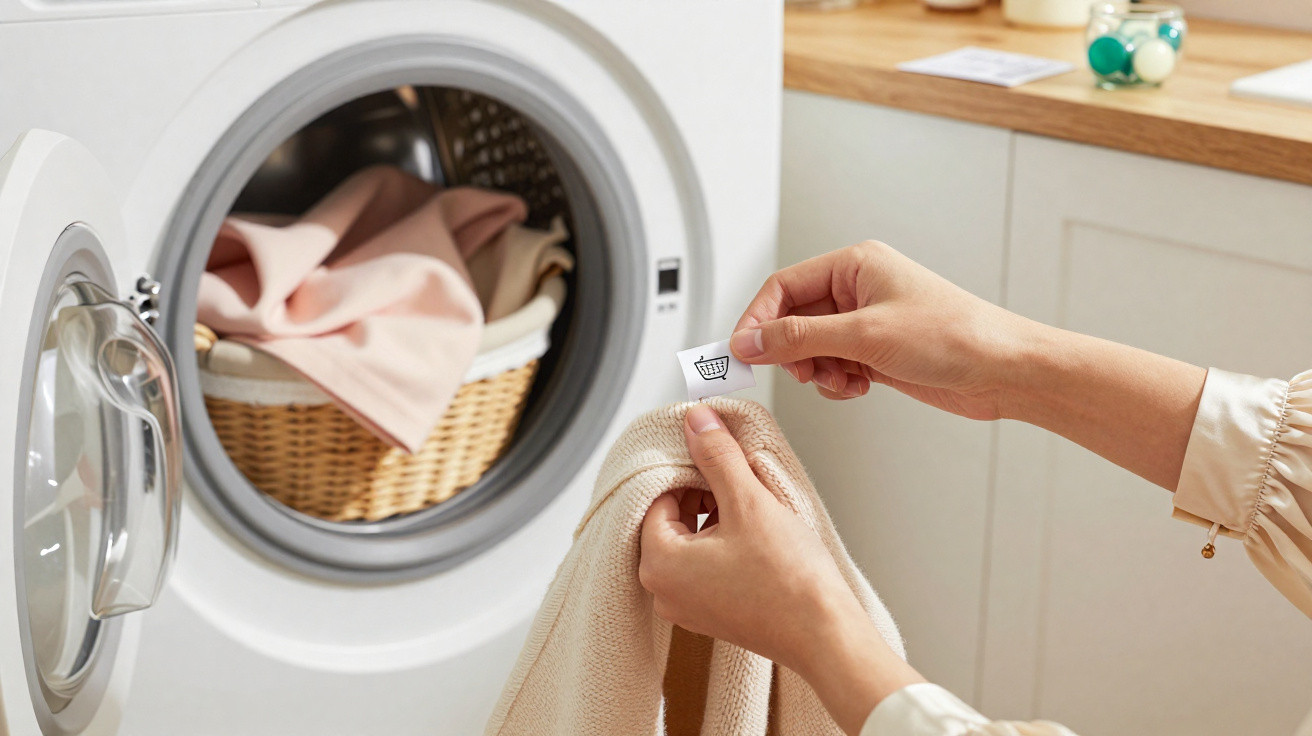
He peers at the label: a tiny tub icon, a few lines and a number. With a shrug, he stuffs the ruined jumper into a bag and leaves. At a nearby counter, an older woman is carefully folding wool jumpers that are completely unharmed. The same brand. The same material. A very different outcome.
The difference comes down to a small rectangle of fabric most of us barely glance at - and then misread. One little symbol can quietly determine whether your favourite clothes survive or perish.
The hidden offender on your care labels
When people are asked which laundry symbol baffles them most, many mention tumble-dryer icons or the bleach triangles. But the true destroyer of clothes is more subtle, smaller and almost unassuming: the washing tub with one or two bars underneath it.
Most people barely register it. Your brain labels it “machine washable, ordinary load” and you press start. But that little bar is actually a firm instruction: use less agitation and gentler handling, or the fabric will not forgive you. One bar indicates a mild wash; two bars mean a very delicate wash.
Overlook it and you are doing more than using the wrong programme. You are gradually abrading fibres, shrinking wool, misshaping elastic and ruining prints. Slowly. Permanently.
We tend to picture damaged clothing as the result of one obvious catastrophe: a wash that is too hot or a stray red sock. In reality, the damage is more insidious. It usually results from dozens of washes that are nearly right - just a little too harsh, too quick or too warm.
That washing-tub icon with one or two bars sits at the centre of the problem. It looks straightforward on paper, but it exploits routine in practice. You buy a new jumper, notice “40°C” and decide that it belongs in your normal cycle. By the end of a long day, the faint line beneath it is easy to miss.
After a few months, the garment starts to lose its form. T-shirts twist along their seams. Jeans become coarse and faded instead of comfortably worn in. Sportswear stops drawing sweat away and begins to smell sooner. Few people trace this back to a tiny bar they ignored once.
There is even a figure often cited by textile brands: they estimate that around 90–97% of customers treat “tub + number + bar” as if it meant an ordinary wash. Not out of carelessness, but because they are on autopilot. Yet that autopilot is what steadily damages the best items in a wardrobe.
How the washing-symbol bar works - and what to choose instead
What is that bar really asking you to do? It does not require specialist detergent or futuristic equipment. It simply calls for three changes: water temperature, spin speed and drum action.
A single bar beneath the tub means a lower spin speed and a gentler programme. On modern washing machines, think “easy care” or “synthetics”. Two bars mean choosing “delicate” or “wool”, even if the temperature shown seems suitable for your usual wash.
Put the item on a standard mixed-load programme instead and the machine will tumble it much more aggressively. The material stretches, rubs and ages ten times faster - all because of a line you scarcely noticed while watching Netflix.
Most of us separate laundry by colour rather than by care symbol: whites in one pile, colours in another and darks elsewhere. It is efficient, certainly, but it can be ruthless on fabrics that have politely asked for different treatment.
Consider a cotton shirt labelled 40°C with one bar below the tub. Washed gently, it may remain clean and crisp for years. Put the same shirt on a standard “daily wash” with jeans and towels, and within months the collar turns stiff, the seams ripple and the fabric develops that tired office-shirt sheen.
Leggings are another example. Many display the bar symbol next to 30°C. With the appropriate programme, they retain their stretch, shape and black colour. Subject them to high spin and normal agitation, however, and they gradually sag at the knees and turn grey around the seams. You may blame the brand, but the programme is often the cause.
We seldom connect behaviour A - pressing the same button for every load - with result B: clothes ageing before we do. But that is exactly what happens when the “bar code” is overlooked. It is not dramatic, just a gradual and quiet decline across your wardrobe.
The 10-second habit that protects your favourite clothes
One small ritual can make a real difference. Before washing a new garment for the first time, check its label and focus on only one detail: the tub symbol and whatever appears beneath it.
No bar means it is one of your more robust items. One bar should be mentally categorised as “easy care”. Two bars? That garment has diva energy. It deserves the delicate setting every time.
Next, match those three categories to your machine once and for all. Use the normal programme for no bar, synthetics or easy care for one bar, and delicate or wool for two bars. Spend 30 seconds writing this on a sticky note attached to the machine door. After that, you are not guessing; you are matching symbols with the right setting.
The main danger is lack of time. You get home late, face a pile of washing and have very little mental energy left. Everything goes into one drum, you hit the usual button and promise yourself that you will “be more careful next time”.
That is when the quiet damage begins. The two-bar lace blouse is thrashed around with towels. Your favourite one-bar hoodie spins like a helicopter alongside heavy jeans. Fabrics do not complain; they simply wear out sooner than they should.
Emotionally, this matters more than we tend to acknowledge. Clothes hold memories: the shirt from your first proper job, the jumper bought on a weekend away, the dress that made you feel unexpectedly confident. When they wear out too early, it is not merely money wasted - a small part of you fades with them.
There is a practical side, too. Fast fashion benefits from our inertia: the faster clothes deteriorate, the sooner we buy replacements. Reading a single symbol is a small act of resistance. It says: you do not get to decide how quickly my wardrobe ages.
“The most sustainable garment,” says one London textile expert, “is the one you already own and keep alive. Most of the damage I see comes not from one disaster wash, but from people ignoring the gentle‑wash bar, over and over again.”
To make things easy, here is a cheat sheet you can screenshot and stick on the fridge:
- No bar under tub = standard cycle, normal spin, match the temperature number.
- One bar = “easy care” / “synthetics”, lower spin, avoid heavy items in the same load.
- Two bars = “delicate” / “wool”, small loads, mild detergent, treat it like it cost you twice the price.
Let’s be honest: nobody really does this every day. Even so, following it half the time can extend the life of your favourite items much more than you might expect.
Why this small washing symbol matters so much
At first glance, this is only about a line beneath a tiny tub. In truth, it is about the way we care for the things that accompany us through life. It is easy to say “it’s only a jumper” - until the jumper you wore on every cold morning suddenly no longer looks right.
Once you notice that bar and act on it, your relationship with laundry changes. It becomes less of a chaotic weekly task and more of a quiet negotiation with your wardrobe. You begin to see which brands treat fabrics properly, which garments are worth spending money on and which pieces are practically asking for kinder care.
You will start viewing other symbols differently as well: the crossed-out tumble dryer that explains the shrunken hoodie, or the little iron with a cross that a friend ignored before melting a logo. This knowledge does not make you obsessive. It simply gives your clothes the chance to last as long as you paid for them to.
On a hectic weekday, you will probably still throw a mixed load together and press “go”. You are human. On a quieter evening, though, you may separate the clothes bearing that discreet bar and give them a gentler spin of their own. That brief pause can change your wardrobe’s future.
| Key point | Detail | Benefit for the reader |
|---|---|---|
| The tub symbol with bar(s) | One bar = gentle cycle; two bars = very delicate cycle and less agitation | Prevents the gradual destruction of sensitive fabrics |
| Adjusting the washing-machine programme | Match each symbol to a specific programme: normal, synthetics or delicate | Extends the life of favourite clothes |
| Building a 10-second habit | Check only the washing symbol before the first wash | Reduces mistakes without making everyday routines more complicated |
FAQ:
- What exactly does the bar under the wash tub mean? It shows how gentle the wash needs to be. No bar means normal agitation, one bar means mild agitation and two bars mean very delicate handling. It concerns movement and spin, rather than temperature alone.
- If the label says 40°C with a bar, can I still use my normal 40°C cycle? Not really. The temperature may be the same, but the intensity is not. The bar calls for a gentler programme - usually “easy care” or “delicate” - even at 40°C.
- Is this why my clothes fade and lose their shape so quickly? Often, yes. Repeated use of a harsher programme than the symbol permits will age fabrics, stretch seams and roughen fibres much faster than ordinary wear.
- Do I have to separate every item according to its symbol? No. Prioritise your favourite and most delicate pieces: wool jumpers, blouses, sportswear and dresses. Where possible, group those with similar symbols; the rest can cope with a standard wash.
- Can I ignore the symbol if the garment is cheap? You can, but inexpensive does not have to mean disposable. Using the bar guide even for budget clothing keeps it looking respectable for longer, saving money and reducing waste over time.




Comments
No comments yet. Be the first to comment!
Leave a Comment