
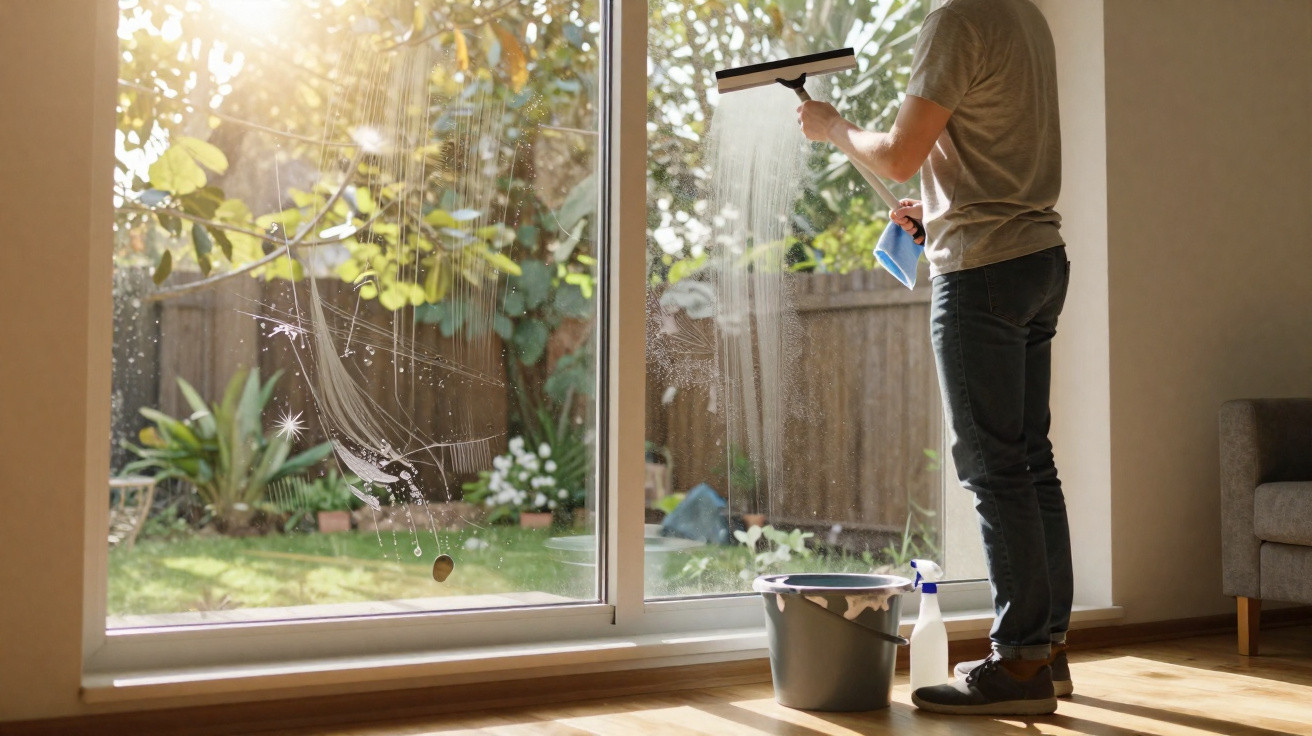
The sun is shining, the light is perfect, and suddenly every fleck of dust on your windows seems impossible to ignore.
You reach for a spray bottle and kitchen roll, then get started. In the bright afternoon light, the glass appears perfectly clear. You stand back to admire it and might even feel quietly pleased with yourself.
Then evening comes. As the light shifts, you spot them from the sofa: long silver streaks, faint wipe marks and small semicircles of dried cleaner. Your supposedly sparkling windows now look worse than they did before. You go over the job in your mind, wondering how something so simple went so wrong.
It is not merely irritating. There is a very specific physical reason for it, one that most people never consider. And the sun is very much part of the issue.
Why cleaning windows in sunny weather backfires
A bright day can make cleaning a sun-drenched window feel irresistible. The pane shines, the frame feels warm and every bit of dust suddenly stands out. Many of us automatically reach for the cleaning supplies just as the sun is beating down on the glass. It seems efficient, as though you can see the dirt in high definition.
The irony is that the sunlight revealing every fingerprint is also undermining the cleaning process. Heat in the glass makes the product dry more quickly. Rather than loosening grime so that you can remove it, the liquid evaporates halfway through a wipe. Those lengthy, dull streaks are left behind, only becoming obvious once the light changes direction.
During summer, glass in a south-facing window can unobtrusively reach 30–40 °C while you spray away. A 2023 test by a major cleaning brand found that glass cleaner dried twice as fast on panes warmed by the sun as it did on shaded glass. That can mean the difference between having a few seconds to work the product and seeing it flash-dry before your cloth reaches the corner. It is little surprise that streaks are so often noticed at the end of the day.
The same test windows behaved very differently on an overcast day. The cleaner remained wet for longer, dirt had time to break down and streaking fell sharply. There is a human factor too: in strong sunshine, we hurry. We repeatedly go over the same area, alter direction, apply more pressure and change cloths too late. Each additional wipe leaves another microscopic layer of cleaning-product residue. The familiar result is a window that looks clean at midday but becomes a patchwork of lines as daylight fades.
There is a small piece of chemistry behind these marks as well. Many window sprays include surfactants, alcohol and sometimes ammonia. On hot glass, the water and alcohol disappear rapidly, but tiny traces of surfactant remain attached to the surface. Every extra spray builds up more of this invisible coating. When it catches low evening light, the reality becomes clear: the window is no longer dirty, but layered. Layered with your own product.
How to clean windows like a professional without streaks
Timing is the first major difference-maker. Try cleaning in the early morning, late afternoon or on a genuinely overcast day. Feel the glass using the back of your hand: if it is hot, it is not the right time. Wait until the pane is cool, or only slightly warm.
Keep the cleaning solution simple too. A bucket of lukewarm water with a very small amount of washing-up liquid can work better than many expensive sprays. Use one or two drops, rather than a squirt. Wash with a microfibre cloth or sponge, then use a squeegee for the crucial stage. Draw the squeegee from top to bottom in straight, overlapping strokes, wiping its blade with a cloth after every pass.
Move efficiently but without rushing. Use less product and rely more on the physical cleaning action. Dry the edges and the sill with a clean microfibre cloth to collect drips. This small edge wipe is often what distinguishes professionally clear glass from a streaky home-cleaning result.
The other essential change is to avoid soaking the window. Most people use far more product than necessary, almost as if they were washing a car. Seeing the pane dripping can feel productive. In practice, surplus liquid combines with old dust and pollen before drying into heavy arcs and trails.
Use two cloths instead of one: a slightly damp microfibre cloth for washing and a dry one for polishing. Replace the first cloth when it becomes grimy or overly wet. Let us be honest: hardly anyone does this every day, which is why keeping two or three good cloths in rotation makes a considerable difference when you do get round to cleaning.
For a large bay window, divide the glass into sections. Fully clean one small area, from washing through to the final buff, before moving on to the next. This prevents any section from drying while it is still partly dirty. Your future self, sitting on the sofa at sunset, will quietly thank you.
There is a guilt element on a more human level, too. We have all had the moment of looking at the windows and thinking, “I’ll deal with them this weekend”, only for nothing to happen. By the time you finally pick up a cloth, the frames are dusty, the tracks contain crumbs and you are tempted to tackle everything in one go. That is when streaks, frustration and unfinished cleaning sessions begin.
One professional cleaner I spoke to put it in a memorable way:
“Clear glass isn’t about scrubbing harder, it’s about knowing when to stop adding stuff to the surface.”
Cleaning windows is more about establishing a rhythm than achieving perfection. A light clean carried out more regularly, in the right conditions, is better than an annual heroic effort in blazing sunshine. The best approach is the one you will genuinely repeat, rather than one that looks impressive on TikTok but leaves you worn out.
- Choose a “window day” whenever the seasons change.
- Keep a small spray bottle containing diluted vinegar and water for quick touch-ups.
- Put clean microfibre cloths somewhere easy to reach, rather than burying them beneath other laundry.
- Accept that complete perfection belongs in showrooms, not living rooms.
A little science makes a big difference
Once you understand that the sun is your hidden enemy, you begin to view your windows differently. Intense midday sunshine is not an invitation to clean; it is closer to a warning sign. You start choosing gentler light and cooler glass, noticing how the sky changes the appearance of your panes in the morning and evening.
There is a subtle pleasure in getting it right: the sweep of a squeegee over cool glass, the way a room becomes brighter without cloudy trails, and the satisfaction of not finding fresh streaks at 9 p.m. You may even find yourself looking at your neighbours’ windows and recognising the revealing arcs of dried product and hurried wiping baked on in the sun.
At its heart, the question is straightforward: are you battling your windows or working with them? The answer often comes down to minor choices - the time of day, the quantity of product and the patience to replace a cloth instead of simply managing with it. We rarely talk about these details, yet they influence the light we live with every day.
| Key point | Details | Why it matters to readers |
|---|---|---|
| Avoid direct sun on the glass | Clean in the early morning, late afternoon or when cloud covers the sun. Test the pane with your hand: if it feels hot, wait. | This limits flash-drying, producing fewer streaks and avoiding the need to clean the same window twice. |
| Use minimal product | Add 1–2 drops of washing-up liquid to a bucket of lukewarm water, or mist glass cleaner lightly rather than drenching the pane. | Less residue remains on the glass, resulting in clearer windows and fewer “mystery marks” emerging at sunset. |
| Work with two cloths and a squeegee | Use one damp microfibre cloth for washing and one dry cloth for buffing, alongside a squeegee in straight vertical passes. Wipe the blade after each pass. | This creates a professional finish, makes the task quicker and reduces arm fatigue and frustration. |
FAQ
- Is it really that bad to clean windows in full sun? It is not dangerous, but it is inefficient. Heat causes the cleaner to evaporate rapidly, so it cannot properly lift dirt. You are left with streaks of dried product instead of actual grime.
- What is the best homemade solution for streak-free windows? A common mixture is 1 part white vinegar to 3 parts warm water, with an optional drop of washing-up liquid. Apply it sparingly with a spray bottle or cloth, then buff the glass dry using a clean microfibre cloth.
- Are paper towels okay for cleaning glass? They are useful in an emergency, but they can leave lint behind and may scratch the glass if grit is present. Microfibre cloths or a squeegee provide a cleaner, more reliable finish.
- How often should I really clean my windows? A full clean two to four times yearly is enough for most homes, with quick attention for fingerprints and nose prints in between. Busy kitchens and city flats may require slightly more frequent cleaning.
- Why do my windows look fine at first and then streaky later? Up close, particularly in strong light, your brain concentrates on dirt rather than residue. Once the light changes and you step back, dried films of product and uneven wiping patterns become apparent.



Comments
No comments yet. Be the first to comment!
Leave a Comment