
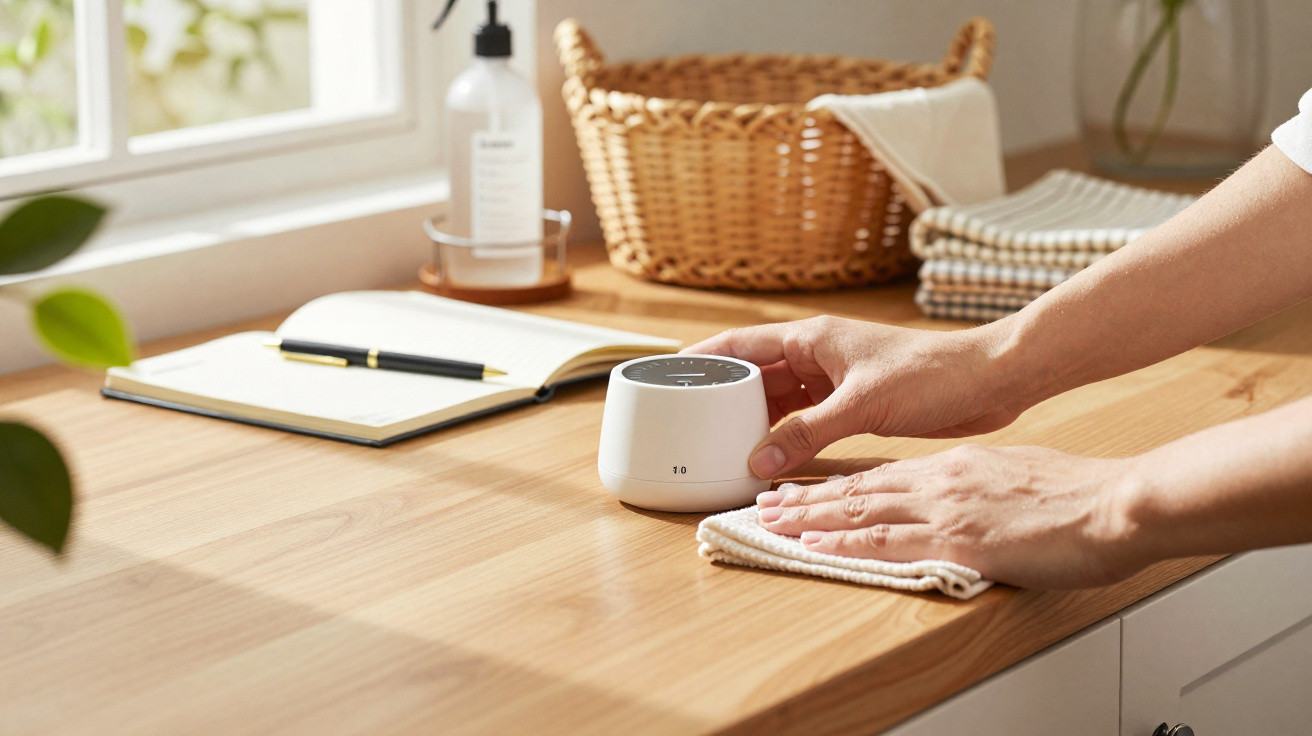
The hoover is out, the mop bucket is waiting, and your weekend spirits have already fallen by two points.
You look towards the kitchen, then the bathroom, then the strange heap of “stuff” on the chair that has been there since... who knows when. The thought of “weekly cleaning” seems less like ordinary housework and more like a bargain-basement endurance test.
You promise yourself that you will “do it properly this time”. You will deep-clean, get organised and perhaps even take on the oven. Yet, an hour later, you are slouched on the sofa, scrolling through your phone, with only half a skirting board cleaned and a faint disinfectant smell lingering in the room. The flat still appears worn-out, and you feel even worse.
Here is the understated reality: it is seldom the dirt itself that wears us down. It is how we go about dealing with it.
The small change that transforms how cleaning feels
Most of us approach weekly cleaning as though it is a performance: one enormous, brave, no-holds-barred session intended to “reset” the entire home at once. It sounds efficient, but in practice it breeds dread. All week, you know that Saturday will bring rubber gloves and resentment.
Your body responds as well. Before you have even picked up the spray, your shoulders tense. Your mind says, “This is going to take ages,” and each crumb suddenly feels like a personal insult. It is hardly surprising that you put it off, only to panic-clean in a stressful rush later on.
The thing that can quietly alter everything is a routine so modest that it may initially seem ridiculous: a 10-minute daily reset that safeguards your weekly clean.
Imagine a Tuesday evening in a compact London flat. The kitchen is... not in a good state. There are pans beside the sink and crumbs on the hob. You feel inclined to sigh, leave it alone and go straight to bed. Instead, you put a 10-minute timer on your phone and say aloud, “Just until this goes off.”
You place dishes into hot, soapy water, wipe away only the crumbs you can see, and sort the post into “deal with later” and “bin”. You fold the throw on the sofa. When the timer sounds, you are midway through the surfaces. Strangely, you want to carry on. But you stop, because that is the rule.
You repeat it the following evening. Ten minutes, with no grand effort. By Friday, the kitchen and living room have never become completely chaotic. When Saturday arrives, your “weekly cleaning” is easier, quicker and no longer feels like a punishment.
Habit psychology researchers describe this as reducing activation energy. The smaller and more reliable a task is, the less resistance your brain puts up before beginning. One large “big clean” creates a considerable unseen cost before you have even lifted a cloth. That is the fatigue you carry with you throughout the week.
Once cleaning becomes a brief daily ritual, the story changes. Your mind learns, This isn’t a battle, it’s just that 10-minute thing we do. That is more important than any expensive mop or miracle spray. Rather than confronting a mountain every weekend, you are simply trimming a hedge before it becomes overgrown.
The real benefit is not the sparkle. It is that your nervous system no longer prepares itself for a blow whenever you think about your home.
The 10-minute reset routine that protects your weekend
The routine is straightforward: once each day, at approximately the same time, complete a firm 10-minute reset centred on the first things you notice when you come in. Do not tackle the whole home, and do not focus on “everything you should do”. Deal only with the visible, surface-level mess.
Choose no more than one or two areas, usually the kitchen and living room. Set a real timer. Each time, use the same sequence: clear surfaces, remove rubbish, do a quick wipe, then carry out a soft reset. This could mean stacking dishes together, binning packaging, wiping the visible worktop, arranging cushions and folding a blanket.
When the timer goes off, stop, even if you are partway through a job. In fact, especially if you are. Stopping teaches your mind that this task is limited, manageable and not a black hole that consumes your evening.
Many people already follow a version of this without labelling it. A woman I spoke to in Manchester referred to it as “closing the day”. She began doing a 10-minute reset after her children were in bed simply to prevent the following morning from starting in disorder. In time, something unexpected occurred: the Sunday clean she dreaded became almost half as long.
She had not purchased new products, employed a cleaner or become a cleaning influencer. She had only stopped everyday clutter from building into a psychological mountain. By Sunday, the bathrooms still required a quick once-over, the floors needed hoovering and the bedlinen needed changing. However, nothing seemed disastrous.
We have all had the experience of looking around and wondering, “How did it get this bad?” The reset routine discreetly takes that experience out of your week. Mess still happens, life continues and the dog still sheds. It simply does not reach “How did it get this bad?” levels.
Why can such a small routine make weekly cleaning less tiring? Exhaustion is not purely physical; it is also mental load. Every mug left out becomes an unanswered question in your mind: “When will I deal with that?” A large weekly clean gathers seven days of unanswered questions and deposits them all into one morning.
The 10-minute reset deals with some of those questions each day. You are not “deep cleaning” during those minutes; you are merely restoring a baseline. As a result, your weekly clean becomes a top-up rather than a rescue mission. Walking into a bathroom that is “a bit grubby” is a very different experience from entering one that looks like a crime scene.
There is another benefit. By finishing at 10 minutes, you gradually retrain the all-or-nothing voice that says, “If I can’t do it perfectly, why start?” It becomes accustomed to “good enough for today”. Starting the weekly clean then feels much less dramatic. You are not trying out for a cleaning programme; you are simply completing the next small task.
How to make the 10-minute reset routine stick
Begin almost absurdly small. Select one anchor point, such as after dinner, before a shower or once the children are asleep, and attach your reset to it. Do not debate it. When that moment arrives, start the timer, even when you are tired or feel that you “don’t really need it tonight”. Those are precisely the occasions when it matters.
Use exactly the same steps every day. For instance: remove rubbish, stack dishes, wipe one main surface and reset the sofa. Alternatively: clear the bathroom worktop, wipe the sink quickly, hang towels so they can dry properly and check the floor for obvious clutter. Familiarity lowers friction. Your brain no longer has to decide; it simply follows the routine.
If 10 minutes seems unachievable, begin with five. Most of the change takes place in your mind rather than with your sponge. The routine succeeds because it is there, not because it is impressive.
The greatest danger is allowing the reset to become another source of guilt. You miss one day, the house feels untidy, and you immediately start telling yourself stories: “I’m just not organised, I can’t stick to anything.” That narrative is more draining than the mess itself.
Leave out the drama. Treat the routine like brushing your teeth: some nights you do it poorly, some nights you forget, and then you simply... begin again. Do not attach moral judgement to it. Missing a reset does not “ruin” your week; it only means tomorrow may feel slightly more demanding. Nothing more.
Let us be honest: nobody truly manages this every single day. Real life brings late trains, unwell children, dreadful bosses and last-minute pub plans. On those evenings, your routine may amount to no more than putting plates in the sink and straightening the duvet. That still counts, because the genuine habit is showing up, not scrubbing perfectly.
“My home didn’t suddenly become spotless,” a friend told me. “It just stopped shouting at me every time I walked through the door.”
That is the quiet win this little routine provides: less noise, less nagging in your mind and more weekends when cleaning is simply another job rather than the main event. For an easy starting script, here is one that many people find manageable:
- Choose one daily reset period, lasting no more than 10 minutes.
- Focus only on the one or two areas you see most often.
- Complete the same three or four micro-tasks every time.
- Stop when the timer sounds, even if you are halfway through wiping.
- Miss a day? Shrug and begin again at the next reset period.
There is nothing elaborate about it. That is why it works.
Make your weekly clean lighter, not louder
Consider the version of you who wakes on Saturday. One version opens the bedroom door and walks into a hallway crowded with laundry, dirty dishes, random shoes and unopened post. Before coffee, the weekly clean already feels like trench warfare.
The other version enters mild disorder rather than a complete collapse. There may be some dust, a bathroom needing a quick once-over, some hoovering and perhaps the fridge wipe you have been avoiding. You may still not enjoy it, but it feels... manageable. Briefer. Less emotionally loaded.
The distinction between those two Saturdays is not discipline or personality. It is the small daily routine that quietly prevented the mess from turning into a monster. The 10-minute reset does not turn you into someone else. It simply respects your future self enough to give them a gentler landing.
People also report a curious side effect. Once the weekly clean feels easier, they are more inclined to add one pleasant detail to it: a new candle, fresh pillowcases they genuinely like or a plant rescued from the bargain shelf. The home becomes less of a battleground and more somewhere you are permitted to enjoy.
Perhaps that is the real aim: not a spotless home, but one that does not exhaust you before the weekend has even begun. A home where cleaning is background noise rather than the entire soundtrack. You do not need a revolution to achieve it, only a quiet, unremarkable 10 minutes repeated often enough for your week to begin breathing again.
| Key point | Detail | Benefit for the reader |
|---|---|---|
| 10-minute daily reset | A short, timed routine focused on visible mess in 1–2 areas | Reduces dread and makes weekly cleaning feel manageable |
| The same steps every time | Clear, wipe and carry out a quick reset in a fixed sequence | Lowers mental load and makes getting started almost automatic |
| Stop when the timer rings | Even if the task is not “finished” | Prevents burnout and disrupts the all-or-nothing mindset |
FAQ:
- How long should my daily reset really last? Ten minutes is an ideal amount for most people, but begin with five if that feels like too much. Consistency matters more than duration.
- What if my home is already a total disaster? Start with just one area, such as the kitchen worktop or sofa space, and reset only that each day for a week before adding more.
- Do I still need a weekly deep clean? Yes, although it will be shorter and less demanding. View the daily reset as maintenance that makes the weekly clean less exhausting.
- Is it better to do the reset in the morning or evening? Pick the time you are most likely to maintain: after dinner, before bed or shortly after arriving home often works best.
- What if I live with messy flatmates or family? Begin by taking responsibility for one shared area and your own space. Encourage others by making the routine visible and simple, rather than by nagging.



Comments
No comments yet. Be the first to comment!
Leave a Comment