
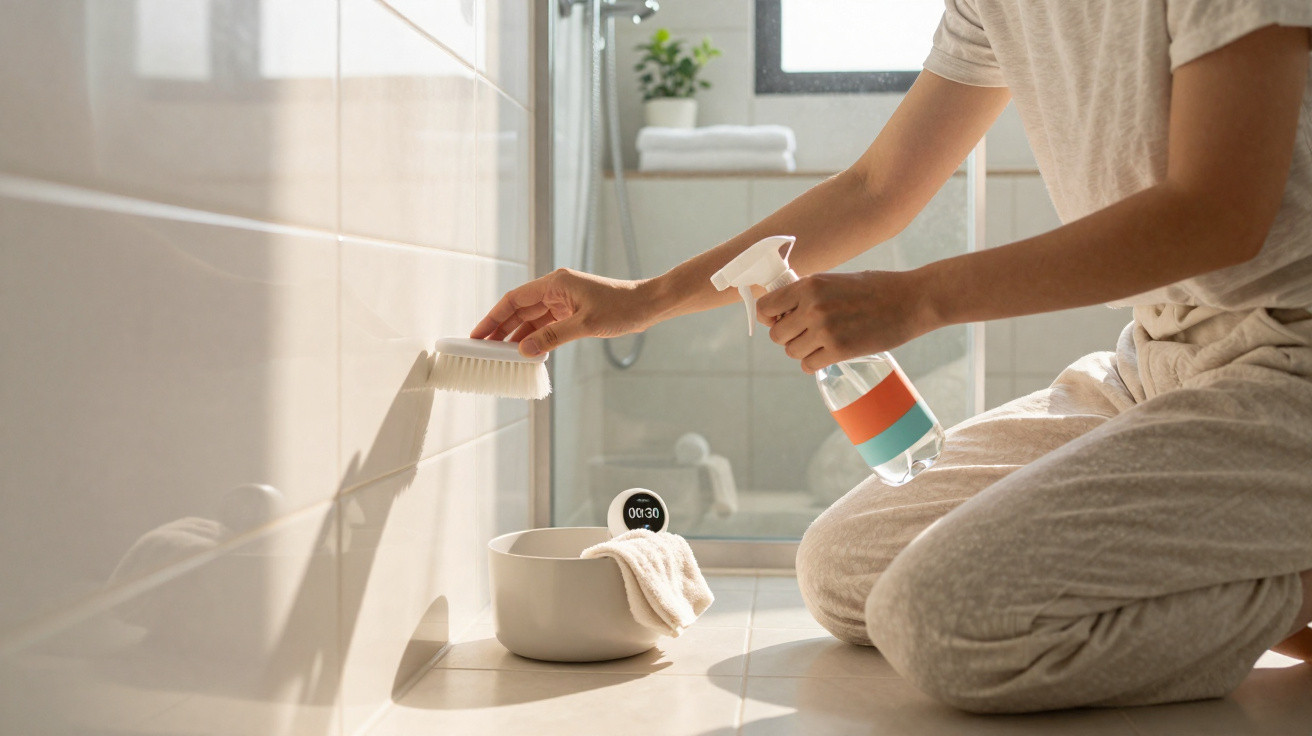
The thing that genuinely stopped me mid-step wasn’t the tiles or the fittings - it was the grout. That supposedly impossible, always-slightly-grubby grout… was a crisp, pure white. No shadowy grey around the drain. No yellowing beside the loo. Just sharp, bright lines that made the whole bathroom look as though it had been fitted yesterday.
The hotel itself clearly wasn’t brand new. There were faint scratches on the basin and a slightly worn patch near the shower curtain - signs that people had actually used the room. And yet the grout looked like something lifted straight from an interior design advert, perfectly preserved.
Naturally, I asked a member of the cleaning staff how they managed it. She gave a small shrug, smiled, and said something simple that quietly changed how I think about my own bathroom.
The answer wasn’t some miracle bottle. It was a tiny habit.
Why hotel grout always looks cleaner than yours
There’s a particular unfairness when it comes to bathroom cleaning: you can scrub for an hour at home and still not get that “hotel white” finish. Meanwhile, housekeeping teams turn rooms around all day, and the grout somehow never seems to get old.
Some of it comes down to pace and routine. They’re quick, they’re consistent, and they know what’s worth focusing on (and what isn’t). But the bigger difference is this: they aren’t constantly tackling set-in stains. They’re preventing stains from taking hold in the first place - and that changes the entire outcome.
One busy morning, I watched a cleaner complete a room in under 15 minutes. There was no dramatic bleaching marathon. No kneeling with a toothbrush for ages. Instead, it was a series of fast, repeatable motions designed to stop moisture, soap scum and mildew from settling comfortably into the grout lines.
Hotels also pay close attention to feedback. A housekeeping manager in a mid-range city hotel told me they’d spotted an interesting pattern: guests almost never complained about minor scuffs or slightly dated furniture. But what consistently triggered irritated reviews? Grimy or mouldy grout. That alone.
So they adjusted the routine. Rather than relying on one harsh deep-clean each month, they trained staff to add a 20-second “micro-step” aimed specifically at the grout during every bathroom clean. After three months, they logged 40% fewer bathroom-related complaints.
A cleaner told me she used to dread rooms with old grout that never looked truly clean, no matter how much she scrubbed. With the new routine, she says the rooms “stay young”. Her words, not mine. Considering how many people cycle through the same shower, that’s a striking result.
The reason is straightforward. Grout is porous, so it behaves like a sponge - soaking up moisture, soap residue, body oils, and even dyes from shampoos. When it stays damp and a bit dirty, it becomes an easy home for mould and bacteria. Once dark patches settle in, every clean turns into a fight.
If you remove the film of moisture and leftover residue before it can sink in, everything shifts. You’re no longer trying to undo weeks of build-up - you’re stopping it from forming.
That’s the hotel approach in one line: don’t battle stains after they’ve taken hold. Block them at the door every day, with the smallest effort possible.
The cleaning staff secret: a 30-second habit after every shower
Here’s exactly what the hotel cleaner showed me. Once the bathroom was cleaned, she picked up a small squeegee and a thin microfibre cloth. Nothing fancy. Nothing scented. Nothing sold as a “miracle”.
First, she pulled the squeegee down the tiled walls from top to bottom, taking extra care over the grout lines. Then she used the cloth - dampened slightly and wrung out until almost dry - and ran it gently along the areas where water tends to sit: corners, around the taps, along the base of the shower, and near the drain.
No sprays. No foam. Just lifting away water and residue before it can dry into the joints. That’s all. “If the grout doesn’t stay wet, it doesn’t change color,” she told me.
This is the bit you can copy at home: make it a tiny post-shower ritual, not a whole cleaning session. Just give yourself one extra minute. While the water is still beading on the tiles, use a cheap squeegee to push it down and away.
Then take a small cloth (or an old towel kept specifically for this) and quickly “kiss” the grout in the danger zones: the bottom row of tiles, around shelves, and the joints behind shampoo bottles. You don’t need perfection - the goal is simply to remove as much lingering moisture as you can.
Let’s be honest: hardly anyone does this every day. Life gets hectic, children are shouting, the dog’s barking, and you’re already running late. But even doing it three or four times a week slows the build-up dramatically - that’s where the real benefit is.
“We don’t have time for deep-cleaning every room, every day,” the cleaner told me. “So we stop what causes the deep-cleaning. If the grout stays dry, I don’t have to fight it later.”
Once you start treating grout as something to protect rather than something to rescue, your habits naturally shift. You can even let simple things do the heavy lifting: gravity, warm air, opening a window, or running the extractor fan for fifteen minutes after a shower - all small actions that dry those narrow lines faster.
- Use a squeegee after showers to clear water from tiles and grout.
- Wipe key grout areas with a dedicated cloth 3–4 times a week.
- Run the bathroom fan or open a window for 10–15 minutes after use.
- Do a gentle weekly clean with a mild, non-bleach cleaner.
- Re-seal grout every 6–12 months for long-term protection.
From quick habit to long-lasting white grout
After a few weeks of using the “hotel habit”, you begin to notice small wins. The grout line behind the shampoo bottles stops looking grey. That awkward corner by the shower door quits collecting that tan-coloured grime.
You may even find yourself doing a quick swipe almost without thinking - like turning off the light as you leave a room. It becomes part of how you ‘close down’ the bathroom after using it, rather than a dreaded “cleaning day” you keep pushing back.
More quietly, it changes your relationship with the space. Instead of waiting for things to get bad and then reacting, you’re keeping the grout looking fresh - keeping it “young”, as the cleaner put it. And that daily sense of neatness is worth far more than yet another bottle of so-called miracle bleach.
| Key point | Detail | Why it matters to you |
|---|---|---|
| Prevent rather than scrub | Remove water and residue straight after showering | Cuts staining without hard work or harsh chemicals |
| Regular micro-actions | Squeegee + cloth on the grout 3–4 times a week | Keeps grout white for longer, like in hotels |
| Protected grout | Drying + optional sealing every 6–12 months | Less mould, a healthier bathroom, and longer-lasting finishes |
FAQ:
- How often should I wipe my grout to keep it white? Ideally after every shower, as hotel staff do - but even 3–4 times a week with a quick squeegee and cloth makes a visible difference.
- Do I need special professional products like hotels use? No. Most hotels use basic cleaners and simple tools; the real difference is consistency and drying the grout quickly.
- Can I use bleach to whiten already yellowed grout? Diluted bleach now and then can help, but using it frequently may weaken grout; try oxygen-based cleaners first and prioritise prevention.
- Is sealing my grout really worth it? Yes. Sealing once or twice a year helps repel moisture and stains, so your day-to-day efforts deliver better results.
- What if I don’t have time for daily maintenance? Choose one habit you can stick to - even a 20-second squeegee - because small, repeatable actions beat occasional “big cleans” every time.



Comments
No comments yet. Be the first to comment!
Leave a Comment