
Those cardboard tubes you chuck away without a second thought could end up being one of the handiest items in your bathroom - even after the paper has run out.
Every day, millions of toilet paper rolls in the UK and US are thrown into the bin, even though they can be reused at home, in the garden and even with children. When you start seeing them differently, they shift from dull rubbish to a surprisingly practical little kit for everyday life.
Why toilet paper rolls suddenly matter
With more households looking to trim waste and keep energy costs down, the basic toilet paper roll has quietly become a small emblem of low-tech, low-cost change. Yes, it can be recycled - but before it ever reaches the recycling stream, that cardboard tube can do plenty of jobs: a mini planter, a cable organiser, a compost booster, a fire starter, or a base for crafts.
Toilet paper rolls are renewable, biodegradable and recyclable, and they bridge two worlds at once: eco gesture and everyday practicality.
Compared with plastic household bits and pieces, cardboard tubes break down naturally and slot neatly into home recycling collections and compost heaps. That’s why they appeal to anyone trying to send less to landfill without splashing out on new “eco-products”.
From bin to resource: the environmental angle
Making toilet paper still carries a significant environmental burden, from water use through to transport. The cardboard core, however, creates a small chance to reduce that impact by keeping it useful for longer before it’s recycled or composted.
Cardboard is high in carbon. Gardeners often describe compost ingredients as “brown” waste (carbon) versus “green” waste (nitrogen). Toilet paper rolls sit squarely in the “brown” camp, helping to balance fresh kitchen peelings.
Shredded cardboard tubes help stabilise compost, reduce smells and produce a looser, easier-to-work soil amendment.
In schools and community centres, the same tubes double as low-cost teaching aids: they make recycling, decomposition and circular economy concepts easier to show in a hands-on way. Children can watch the material change over time, which often lands better than abstract climate slogans.
Turning rolls into compost gold
How to use toilet rolls in your compost
If you’ve got a compost bin or even a small patch of garden, toilet paper rolls can slot into a simple habit:
- Squash the tube flat, then snip it into rings or strips.
- Combine the pieces with kitchen waste such as fruit skins and coffee grounds.
- Don’t add anything glossy or plastic-coated, including some printed labels.
- Keep the compost damp rather than drenched, and turn it often.
Used this way, the mix helps decomposition along and reduces the risk of the heap getting overly wet and packed down. In a few weeks to a few months (depending on warmth and moisture), the cardboard largely vanishes, leaving a darker, crumbly compost that feeds the soil.
| Use | Preparation | Main benefit |
|---|---|---|
| Compost ingredient | Cut into small pieces, mix with food scraps | Balances carbon/nitrogen, reduces odours |
| Seed starter | Cut in half, fill with soil, place in tray | Biodegradable pot that plants can grow through |
| Fire starter | Fill with lint or paper, tie or fold ends | Replaces chemical firelighters |
Seed starters for tiny spaces
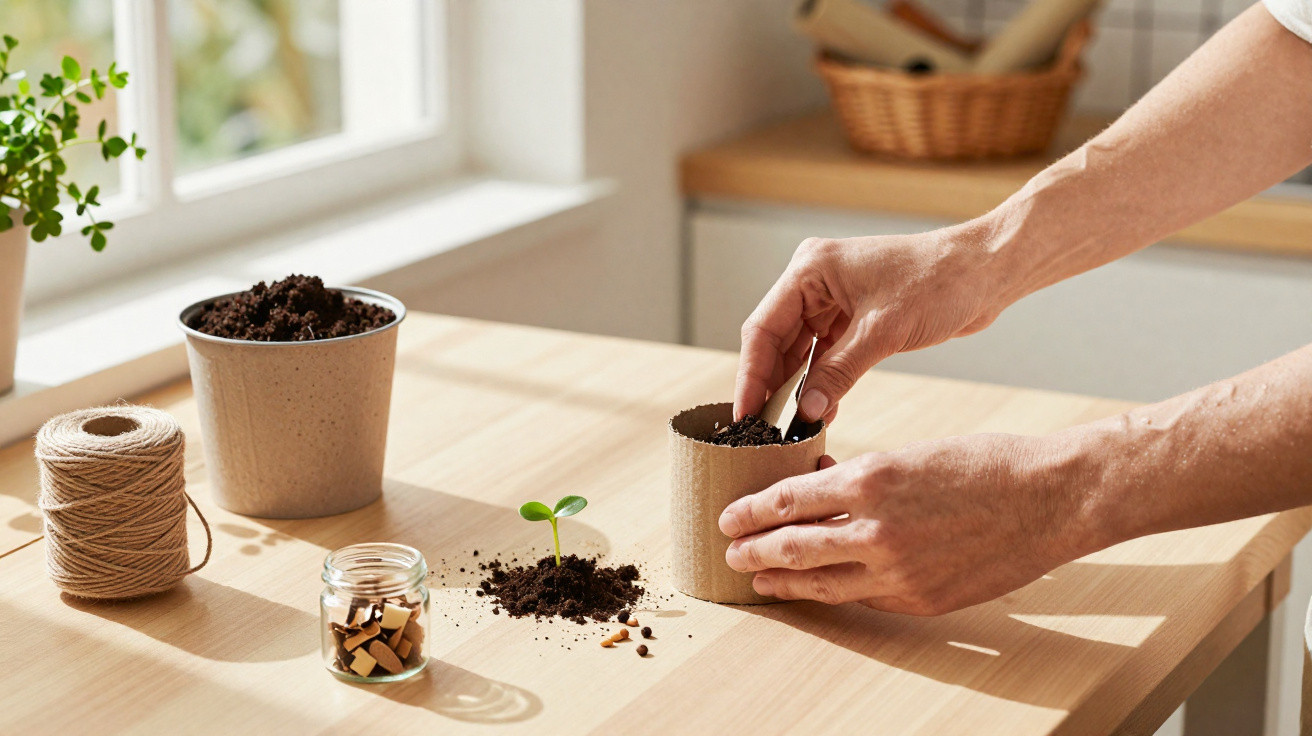
City gardeners commonly turn toilet rolls into small seed pots. Slice a tube in half, cut four short slits at one end, fold the flaps inward to form a base, and fill it with seed compost. Arrange several in a tray or box, then sow.
Once roots have formed and the seedling is ready to move on, you can plant the entire tube into the ground or into a larger pot. Underground, the cardboard softens and the roots push through. That reduces transplant shock and removes the need for plastic seed trays.
For balconies and window sills, cardboard seed pots offer a cheap way to test gardening without investing in equipment.
DIY toilet paper roll tricks that actually work at home
Organisation hacks with zero budget
Outside the garden, toilet paper rolls are useful for keeping everyday mess under control. The tube’s shape and firmness make it ideal for cables, drawers and even wardrobes.
- Cable management: Thread phone chargers, USB leads and headphone wires into a roll to prevent knots. Mark each tube with a pen.
- Drawer dividers: Stand multiple tubes upright inside a box to separate pens, make-up brushes, small toys or screws.
- Wrapping paper helper: Slip a tube (cut open along one side) around a roll of gift wrap so it doesn’t unravel in the cupboard.
They may sound like tiny fixes, but they help avoid the knee-jerk “I’ll just buy a plastic organiser” habit and can curb impulse buys.
All-natural fire starters
These tubes can also serve as simple firelighters for barbecues, fireplaces or wood burners. Pack a roll with tumble dryer lint, sawdust or shredded paper, then fold or tape the ends shut. Sit it beneath small kindling and light it.
Cardboard fire starters avoid paraffin blocks and chemical smells, while giving a second use to dryer lint and paper scraps.
Treat them as you would any open-flame item: keep them dry, out of children’s reach, and well away from heat sources. The point is to cut waste - not introduce an extra fire risk on an overstuffed shelf.
Why kids, teachers and parents like them
Crafts that cost almost nothing
Teachers, youth workers and parents have long known the trick: hand a child a cardboard tube plus some paint and glue, and you’ve filled an afternoon. Animals, rockets, binoculars, pencil pots, garlands, tiny castles - the roll’s structure practically invites make-believe.
For families aiming to reduce screen time without paying for craft kits, these tubes provide a ready supply of creative materials. They also encourage chats about where things come from and what happens after we throw them away.
Transforming a “boring” tube into an object gives children a direct, physical experience of reuse, far from abstract environmental talk.
Plenty of makers post step-by-step tutorials on video platforms, but you don’t need artistic flair to begin. A basic set of paints, a few old magazines for collage, tape and scissors can already unlock dozens of ideas.
How many rolls do you actually generate?
A quick bit of maths highlights how much usable material ends up in household waste. A three-person home might get through about six to eight toilet paper rolls per week, depending on habits and brand. Over a year, that adds up to more than 300 rolls.
If only half of those tubes are given a second job before recycling, that one household alone diverts over 150 items from general waste. Multiply that across a block of flats or along a street, and it starts to look like a quiet, everyday change in behaviour.
Health, hygiene and what to avoid
The cardboard core is typically clean when it leaves the factory, but it does sit in a bathroom. For most uses - crafts, composting and fire starters - this isn’t usually a major concern, as the tube will be handled briefly, hands can be washed, or the material will be burned.
If you’re making projects for very young children who still put objects in their mouths, supervision matters, and it’s sensible to keep tubes away from sinks or damp corners where mould can develop. If a roll has spots, smells musty, or feels soft and wet, it belongs straight in recycling or the compost - not in the craft box.
If your household buys scented or strongly dyed toilet paper, you may prefer to compost or recycle the tubes rather than use them for toys that will be handled closely, simply to reduce contact with additives. Plain cardboard tends to leave you with more choices.
Beyond toilet rolls: thinking in “second use” mode
The rising interest in these cardboard tubes sits within a wider shift: more people now look at packaging and everyday items through a “second use” lens before throwing them out. Glass jars become storage containers, tins become planters, and shoe boxes become document organisers.
Toilet paper rolls are among the easiest items to start with. They’re light, neutral and simple to cut, making them a low-risk way to experiment with reuse. Once a household gets used to turning a tube into a seed pot or a cable holder, that mindset often spreads to sturdier objects.
For anyone trying to build greener routines without spending a lot, these little cardboard cylinders can act as a practical training ground. The action may feel small, but it helps form habits: pausing before discarding, asking “what else could this do?”, and spotting value where the bin once seemed like the only destination.
Comments
No comments yet. Be the first to comment!
Leave a Comment