
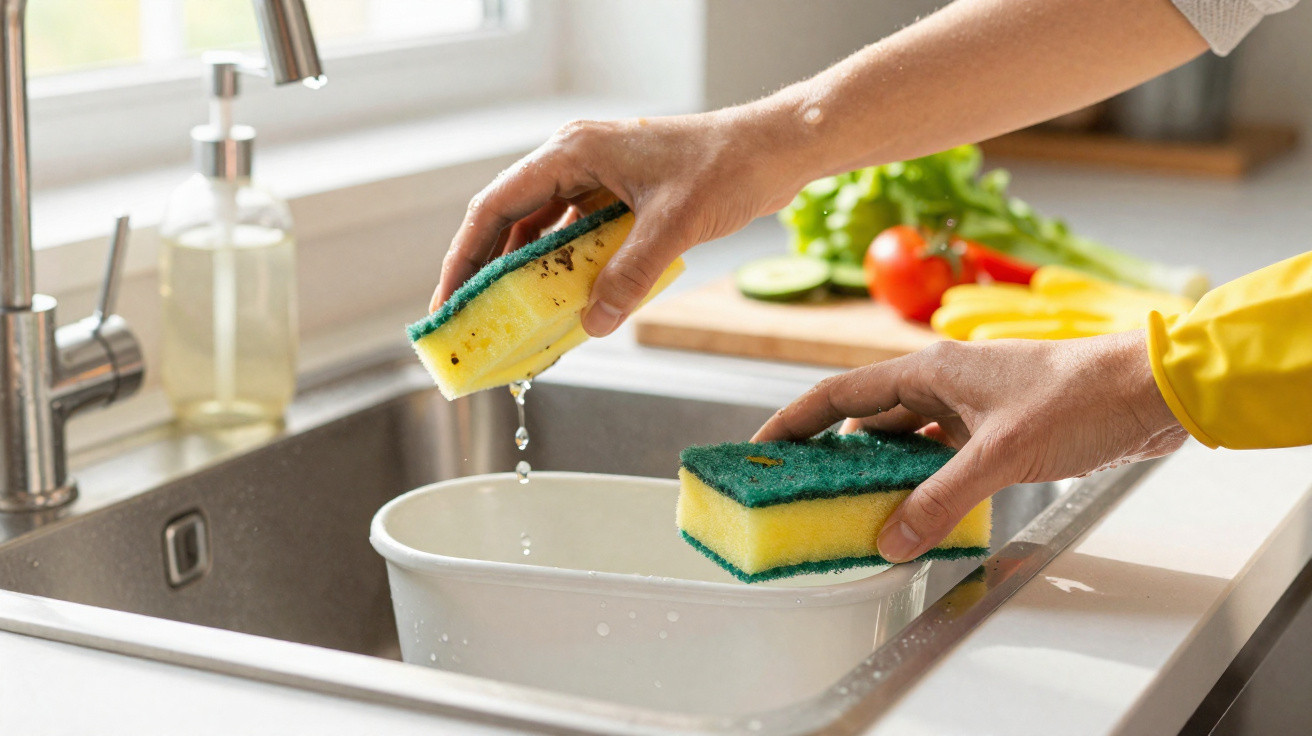
Keeping your home clean means paying attention to the small, everyday items. Many people overlook how quickly a dish sponge can collect millions of harmful germs, which is why it needs replacing regularly to help prevent serious infections.
What is the real danger of using an old sponge?
With constant dampness and trapped food scraps, this common kitchen tool becomes an ideal breeding ground for unwanted microorganisms. Using the same sponge for weeks greatly increases the risk of contaminating plates and utensils, spreading dangerous bacteria throughout your kitchen.
In many households, there is a harmful habit of waiting until the sponge looks physically worn before throwing it away. This quiet neglect encourages pathogens that can lead to intestinal problems, directly affecting the health of anyone who eats the daily meals prepared at home.
What’s the risk of leaving the sponge damp on the sink?
Many people make the mistake of leaving a wet sponge next to the tap, but this seemingly simple habit hides a serious risk.
What is the ideal time to replace it?
Specialists recommend that you dispose of a dish sponge strictly every seven days of continuous use at home. Replacing it weekly stops invisible microbial colonies from reaching worrying levels, helping ensure your dishes are cleaned with full safety.
Waiting two months, or holding on until the material breaks down, exposes everyone in the household to an unnecessary daily risk of infections. Setting a fixed replacement schedule reduces unseen hazards in the home and makes washing up far more healthy.
Below, there is a video from Leda Nagle’s YouTube channel that explores the points discussed in this topic in more depth:
How does cross-contamination happen at the sink?
Cross-contamination happens when microorganisms from a dirty item are transferred directly onto clean surfaces or food. An old sponge can harbour pathogens that spread onto cutlery and crockery, increasing the likelihood of ingesting harmful particles that affect the organism silently.
Even if you wash the sponge with ordinary washing-up liquid, deeply embedded bacterial colonies are not fully removed because of the high internal moisture. In other words, surface cleaning can disguise the real danger, making planned replacement the only truly effective barrier for keeping your family consistently protected.
Hygiene Guide
Essential practices: follow these three key recommendations for day-to-day life in your kitchen:
- 1
Replace the sponge every week to avoid bacteria. - 2
Never store the tool while it is damp or covered in soap. - 3
Let it dry in a well-ventilated place away from the sink.
What are the signs that the sponge should be thrown away?
Noticing physical changes helps you recognise when contamination has already gone beyond what is acceptable in the home. A change in texture and the development of unpleasant smells are clear warnings that microbial growth has reached a critical safety limit.
However, even if the sponge looks clean and intact, weekly disposal is still absolutely essential for everyone. Pathogenic microorganisms are completely invisible to the naked eye; they build up quickly inside the fibres and threaten the health of the whole home.
Pay close attention to these three main indicators that it is finally time to dispose of the sponge:
- A persistent bad smell even after washing with washing-up liquid;
- Dark stains appearing, or visible mould on the surface;
- A noticeable loss of thickness and obvious wear in the washing sponge.
How can you extend the sponge’s hygienic lifespan?
Adopting the right daily habits helps keep the accessory from reaching extreme contamination before the necessary weekly disposal. Removing all food debris after each wash reduces the nutrients that feed bacteria around your sink.
Wringing it out thoroughly and storing it somewhere dry, away from direct contact with standing water, prevents germs from multiplying quickly. These small daily steps reduce invisible risks to your dishes and help ensure that the moment you clean plates is always safe.


Comments
No comments yet. Be the first to comment!
Leave a Comment