
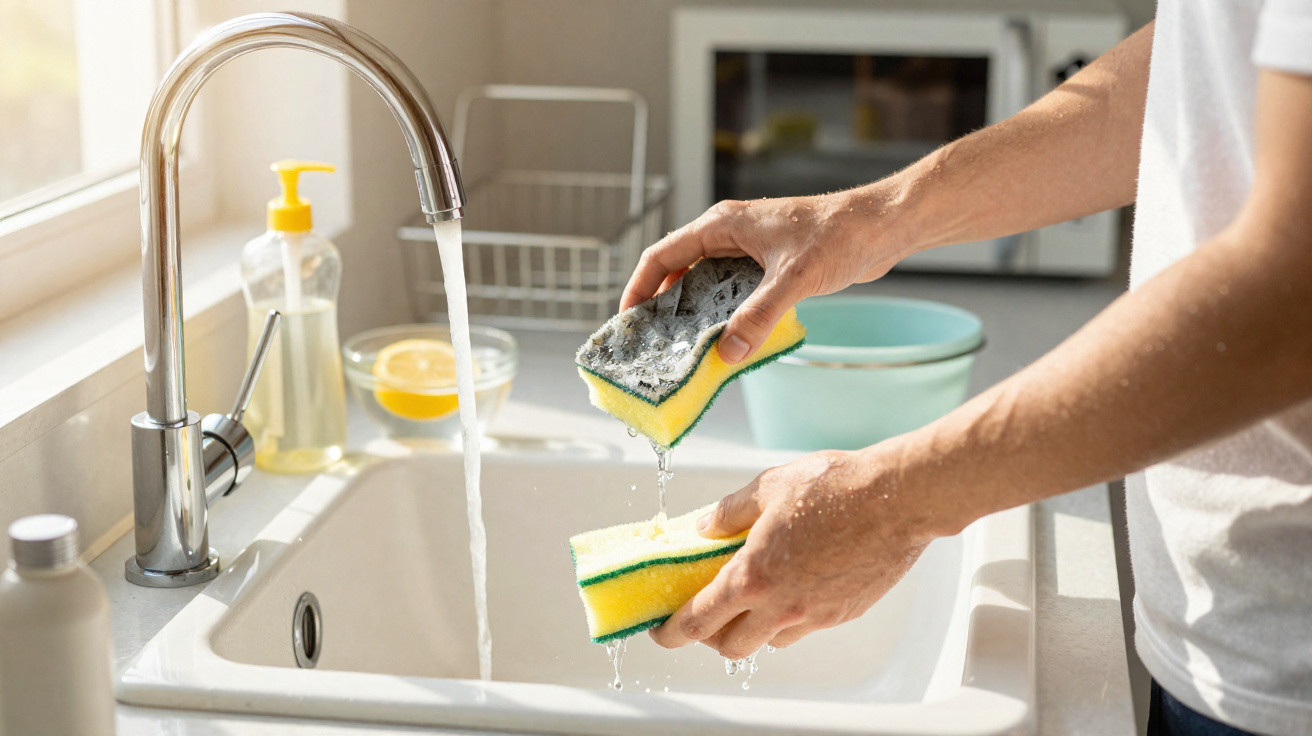
The washing-up sponge is a fixture in many kitchens and, at the same time, one of the items most likely to harbour micro-organisms. With constant exposure to food scraps, grease and moisture, it creates ideal conditions for bacteria and fungi to grow-so how you use it, how you clean it each day and how often you replace it all matter.
Why does the washing-up sponge build up so many bacteria so quickly?
A washing-up sponge has a porous structure, full of tiny spaces that hold on to water, bits of food and washing-up liquid. Each little pore effectively becomes a hiding place for micro-organisms, which find a damp, nutrient-rich environment with limited airflow-perfect for multiplying rapidly.
On top of that, the sponge moves across several surfaces, including pans, plates, knives, chopping boards and the sink itself. As it goes from one place to another, it can transport bacteria and spread them rather than remove them-particularly when you wash up in warm water that does not reach a disinfecting temperature.
How often should you replace a washing-up sponge at home and in professional kitchens?
How frequently you should change a washing-up sponge depends on how much it is used and on day-to-day care, but its lifespan is usually short. In a typical household kitchen with regular use, replacement every 7 to 10 days is recommended. In homes where there is a lot of preparation involving meat, fish and eggs, the interval may need to be even shorter.
In professional settings-such as restaurants and cafés-sponges are often replaced daily or at very short intervals, in line with food hygiene and local authority requirements. To stay organised and avoid forgetting, many people build simple checkpoints into their routine:
- Pick a fixed day of the week to change the sponge.
- Keep more than one sponge and assign each one a job (washing-up, hob, worktops).
- Label the sponge with a permanent marker and the date it was first used.
What signs show a washing-up sponge has gone past its limit?
Even before the recommended change date, certain visible cues and smells indicate the washing-up sponge is no longer suitable. The most common early warning is a strong odour-often sour or musty-caused by bacteria and fungi feeding on trapped residue.
Other frequent signs include heavy discolouration, dark or greenish patches, a worn-out feel and sections that crumble or shed. A sticky surface, reduced suds when you add washing-up liquid and the sense that it still feels dirty after rinsing are also signals to bin the sponge rather than try to rescue it.
How to clean a washing-up sponge and reduce contamination day to day
Between replacements, a few habits can help lower the number of micro-organisms in a washing-up sponge and cut the risk of cross-contamination. No home method guarantees complete sterilisation, but some steps make everyday use safer.
After washing up, it helps to rinse the sponge thoroughly, squeeze out excess water and leave it to dry somewhere airy rather than in a closed container. Boiling the sponge for a few minutes may reduce some micro-organisms, and keeping separate sponges for different tasks (dishes, hob, sink) limits the spread of grime around the kitchen-supporting food safety at home.


Comments
No comments yet. Be the first to comment!
Leave a Comment