
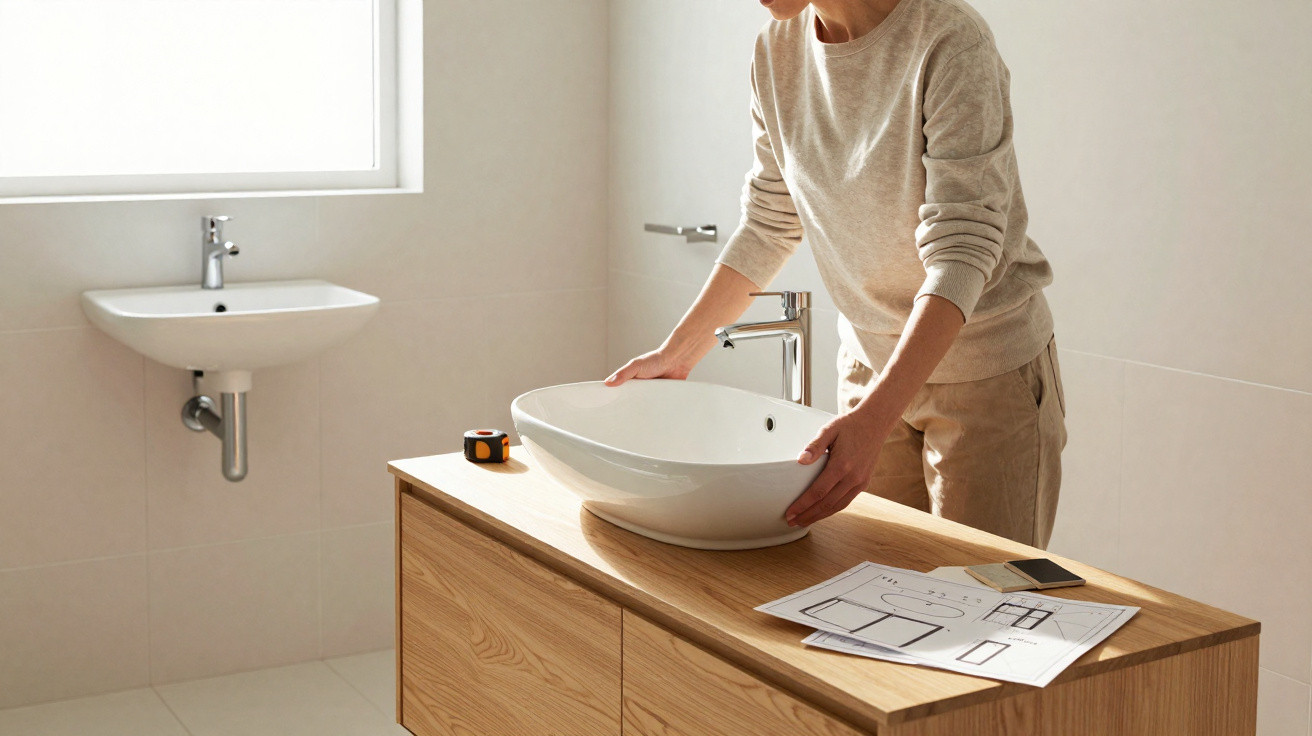
The traditional undermount basin, fitted beneath the worktop, is increasingly sharing space with countertop models and wall-hung versions. These alternatives can make refurbishments simpler, free up the area below the basin, and suit compact rooms better-without requiring you to replace the entire existing unit.
Why is the undermount basin losing space in bathrooms?
An undermount basin delivers a clean, uninterrupted surface, but it relies on accurate cut-outs and a compatible worktop. If there is damage, a change in basin size, or a desire to update the look, you may need to dismantle part of the cabinet and redo the finishing.
Another drawback is how much room the bowl takes up inside the furniture. In small bathrooms, the space under the basin is often used to store toiletries and cleaning products, and a deep basin can significantly reduce that usable storage.
How can a countertop basin reduce renovation costs?
A countertop basin sits on top of the surface, with only the waste and pipework passing through the worktop. In many situations, you can keep the existing cabinet-provided it can carry the weight and is properly protected against moisture:
- Check the worktop is strong enough and properly level.
- Adjust the hole for the waste outlet.
- Choose a tall tap or a tap mounted directly on the wall.
- Make sure the finished height will be comfortable for everyday use.
- Apply suitable sealing around the base of the basin.
- Leave enough room to clean the surrounding surface.
What is the advantage of a wall-hung basin in small spaces?
A wall-hung basin is fixed straight to the wall and removes the need for a worktop or a cabinet down to floor level. With the area underneath left open, the bathroom feels lighter, it is easier to stand closer, and it is simpler to wipe the floor with a cloth, mop, or squeegee during cleaning.
This option can also be paired with a small shelf, a towel rail, or a more discreetly finished trap. The wall must be in good condition and fitted with suitable wall plugs and brackets, because the full weight of the ceramic and the water will be carried by the fixings.
Which shapes work best in compact bathrooms?
Rounded, oval, or shallower designs take up less visual space and help reduce the chance of bumping into the basin in tight areas. When choosing, consider not only the basin width, but also door swing, circulation space, and the distance to the toilet:
- Small round basins for narrow worktops.
- Oval models with soft edges that do not protrude much.
- Corner wall-hung basins for smaller cloakrooms.
- Shallow pieces when the cabinet needs to retain internal storage.
- Wall-mounted taps to keep the worktop surface clear.
- Light colours to reduce the overall visual weight.
The new solution removes the need to replace the entire unit
Switching can be more cost-effective when the existing worktop is still solid, level, and free from leaks. Installing an over-counter option typically involves smaller adjustments than a full refurbishment, although you still need to check pipe positions, tap height, and whether the material can safely support the load.
Alternatives to the traditional undermount basin can help you make better use of the worktop-or keep the floor completely clear. Between a countertop basin and a wall-hung model, the right choice is the one that minimises obstacles, preserves circulation, and makes bathroom cleaning easier.




Comments
No comments yet. Be the first to comment!
Leave a Comment