
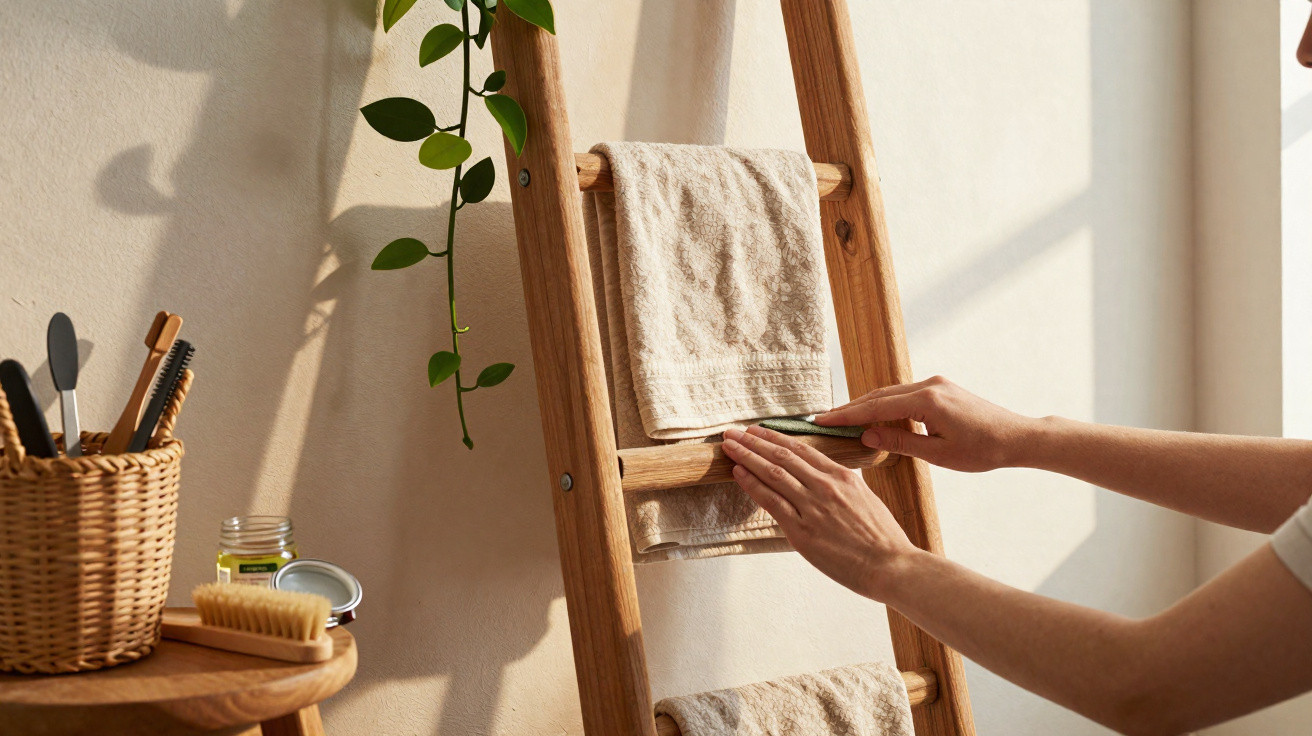
An item left forgotten in a corner - such as an old wooden ladder marked with scratches, splinters or rust on the metal fittings - does not automatically belong in the bin. In many homes, older pieces are given a new role and brought into the décor in a more sentimental and sustainable way, proving that small touches can refresh a room without major building work or big spending. A ladder, for instance, can become a towel rail or a lightweight shelving piece with a straightforward routine of cleaning, minor fixes, painting and safe positioning.
How do you tell whether an object is worth reusing?
Before starting any project, check whether the item is structurally sound and safe. Even if it looks worn, it must be stable enough to take paint, small repairs or new fittings - and to cope with day-to-day handling.
A few clear signs make it easier to spot when you can repurpose decorative objects without compromising safety or practicality at home. When assessing a piece, pay closest attention to:
- Durable material: solid wood, thick metal, rigid plastic or heavy glass generally lasts longer. A solid-wood old wooden ladder usually holds up well when reused as a towel rail or a throw blanket support.
- A versatile shape: crates, baskets, ladders and trays often adapt quickly to new uses, making it easy to hang textiles, add hooks and rest light shelves.
- Suitable dimensions: the size needs to suit the available space so it does not obstruct movement through the room.
- Sentimental value: inherited items or travel mementoes can become standout features when reused creatively.
How should you prepare the surface of an old wooden ladder?
Once you have chosen the object, the way you prepare the surface has a direct impact on both the finish and how long it will last. Wood, metal and plastic each need different preparation before paint, varnish or other finishes such as adhesive films, fabric wraps and decorative metalwork.
With wood, the usual sequence involves cleaning, sanding, filling and sealing; with metal, removing rust and using an anti-corrosion primer is essential. For plastic, careful cleaning and the right type of paint help prevent peeling and improve adhesion.
Basic step-by-step to reuse an old wooden ladder as a towel rail:
- Initial clean: wipe away dust, cobwebs and grime using a damp cloth and mild washing-up liquid. Allow it to dry completely.
- Structural check: make sure the rungs are secure and that there are no rotten sections or deep cracks. Tighten screws or replace any loose fittings.
- Sanding: sand the entire surface with a medium-grade sandpaper and then a fine grade, removing splinters, any flaking old varnish and small imperfections.
- Repairs: fill holes and splits with wood filler, let it dry, then sand again to level the surface.
- Sealer or primer: apply a wood sealer (or a primer if you plan to use coloured paint) to improve adhesion and protect the material.
- Paint or varnish: paint with a water-based enamel paint or apply a matt or clear varnish in 2 to 3 coats, following the recommended drying times.
- Final protection: if it will be used in a bathroom, finish with a moisture-resistant varnish or a protective wax.
- Installation: either lean the ladder against the wall or secure it discreetly with “L” brackets to prevent tipping, then hang towels, throws or lightweight baskets.
When is it better to keep the object’s original rustic look?
Covering every sign of age is not always the best choice, because the character may be in the wear itself. Old doors turned into wall panels, ladders reused as rustic shelving, or vintage frames can keep some of their original paint and texture - as long as the structure remains stable.
A rustic finish works particularly well when the wear suits the room’s style (such as industrial or boho looks) and when there is no danger from sharp splinters or excessively loose paint. In many cases, it is enough to protect the surface with matt varnish or wax. With a ladder, you can simply sand rough areas, clean thoroughly, apply matt varnish, and add metal hooks to a few rungs for hanging plants or accessories.
How can you combine sustainable décor with functional reuse?
When reusing household objects, balancing appearance with usefulness is essential, so the piece does not end up as decoration only. The right item can improve organisation, free up cupboard space and make everyday routines easier, creating practical solutions from what you already own.
For a reused ladder, upkeep is uncomplicated: dust with a dry or slightly damp cloth, avoid abrasive cleaners, check occasionally for damp spots or new splinters, and, when needed, lightly sand and reapply varnish or paint to the most worn areas. That way, the object stays both useful and decorative for many years, demonstrating how reuse can be durable, economical and visually appealing.

Comments
No comments yet. Be the first to comment!
Leave a Comment