
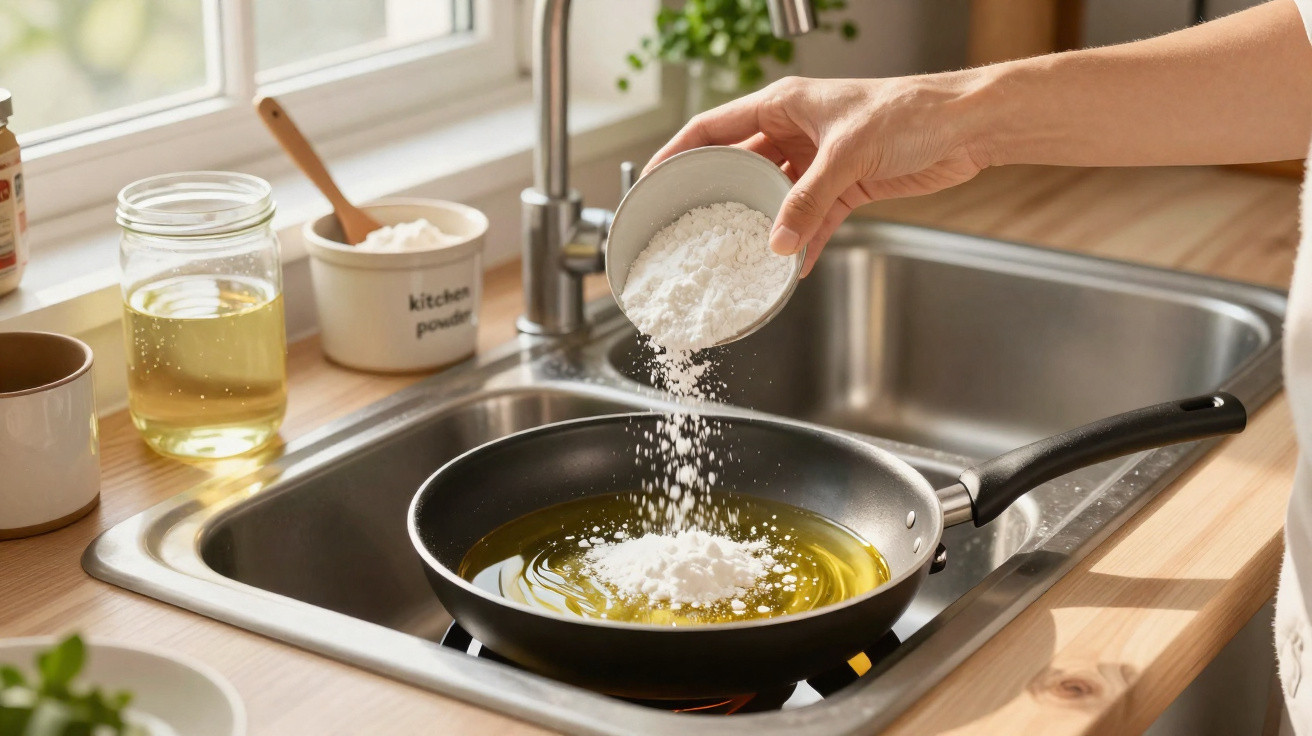
For years, frying oil ends up in the sink without a second thought - until the drain suddenly blocks and an emergency plumber is on the way.
It doesn’t have to happen.
Greasy cooking oil seems harmless: let the pan cool, tip it into the sink, run some water, job done. That everyday habit quietly damages pipework over time. There’s a simple kitchen staple that can stop the problem before it starts: an unremarkable powder that turns old oil into solid waste you can bin.
Why your sink really “hates” cooking oil
Warm, liquid fat doesn’t look like a problem. Inside the pipe, it’s a different story. The oil meets colder water, cools rapidly and starts to set.
"Liquid oil turns into a sticky film of fat in the drain - and it keeps growing with every wash-up."
What happens, step by step:
- The oil cools down, solidifies and clings to the inside of the pipes.
- Fresh grease and food particles stick to that layer.
- Over time, a thicker and thicker plug forms.
- Water drains more slowly, gurgles, smells - and eventually nothing goes down at all.
Many plumbers say a large share of kitchen call-outs comes down to this exact cause: years of frying and deep-frying oil being poured down the drain.
The impact isn’t limited to your own home, either. Wastewater systems have to deal with “fatbergs” - huge masses made from oil, wet wipes and other rubbish. Removing them costs councils substantial money and energy. Keeping fat out of the pipes protects far more than just your own trap.
The surprising fix: powder turns liquid fat into solid household waste
The good news: you don’t need harsh drain cleaners or expensive specialist products to “capture” grease. In plenty of kitchens, the answer is already in the cupboard - starch or finely milled flour.
"A simple kitchen powder binds old oil into a solid mass that can go straight into the general waste bin."
Cornflour is a good example. Its fine, porous structure absorbs oil like a sponge and holds it in place. Once it meets the fat, it thickens into a dense mixture that can become almost firm enough to cut. Instead of entering the pipework, the fat ends up in the bin.
Unlike tips such as “pour boiling water down afterwards” or “throw ice cubes into the sink”, this approach tackles the issue at the source: the oil never reaches the drain in the first place. It’s bound beforehand - with no heat, no splashing risk, and no chemical heavy hitters.
How the powder trick works, step by step
The process is straightforward and easy to build into everyday cooking. You only need:
- used cooking oil (for example, from frying or deep-frying)
- 2–3 tablespoons of a fine kitchen powder (for example, cornflour)
- a jar with a lid, or another tightly sealable container
- a spoon for stirring
Pay attention to the right temperature
Oil straight from the pan is often extremely hot. Adding powder immediately can be risky for both skin and containers. A safer method:
- Let the oil cool for a few minutes after cooking until it is warm rather than hot.
- Pour the lukewarm oil into an old screw-top jar or another container.
- Sprinkle the powder in gradually while stirring.
Depending on how much oil you have, you may need a little more or a little less powder. As a rough guide, 1–2 tablespoons of starch is usually enough for about half a litre of frying oil. If the mixture still looks very runny, simply add a bit more.
Leave it to set instead of washing it away
Right after stirring, it can look like a thick, sticky sauce. The key part happens over the next few hours:
- Seal the container tightly.
- Leave it at room temperature for at least 12 to 24 hours.
- Check the texture afterwards: it should be noticeably firmer.
After a day, the mixture will usually have turned into a compact lump that either releases easily from the jar or can be thrown away together with the container. Put this solid mass in the general waste bin, not the food waste bin, because it is still fat.
Which other powders work - and where they’re strongest
If you don’t have cornflour to hand, other dry kitchen ingredients can do the job. The key is that they must be fine and highly absorbent.
| Product | Characteristic | Suitability for binding oil |
|---|---|---|
| Cornflour | very fine, neutral, inexpensive cupboard staple | binds quickly, forms a compact mass |
| Wheat flour | widely available, can clump | works well, sometimes needs a bit more powder |
| Baking powder or dried yeast | fine powder, usually in small sachets | suitable for small amounts of oil, for example from a pan |
| Arrowroot | very fine, strongly binding | especially fast and firm binding, but tends to be more expensive |
| Coffee grounds (dry) | coarse, organic, often a leftover | binds partly, better as an extra for small residues |
Finely sieved wood shavings or sawdust from untreated wood can also absorb oil if they are completely dry. If you use these, dispose of them in the general waste bin as well.
Why this small habit helps the environment and your wallet
Every portion of oil that doesn’t go down the drain reduces the burden on sewage treatment works and waterways. Fats make water treatment harder, clog pumps, and can damage plants and wildlife.
"Putting oil in the bin instead of the pipe eases the load on plumbing, treatment works and, over time, the household budget too."
On a personal level, the change pays off as well. Drain cleaner, a drain snake, an emergency call-out - a blocked sink can quickly run into three figures. A spoonful of starch costs only pennies. Disposing of oil this way on a regular basis helps prevent expensive visits and reduces the chance of unpleasant smells coming up from the trap.
What about large amounts, like deep-fryer fat?
For small quantities - such as oil from a frying pan or a baking tray - the powder trick is ideal. For larger volumes, for example from a deep fryer, a two-step approach makes more sense:
- Pour cooled (but still liquid) fat into an old bottle or the original container.
- Seal it well and take it to a council collection point or recycling centre.
- Use powder only to bind thick residues and greasy rings left in the pan, then put those into the general waste bin.
Many towns and councils provide collection containers for used cooking oil. In some cases it can even be processed into biodiesel - far more sensible than depositing it in the sewer system.
Making the trick easy to stick to
To stop the new routine fading after a fortnight, a small organisational tweak helps: keep a jar for used oil within reach next to the hob, and store the binding powder right beside it.
- Used oil automatically goes into the jar first - not into the sink.
- The powder is within reach, so stirring it in becomes routine.
- When the jar is full and the contents have set, it goes into the general waste bin.
If you fry often, you can fill several small jars in rotation. That way you don’t have to wait each time for one batch to fully harden.
Risks, limits and sensible add-ons
This method still requires a bit of common sense. Liquids that are too hot can crack glass or warp plastic, so always let oil cool a little first. And never try to get rid of a still-liquid mixture by flushing it down the toilet - you simply move the blockage somewhere else.
If your pipes are already partly blocked, mechanical options can help alongside: a plunger, a drain snake, or a pull-out sink strainer insert. The last of these catches food scraps before they reach the pipe and combine with fat.
The powder trick is most effective as a long-term habit. It changes the basic way you handle fat in the kitchen. Once you get used to treating oils and fats as general waste straight away - rather than as something to rinse away - you significantly reduce the risk of stubborn blockages, while also doing something positive for waterways, council budgets and your own peace of mind the next time you check the sink.



Comments
No comments yet. Be the first to comment!
Leave a Comment