
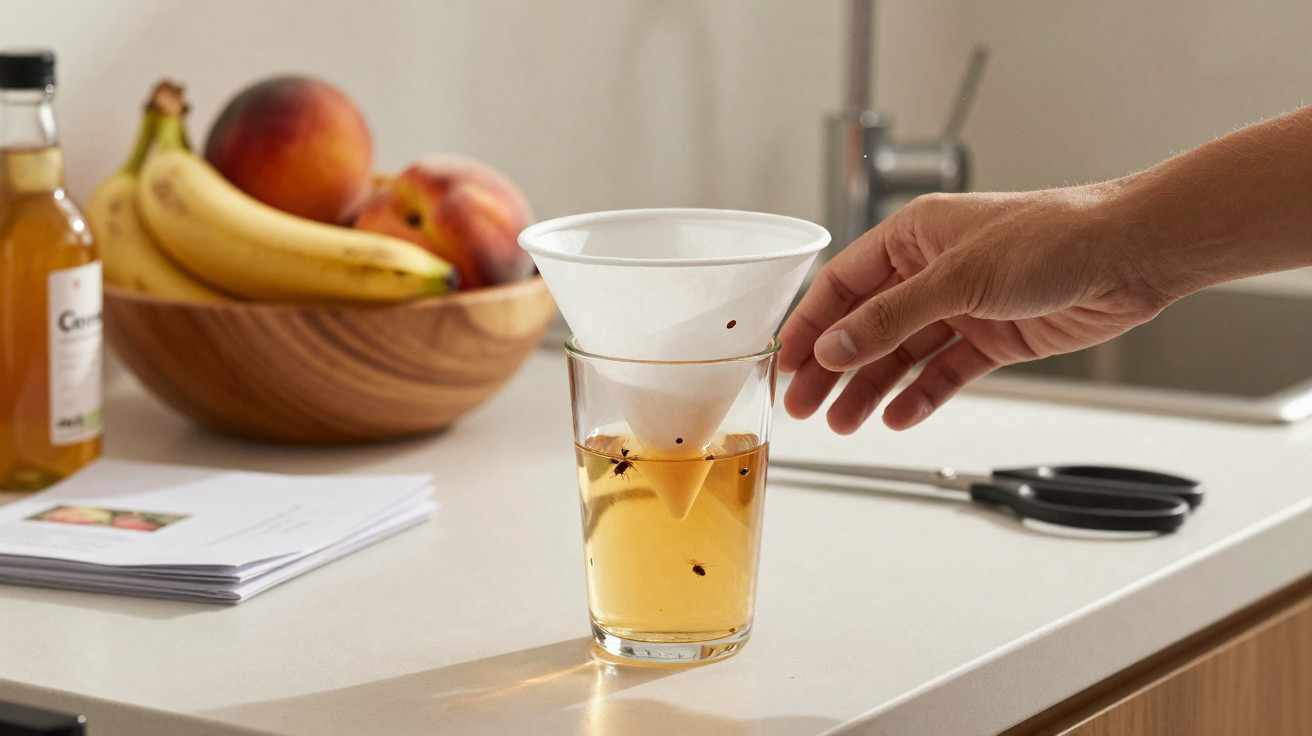
Fruit flies and other tiny gnats may look harmless, but they can make day-to-day life in the kitchen unpleasant very quickly. You wipe down surfaces, put everything away, empty the bin - and the next morning they are hovering over the worktop again. A straightforward trick using a glass, a little fruit and a splash of vinegar can take the sting out of this ongoing nuisance in just one night.
Why fruit flies feel so at home in the kitchen
These little pests do not appear by chance. They are highly responsive to smells, moisture and even the smallest traces of organic material. Modern kitchens, with fruit bowls, open bins or damp sink areas, often offer them ideal conditions.
Common triggers include:
- very ripe or already bruised fruit in the fruit bowl
- damp patches around the sink, draining area or waste trap
- rubbish left too long, especially food waste
- tea towels that never fully dry out
At first glance the kitchen can look clean, yet hidden dampness and fruit that is “still fine” create a kind of permanent buffet for them. As long as these sources remain, the flies keep coming back.
“The key mistake: you clean the surface, but leave the real attractants untouched.”
Typically, the flies repeat the same circuit - for instance between the fruit bowl, the sink and the worktop. If you spot that pattern, you can target it and place the glass trick exactly where it will be most effective.
The glass trick: how the trap works on the worktop
This method relies on everyday items that most people already have at home. The aim is to draw the flies to a single spot - and keep them there.
What you need for the trap
- 1 large drinking glass
- a few thin slices of apple or another sweet fruit
- 1 tablespoon of apple cider vinegar (cloudy is fine)
- 1 sheet of paper (printer paper or a note will do)
This combination works so well because the sweet-and-sour smell is extremely appealing to fruit flies, while the paper shape makes it much harder for them to find their way back out.
Set-up in two minutes
Putting it together is quick and does not require any crafting skills:
- Place the apple slices on the bottom of the glass.
- Add one tablespoon of apple cider vinegar over the top.
- Roll the paper into a cone (like a small paper horn).
- Sit the cone inside the glass, point downwards, opening at the top.
Important: the paper cone should not be sitting in the vinegar; it should end just above it. The top opening should not be too large, otherwise the flies can escape more easily.
“The paper cone works like a funnel: getting in is easy, but the flies can hardly find their way out again.”
Perfect position and the right time
Where you place the glass matters. The best spot is the area where the flies are constantly active - often right by the sink or next to the fruit bowl.
The trap tends to work best overnight. The kitchen is still, there are no air currents from people, open windows or the dishwasher, and the scent of the bait becomes the clear main draw. In the morning, you can see how many insects ended up in the glass.
Why the funnel trick works so reliably
Fruit flies react strongly to sweet-and-sour scents. For them, the mix of apple and apple cider vinegar is far more tempting than whatever else is in the kitchen. Because the smell collects inside the glass, it does not simply disperse around the room.
The way the trap works can be boiled down to three points:
- Strong attraction: apple provides sweetness, apple cider vinegar adds the sharp sour note.
- Concentrated scent: the glass focuses the smells.
- Confusing geometry: the paper funnel lets them in easily, but makes it difficult to get out.
The insects follow the scent trail through the opening in the cone, end up inside the glass, then fly around in confusion and fail to locate the small opening again. Many eventually land on the liquid or drown in it.
A few details significantly improve the success rate:
- The opening in the paper cone should be only a few millimetres wide.
- The paper must sit firmly in the glass and not slip.
- Using more vinegar does not help; one tablespoon is enough.
What to do in the morning - and when to add more traps
The next day, it is worth checking the glass. If several flies are inside, the trap has done its job. If you still see lots of insects in the kitchen, you can scale it up immediately.
Depending on how bad things are, two approaches make sense:
- Light infestation: empty the glass, reset it, and put it back in the same place.
- Heavy infestation: set out two or three glasses at the same time in “hotspots”, such as the sink, fruit bowl and bin.
“When there are masses of fruit flies, a small ‘fleet of glasses’ works better than relying on a single container.”
Once the number of flies drops noticeably, leave the trap out for another night or two. At the same time, deal with the causes - otherwise the cycle starts again.
Without tackling the causes, the swarm will return
The glass trick quickly reduces what you can see, but it is not a substitute for basic hygiene. If you want lasting peace, you need to make the attractants less appealing.
Three areas in particular deserve attention:
- Fruit bowl: remove overripe fruit, cut away bruised areas immediately, and when in doubt store fruit in the fridge.
- Waste trap and sink: regularly flush with hot water and a little washing-up liquid or bicarbonate of soda, and dry damp edges.
- Bin: empty food waste more often, keep the lid closed, and wash out the bin regularly.
If you take these points seriously, you will only need the glass trick occasionally - for instance after a big fruit shop in summer, or if something has accidentally been left in the food waste.
Practical extras: alternatives, risks and everyday tips
Instead of apple slices, you can also use other sweet leftovers, such as a piece of overripe banana. Some people swear by adding a drop of washing-up liquid to the vinegar: it reduces surface tension, so the flies sink more quickly. If you have pets or small children, place the glasses somewhere they cannot be knocked over.
Chemical insect sprays are more problematic in the kitchen. They may work fast, but they can leave residues on surfaces where food is prepared. The glass trick uses no poison, costs next to nothing and can be set up again at any time.
Another advantage is that it makes the true scale of the problem very obvious. If the glass stays empty, the cause may not be in the kitchen at all - it could be, for example, a vase with old water in the living room or an empty juice carton rotting in the paper recycling.
If you get used to combining the trap with tackling the source, it becomes a simple routine: check the fruit, dry damp areas, get rid of rubbish promptly - and, when needed, put out a baited glass. That keeps the kitchen far more manageable, even during the warmer months when these tiny pests are usually at their peak.
Comments
No comments yet. Be the first to comment!
Leave a Comment