
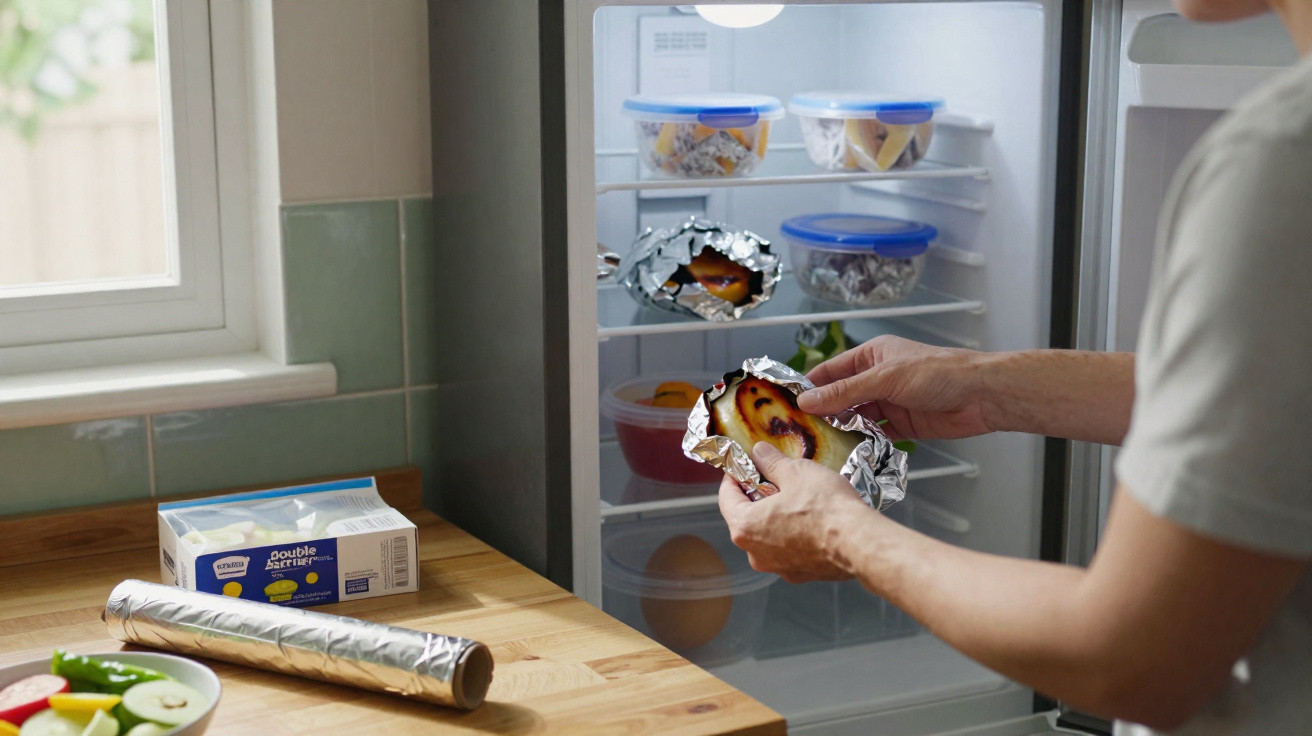
Where does it all go wrong?
Many households rely on the freezer to save leftovers, make the most of special offers, or build up a stash of staples. Yet the quick habit of reaching for plain aluminium foil often means that, after defrosting, the food barely resembles the original dish. Flavour, texture, smell - everything seems different. The cause is rarely the appliance itself; it’s almost always the automatic choice of the wrong packaging.
Why plain aluminium foil so often goes wrong in the freezer
At first glance, aluminium foil seems ideal: it’s cheap, tears off quickly, moulds tightly around food and looks almost “professional”. A portion of lasagne, a wedge of cheese, a loaf of bread, a discounted salmon fillet - wrap, fold, done.
That’s exactly where the snag is: aluminium foil on its own doesn’t create a sealed barrier against air and moisture. It creases, it tears easily, and tiny gaps form at the folds and edges. You may not notice them - but air and water vapour certainly do.
The result is straightforward: air reaches the food, moisture migrates outwards and crystallises. Meanwhile, parts of the surface dry out inside the wrapping and the product changes.
The real enemy in the freezer isn’t the cold - it’s contact with air.
At the latest when you defrost, the outcome becomes obvious:
- the surface looks grey, pale or whitish
- the texture turns crumbly, soggy or rubbery
- liquid components separate from fat or protein
- the aroma is noticeably weaker or tastes “odd”
A pasta bake loses its creamy sauce, a steak feels watery and soft, bread becomes limp on the outside and falls apart within. There’s a name for this: freezer burn.
Freezer burn, ice crystals, strange smells - what’s really happening in the freezer
Inside a freezer, water doesn’t simply sit still. It moves. If packaging doesn’t seal properly, moisture evaporates from the food, freezes outside the surface and builds up layers of ice or frost.
Freezer burn is, in essence, dehydration at the surface. Affected areas tend to be:
- paler and duller than the rest
- dry and fibrous
- tough or crumbly when eaten
Some foods are particularly vulnerable:
- Bread and bread rolls - they quickly absorb odours and moisture.
- Fish - its delicate structure breaks down easily; freezer burn can make it cottony.
- Meat - dries out on the surface and cooks unevenly in the pan.
- Dishes with sauce - water and fat separate, and the sauce can feel grainy after defrosting.
Then there’s the mix of smells inside the appliance: a freezer is not a sterile space. Even at -18 °C, odour compounds circulate.
If you don’t pack food airtight, you risk vanilla ice cream with a hint of fish and garlic bread with a faint ice-cube note.
Metal foil only blocks these aromas to a limited degree. Minor leaks are enough for molecules to travel. Put cake next to fish fingers, and over time the cake will pick up the smell.
When aluminium foil comes into contact with salt and acid
Beyond appearance and flavour, there’s another issue: salty and acidic foods don’t react particularly well with aluminium. Direct contact is especially troublesome when the surface is moist.
This includes, for example:
- tomato sauces and other tomato-based dishes
- anything with lemon or lime juice
- foods containing vinegar, such as salads with dressing or pickled vegetables
- heavily salted marinades and cured meats
- strongly seasoned stews and chilli
If these foods stick directly to the foil, reactions can occur. Many people don’t notice in everyday life because the changes often only show up after longer storage - through altered flavour or patches that look different.
A simple rule of thumb helps: anywhere a dish is very strongly seasoned, salty, acidic or particularly liquid, it shouldn’t be left sticking directly to aluminium.
The “double barrier”: how to pack freezer-safe food with less hassle
The most dependable way to protect food in the freezer is a straightforward principle: start with an inner layer, then add an airtight outer shell.
Step 1: A layer directly against the food
The aim here is to shield the product and stop it adhering to metal. Good options include:
- cling film wrapped tightly around meat, fish or cheese
- baking parchment between the food and aluminium foil, for instance with baked pasta dishes
- sheets of baking parchment between individual slices of bread or pieces of cake
This first layer doesn’t need to be especially tough; it mainly provides a neutral surface.
Step 2: An airtight outer layer
The second stage is all about sealing. Ideal choices are:
- thick freezer bags with a secure seal
- sturdy containers or boxes specifically labelled as freezer-safe
- vacuum bags, if you have the equipment
The less air left in a bag or box, the lower the risk of freezer burn, flavour loss and unwanted odours.
If you use bags, press out as much air as you can by hand (some people use a straw). Flat, wide parcels freeze faster, stack more neatly, and defrost more evenly later on.
How to pack different foods properly
| Food | Recommended packaging |
|---|---|
| Tomato sauces, stews | Cool first, then freeze in shallow freezer bags or containers; no direct contact with aluminium |
| Meat and fish | Wrap snugly in cling film or baking parchment, then place in a bag and remove air thoroughly |
| Bread and bread rolls | Slice or portion, then seal well in a bag |
| Cakes and pastries | Wrap individual pieces in cling film/baking parchment, then place in a container or bag |
| Prepared bakes | Cover in the dish with baking parchment or cling film, plus an additional bag or tight-fitting cover |
If you remember these simple matches, you’ll avoid many of the usual disappointments after defrosting.
Small habits that make a big difference
Alongside the right packaging, a few routines can noticeably improve results:
- Portioning: divide leftovers into single portions straight away, so nothing has to be half-defrosted and refrozen.
- Let it cool: bring hot food down to room temperature first. Otherwise, condensation forms and later turns into icy crusts.
- Freeze flat: don’t freeze sauces or soups as thick blocks; freeze them as flat packs to save space and time.
- Label everything: write the contents and date on the bag or box so you know what needs using first.
Most “freezer mishaps” don’t happen inside the appliance, but in the few minutes beforehand - while packing.
Why freezer temperature still matters
Even though packaging is the key factor, the temperature in the appliance affects how well nutrients and structure hold up. Around -18 °C is considered a solid standard. If the freezer is opened frequently or packed very full, the temperature fluctuates, ice forms more quickly, and food ages faster in its cold sleep.
A thermometer in the freezer helps you keep track of the real temperature. Many households run warmer than they think - and then wonder why food defrosts watery and pale.
Freezing without regret: what really matters
Freezers are a powerful tool for cutting food waste. Whether it’s leftover Sunday roast, yesterday’s bread, or the big family meal that turned out to be too much - it can all be saved if the packaging does its job.
That’s why the key question before freezing isn’t “Have I got any aluminium foil?” but: “Does this packaging truly block out air?”
If you rely on a double barrier, keep salty and acidic foods away from metal, and consistently minimise contact with air, you’ll get far better results. After weeks in the freezer, the food won’t taste like a “last resort” - it will be close to freshly cooked, which is what matters day to day.



Comments
No comments yet. Be the first to comment!
Leave a Comment