
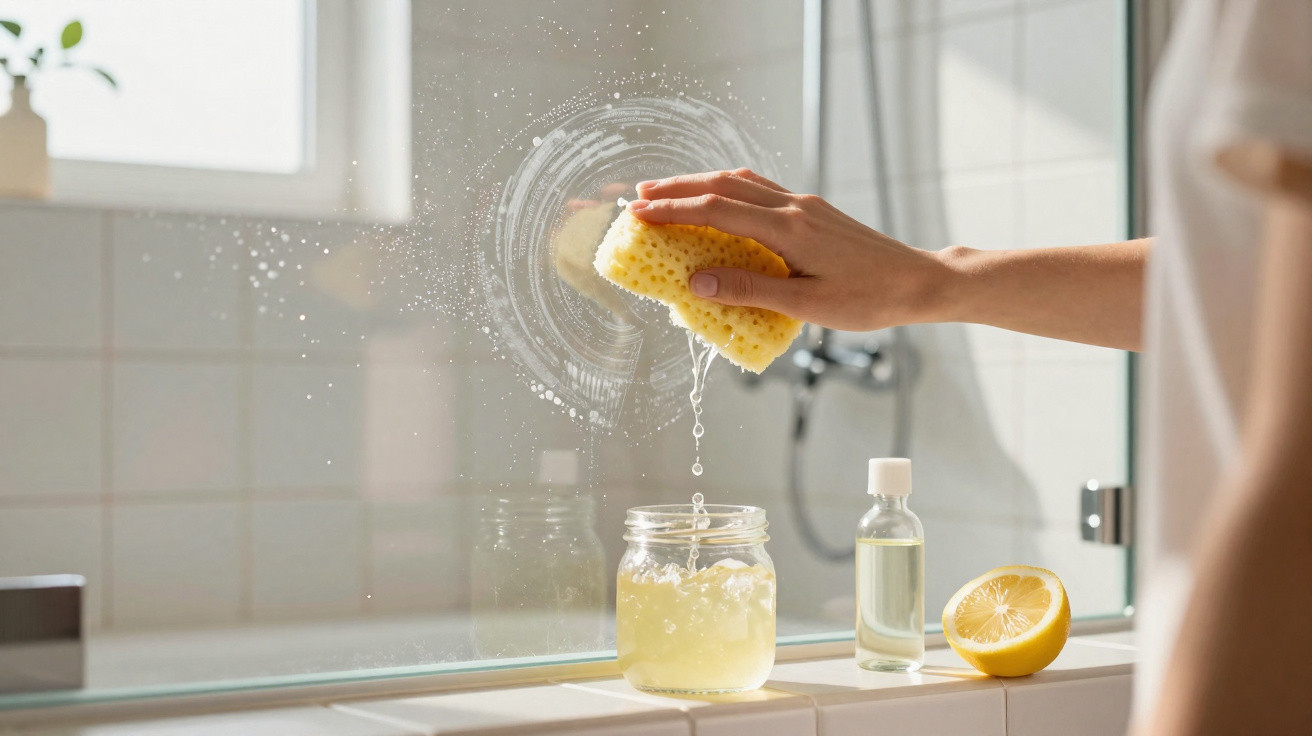
Many households feel defeated by white haze and stubborn marks on the glass shower screen. Shop shelves are packed with harsh bathroom cleaners: they’re pricey, smell strong and often still leave a dull grey film behind. A straightforward homemade mix using three everyday ingredients shows there’s another way - it shifts limescale without scratching the glass.
Why the shower screen turns cloudy so quickly
Anyone who takes warm showers will recognise what’s happening: the water evaporates and the minerals are left behind. Tap water contains dissolved substances such as calcium and magnesium carbonates. As the surface dries, these settle as white dots and patches.
With every shower, another layer forms. What starts as a few splashes becomes a milky veil that gradually attacks the glass surface. The result: the shower screen looks yellowed, dull and permanently dirty, even when it has just been cleaned.
Many people then reach for the heavy-duty options:
- abrasive cleaning stones
- the rough side of a washing-up sponge
- scouring powders with a high level of abrasion
These don’t just grind away limescale - they also wear down the surface. Tiny scratches appear, and that’s exactly where soap residue and fresh limescale can cling even more easily. The glass looks worse after each round - a vicious circle.
"Instead of scrubbing harder, a different strategy helps: gentle acids, enough contact time and tools that won’t damage surfaces."
Three cupboard ingredients: how to make a limescale-remover gel
This mixture follows a simple idea: mild acids break down mineral deposits, while a gel-like texture helps the cleaner cling to a vertical surface.
The base: two mild acids and a thickener
To make the gel yourself, you’ll need:
- household vinegar (clear, about 8%) – dissolves limescale and soap residue
- citric acid – boosts the effect, especially on stubborn limescale
- cornflour – turns the liquid into a gel that sticks to the shower screen
Used together, the ingredients target limescale deposits without the typical chemical odour of many bathroom products and without any abrasive particles.
Step-by-step recipe for the anti-limescale gel
Preparation takes only a few minutes:
- Stir one tablespoon of cornflour into about 300 millilitres of cold water.
- Heat the mixture slowly, stirring, until it thickens into a semi-transparent gel.
- Take it off the hob and leave it to cool briefly.
- Stir in one tablespoon of citric acid.
- Add around 100 millilitres of clear household vinegar and mix thoroughly.
- Let it cool completely, then pour into a bottle or an old pump dispenser.
The cost comes to roughly 50p for an amount that matches several standard bottles of limescale remover.
"Because it’s a gel, the cleaner stays where the limescale is - and finally has enough time to penetrate the build-up."
Using it on the shower screen: keeping the glass scratch-free
For the gel to work at its best, preparation matters. Before you start the main treatment, quickly rinse the shower screen with water. This removes loose dirt and soap residue that would otherwise reduce how well the gel works.
How to use it on standard glass
For a typical glass shower screen, this approach is usually enough:
- Put on rubber gloves to protect your skin.
- Apply the gel generously to the whitest areas - ideally working from the bottom upwards so it doesn’t run down too quickly.
- Spread it gently with a soft sponge or cloth, with no pressure and no scrubbing motions.
- Leave for 15 to 30 minutes; for very heavy limescale, up to an hour.
- Lightly go over the area with the non-abrasive side of a sponge or with a microfibre cloth.
- Rinse thoroughly with warm water until all residue is gone.
- Dry with a clean cloth or pull off the water using a squeegee, so new drip marks don’t form.
Afterwards, the glass often looks noticeably clearer and shinier. Repeating the process over several treatments can further reduce older, stubborn layers.
Special considerations for coated glass and plastic
Modern shower screens often have a water-repellent coating. These surfaces can be more sensitive to acids.
- Treated/coated glass: test first in an inconspicuous corner to see how the material and coating respond. If in doubt, dilute the gel with a little more water.
- Plastic or acrylic: use only a very diluted mixture, rinse with plenty of water and never use abrasive sponges.
- Stone surfaces: do not use this acidic mixture on marble or granite near the shower tray. Acids can permanently etch polished stone.
"If you’re unsure, test a small, barely visible area - it helps prevent damage to specialist glass or delicate surfaces."
Routine against limescale: clear screens with minimal effort
Keeping the shower screen cleaner for longer doesn’t take much. A simple routine is enough:
- after each shower, quickly pull the water off the glass with a squeegee
- leave the door or enclosure slightly open so everything can dry
- use the gel once a month, before the limescale layer builds up again
The more consistently you do these small everyday steps, the less often stubborn deposits take hold. The gel-like homemade mix becomes an occasional “treatment”, rather than an emergency fix for crusted-over surfaces.
What’s going on with limescale, vinegar and citric acid
Limescale marks are mostly calcium carbonate. This compound reacts with acids and breaks down. Vinegar and citric acid are among the milder organic acids that have been used as descalers in the home for decades.
The advantage is that the concentration stays well below that of many aggressive specialist cleaners. That reduces the risk of irritated airways and damaged surfaces - provided the cleaner is kept away from acid-sensitive materials such as natural stone.
Cornflour acts only as the “carrier”. It creates a thicker consistency without chemically reacting with the limescale itself. What matters is that the mixture stays on the surface long enough. In this case, patience replaces hard scrubbing.
Practical tips to avoid damage
To make sure the homemade mix works well without causing problems, a quick safety check helps:
- Always wear rubber gloves to avoid skin irritation from acids.
- Try not to breathe it in directly, especially in small, poorly ventilated bathrooms.
- Never mix with chlorine-based cleaners or strongly alkaline products - these combinations can release dangerous fumes.
- Check the label on the shower screen or the manufacturer’s guidance to confirm that mild acids are permitted.
If you have children or pets at home, keep the cleaner out of reach and rinse all surfaces thoroughly after use.
Many users say this simple mixture has allowed them to replace expensive specialist products almost completely. The shower screen benefits twice over: fewer scratches thanks to gentler cleaning, and less limescale because the gel structure keeps the cleaner where it’s actually needed.
Comments
No comments yet. Be the first to comment!
Leave a Comment